Dial In Better Espresso: 20 Bar, Temp Control, 58mm
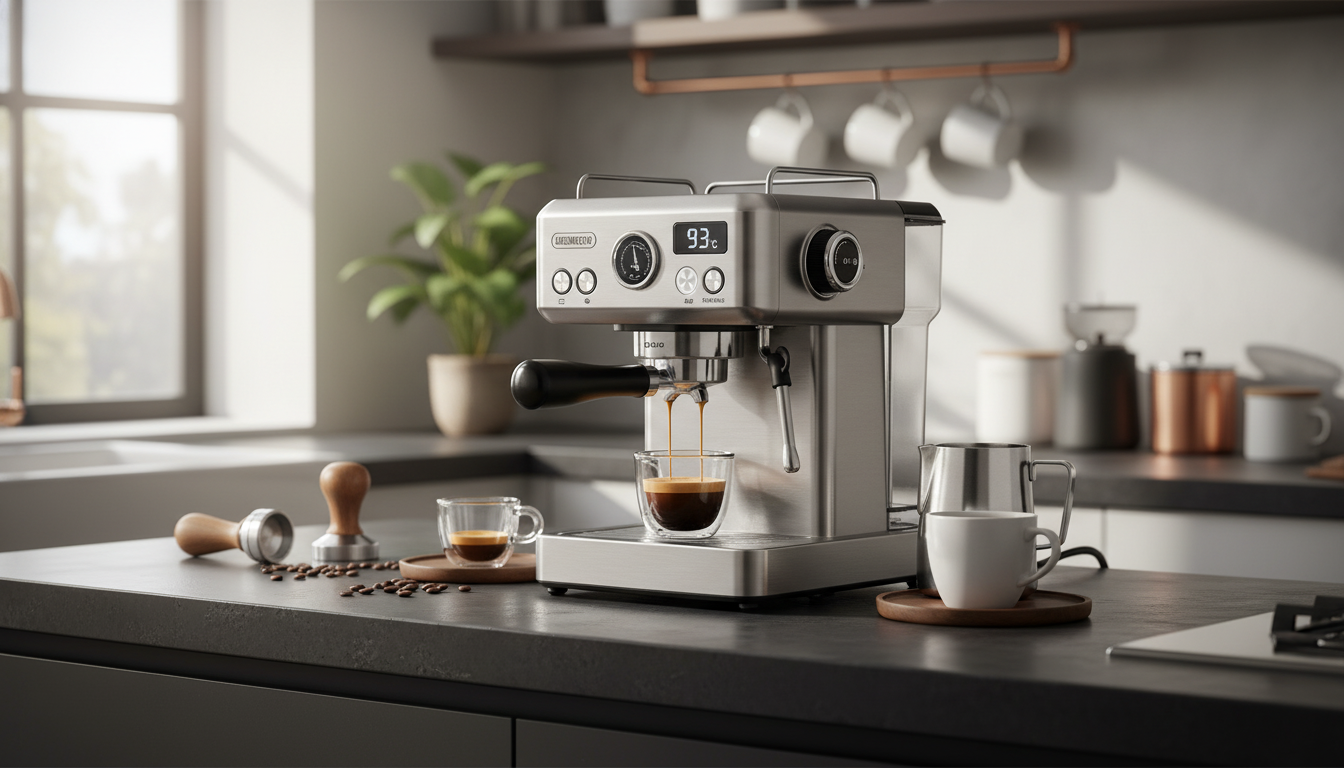
20 Bar Semi-Automatic Espresso Machine with Temperature Control and 58mm Portafilter
A semi-automatic espresso setup can bridge the gap between café-style results and everyday convenience. This guide breaks down how pressure, temperature control, and a 58mm portafilter work together, what to look for in day-to-day use, and how to get consistently balanced shots at home. For a feature set built around those essentials, see the 20 Bar Semi-Automatic Espresso Machine with Temperature Control – 58mm Portafilter.
What makes a semi-automatic espresso machine different
Semi-automatic machines keep the important flavor-driving steps in your hands while handling the heavy lifting of pumping hot water through the puck. You control grind size, dose, distribution, tamping, and when the shot starts and stops—each one affecting body, clarity, and crema.
- Manual control where it matters: grinding, dosing, tamping, and starting/stopping the shot are user-led steps that influence flavor and texture.
- More consistency than fully manual lever machines, with less automation than bean-to-cup systems.
- Best for learning repeatable routines: dial-in grind size, dose, yield, and temperature for predictable results.
- Pairs well with a dedicated grinder for the biggest improvement in cup quality.
Why 20 bar matters (and what it doesn’t mean)
A “20 bar” rating describes what the pump can deliver at maximum capacity, not what you should aim to brew at every moment. Espresso extraction typically targets stable, controlled pressure at the puck, which depends heavily on resistance created by fine, uniform grounds and a well-prepped basket.
- Pressure rating describes pump capability; brewing typically targets a stable pressure during extraction rather than maximum possible pressure.
- Higher pump capacity can help maintain flow under resistance (fine grinds, proper tamp, fresh coffee), supporting crema and body.
- Taste still depends on grind uniformity, dose, distribution, and shot time—pressure alone cannot fix channeling.
- Aim for controlled flow: uneven extraction often shows as spurting, fast blonding, or thin crema.
If you want a practical framework for evaluating strength and balance, brew ratio is a strong starting point. The Barista Hustle brewing compass is a helpful reference for dialing in directionally (stronger/weaker and more/less extracted): Espresso brew ratio (Brewing Compass).
Temperature control: the fastest route to repeatable flavor
Small temperature shifts can noticeably change sweetness, acidity, bitterness, and aroma definition. Temperature control adds a reliable lever once your grind and ratio are close, and it can reduce the frustrating “first shot great, second shot harsh” effect by improving back-to-back stability.
- Small temperature shifts can change perceived sweetness, acidity, bitterness, and aroma clarity.
- Temperature control helps match different roast styles: slightly cooler for darker roasts to reduce bitterness, slightly hotter for lighter roasts to improve extraction.
- Stability supports consistent back-to-back shots, reducing the “first shot great, second shot harsh” problem.
- Useful for troubleshooting: if grind and ratio are consistent, temperature adjustments can fine-tune balance.
Temperature tuning ideas (starting points)
| Coffee style | Goal | General temperature direction |
|---|---|---|
| Dark roast | Reduce bitterness, keep chocolate notes | Slightly lower |
| Medium roast | Balance sweetness and brightness | Middle/standard |
| Light roast | Improve extraction and clarity | Slightly higher |
The value of a 58mm portafilter for home espresso
A 58mm portafilter is a widely used, commercial-style size. For home users, the biggest advantage is compatibility: baskets, tampers, and many precision accessories are commonly made in 58mm, which makes upgrades easier over time.
- 58mm is a common commercial-style size, offering broader compatibility with baskets and tampers.
- Wider puck area can support more even water distribution when properly prepped.
- Makes it easier to build a long-term kit: precision baskets, distribution tools, and calibrated tampers are widely available.
- Encourages consistent workflow: dose, distribute, tamp level, lock in, and brew.
At-a-glance specs and daily-use checklist
Quick reference
| Feature | What it affects | Why it’s helpful |
|---|---|---|
| 20 bar pump rating | Flow under resistance | Supports espresso-style extraction with proper puck prep |
| Temperature control | Flavor balance and repeatability | Makes results more consistent across different coffees |
| 58mm portafilter | Tool compatibility and puck geometry | Easier upgrades and more standardized accessories |
| Semi-automatic operation | User control of extraction | Enables dialing in shots to taste |
Dialing in: a simple routine for better shots
Common shot problems and quick fixes
| Symptom | Likely cause | Try this first |
|---|---|---|
| Sour, sharp, thin | Under-extraction | Finer grind or slightly higher temperature |
| Bitter, drying finish | Over-extraction | Coarser grind or slightly lower temperature |
| Spraying/uneven flow | Channeling | Improve distribution; tamp level; check basket fill |
| Weak crema | Stale coffee or too coarse | Use fresher beans; grind finer; verify dose |
Milk drinks and steaming workflow
Cleaning and care for long-term performance
Water chemistry is a major variable in both taste and maintenance. For deeper guidance, the Specialty Coffee Association’s standards and resources are a solid reference: Water quality for coffee (SCA Water Standards).
Who this machine style fits best
Shop in-stock picks
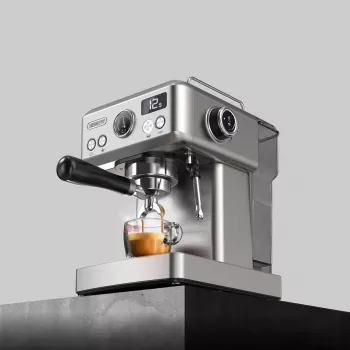
- 20 Bar Semi-Automatic Espresso Machine with Temperature Control – 58mm Portafilter
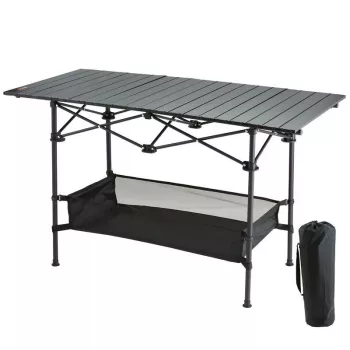
- Portable Folding Camping Table (a simple way to create a pop-up coffee station for patios, tailgates, or travel-friendly setups)
FAQ
Does a 58mm portafilter make a noticeable difference at home?
Yes—mainly through compatibility and repeatability. A 58mm size gives access to standardized baskets and tampers, making it easier to keep puck prep consistent, though grind quality and fresh coffee still make the biggest difference in the cup.
How should temperature be adjusted for different roast levels?
Go slightly cooler for darker roasts to reduce bitterness and slightly hotter for lighter roasts to improve extraction. Change in small steps and keep dose, grind, and yield the same so you can taste what temperature is doing.
Why is the shot sour even when pressure seems strong?
Sour shots usually point to under-extraction from a grind that’s too coarse, a low dose, a short shot time, or uneven puck prep that channels. Try grinding finer, improving distribution and level tamping, and—once those are steady—nudging temperature slightly higher.













Leave a comment