Classic Gray Wooden Play Kitchen for Realistic Pretend Play
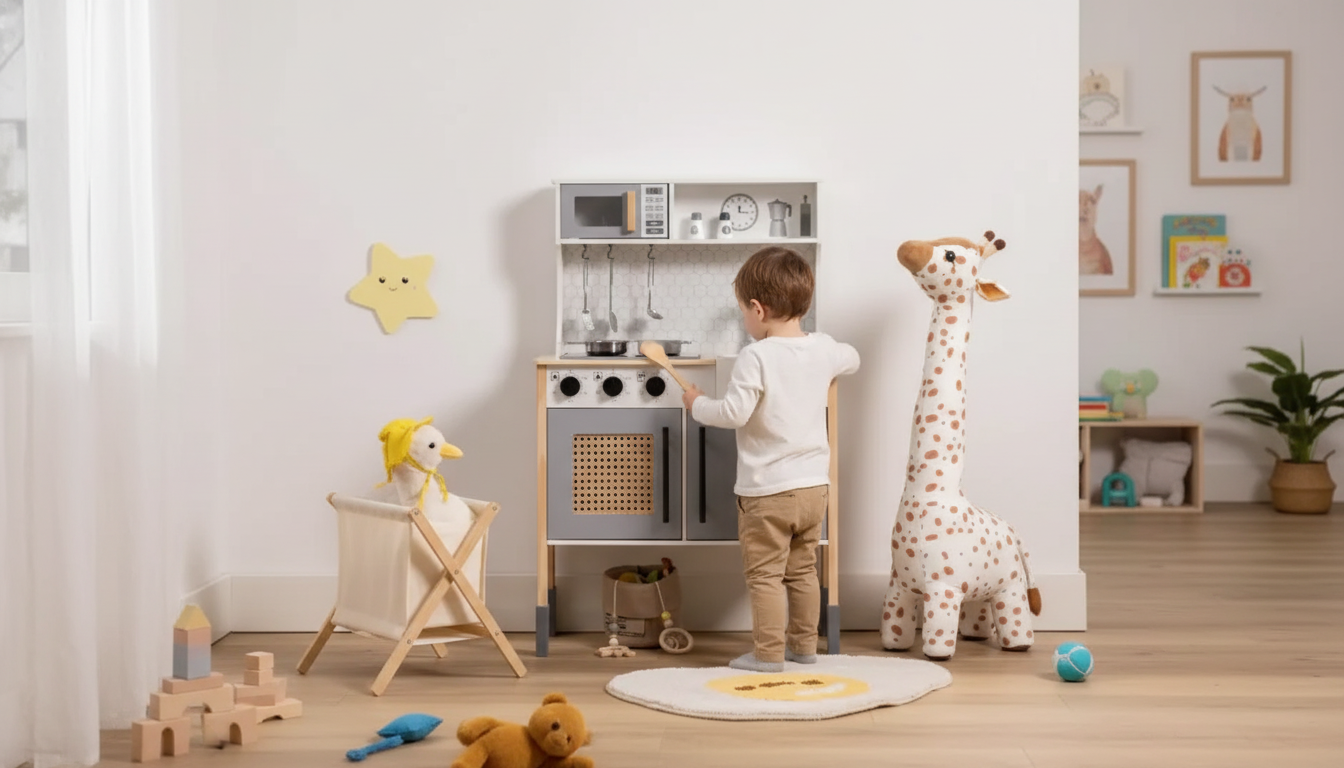
Classic Gray Wooden Play Kitchen Set for Kids with Realistic Pretend-Play Details
A wooden play kitchen brings everyday routines into kid-sized, imaginative play—stirring, “washing,” organizing, and role-playing meals while practicing communication and fine-motor skills. This classic gray set blends a clean, modern look with realistic kitchen-style components to support open-ended pretend play at home, in playrooms, or in classrooms.
Why a Wooden Play Kitchen Becomes a Daily Favorite
Pretend kitchens tend to earn a permanent spot in the daily rotation because they’re never “one-and-done.” Kids can cook breakfast one day, run a café the next, and host a holiday dinner party after that—using the same play station in completely different ways.
- Encourages imaginative role-play: cooking, serving, cleaning, and hosting pretend guests.
- Supports social skills: turn-taking, sharing, and cooperative play with siblings or friends.
- Builds practical habits through play: tidying “ingredients,” storing accessories, and following simple sequences (prep → cook → serve → clean).
- Wood construction is often chosen for stability and a furniture-like feel in the play space.
- Neutral gray styling fits many room themes and can feel less visually busy than highly saturated plastic sets.
Realistic Features That Make Pretend Play Feel More Like the Real Thing
The most-loved play kitchens are the ones that invite repetition—open, close, turn, “wash,” and organize. Those small actions mimic real life, which helps play feel meaningful and gives kids lots of chances to practice coordination and independence.
- Interactive elements to look for: turning knobs, opening doors, and movable components that invite repeated play.
- A sink-and-faucet area can spark “wash and rinse” routines and water-free sensory play with cups and pretend dishes.
- Oven or cabinet doors create opportunities for object permanence games and simple organization skills.
- Storage shelves and hooks help keep play accessories contained and teach clean-up as part of the game.
- A countertop workspace encourages pretend prep: mixing, arranging, and plating with toy food or safe household items (like empty spice jars).
To keep pretend play feeling fresh, set out a small “theme” bin once in a while—breakfast foods for a week, baking tools the next, then a “restaurant night” kit with notepads and pencils for taking orders.
Quick Checklist for Comparing Play Kitchens
Before choosing a set, it helps to think about how it will actually be used in your space: who will play with it, where it will live, and how easy it will be to reset after playtime.
- Choose a size that matches the child’s reach and the available floor space.
- Prioritize sturdy, smooth edges and well-finished surfaces for frequent daily use.
- Look for easy-to-clean materials and finishes—especially for shared play spaces.
- Consider the accessory plan: use what’s included, or pair with toy food, pots, and utensils already owned.
- Plan for noise level: some sets have clicky knobs; if quiet play matters, look for smoother-turn components.
Play Kitchen Comparison Checklist
| What to check | Good sign | Why it matters |
|---|---|---|
| Stability | Doesn’t wobble during door/knob play | Helps play feel realistic and reduces tip risk |
| Moving parts | Knobs/doors move smoothly without sticking | Kids repeat actions more when it feels “real” |
| Storage | Shelves or compartments fit common accessories | Simplifies clean-up and supports organization skills |
| Surface finish | Smooth, wipeable surfaces | Easier maintenance for daily pretend cooking |
| Room fit | Footprint suits the play area with walk-around space | Prevents clutter and improves play flow |
Setting It Up for Better Play (and Less Mess)
A play kitchen can stay inviting without taking over the room—especially when there’s a simple “reset” system. The goal is to make clean-up feel like part of the game rather than a separate chore.
Safety and Materials: What Parents Commonly Look For
For additional guidance, review toy safety recommendations from the U.S. Consumer Product Safety Commission (CPSC) and the American Academy of Pediatrics. Many toys are also designed with standards such as ASTM F963 in mind.
Product Spotlight: Classic Gray Wooden Play Kitchen Set
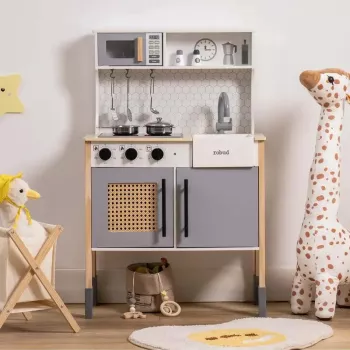
Classic Gray Wooden Play Kitchen Set for Kids – Pretend Play Kitchen with Realistic Features
Extra add-on for a cohesive play space
If you’re styling a shared living area or a “quiet luxury” playroom vibe, a simple color guide can help coordinate bins, baskets, and wall accents around the kitchen’s gray tone: Colorful Quiet Luxury Palettes Checklist | Digital Download Guide for Elegant Color Schemes, Minimalist Style & Timeless Design Inspiration
FAQ
What age is a wooden play kitchen best for?
Many families find wooden play kitchens work well from about ages 2–6, with interest often lasting beyond that through more elaborate role-play. The best fit depends on the child’s height and reach, the size of the accessories used, and close supervision for younger toddlers who may still mouth small items.
How can a play kitchen support learning and development?
Play kitchens build fine-motor skills through turning knobs and opening doors, language skills through role-play dialogue, and social skills through sharing and turn-taking. They also encourage sequencing (prep-to-clean routines) and early math concepts like counting pieces and sorting “foods” into categories.
What should be checked during assembly and daily use?
During assembly and over time, re-check that hardware stays tight, the unit doesn’t wobble, and doors/knobs move smoothly without sticking. Keep an eye out for pinch points around doors and hinges, and match accessories to your child’s age to minimize choking risks.














Leave a comment