Countertop Dishwasher with Tank: Cycles, Setup & Tips
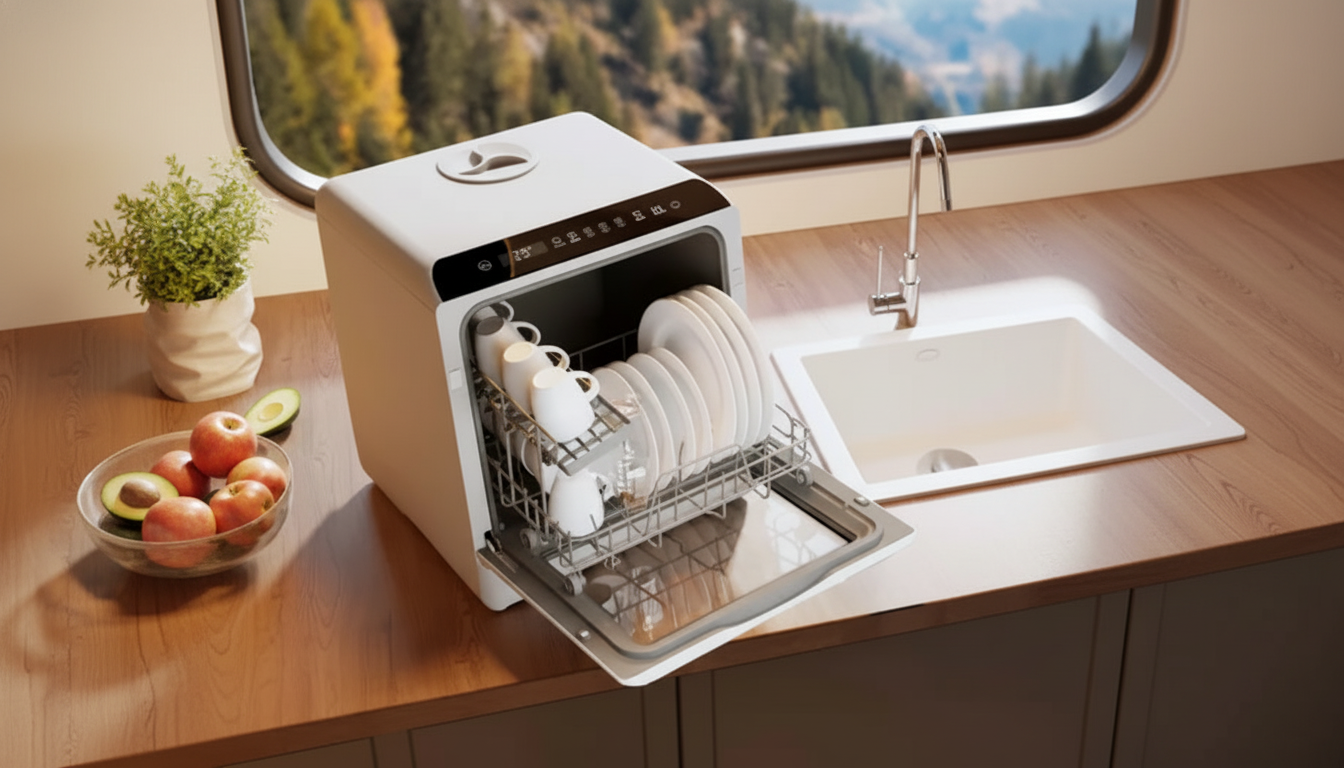
Compact Countertop Dishwasher with Built-in Water Tank & Multiple Washing Programs
A countertop dishwasher with a built-in water tank is made for situations where a full-size machine (or a permanent plumbing hookup) doesn’t make sense. It sits on a counter, uses an enclosed wash chamber to keep splashes contained, and offers multiple wash programs so you can choose anything from a quick refresh to a deeper clean for dried-on messes. For apartments, RVs, dorms, office kitchens, and small households, it’s a practical way to keep up with daily dishes without turning the sink into a permanent work zone.
Who This Dishwasher Fits Best
- Small kitchens that don’t have room for a full-size dishwasher
- Renters who want a non-permanent setup with minimal installation
- Homes without an easy under-sink connection, where a built-in tank can be the simplest option
- RV living, tiny homes, and cabins where water access may be limited or intermittent
- Busy households that want a faster, contained alternative to handwashing a few place settings
If the goal is to reduce daily dish time while staying flexible about where the appliance goes, a tank-equipped countertop unit checks a lot of boxes.
Key Features That Matter Day to Day
- Built-in water tank for flexible placement when a direct faucet hookup isn’t ideal
- Multiple wash programs to match soil level (light, normal, intensive, quick, and other common cycles)
- Countertop footprint that can live on a sturdy surface near an outlet
- Enclosed washing chamber that helps keep splashes contained and counters drier than handwashing
- Simple controls for choosing cycles and starting a load without a complex install
Small details make a noticeable difference over time—especially cycle variety. Using the right program (instead of defaulting to the fastest one) tends to improve results and reduce rewashing.
Wash Programs: What to Use and When
Most compact countertop models include a familiar set of cycles. Here’s how to decide quickly:
- Quick/Speed: best for lightly used cups, plates, and fresh food residue
- Normal/Daily: a solid default for mixed loads from everyday meals
- Intensive/Heavy: for dried-on starches, baked-on sauces, and oily items (when size allows)
- Rinse/Hold: useful if dishes will sit before a full load; helps reduce odor and stuck-on debris
- Glass/Delicate (if available): gentler spray/temperature for glassware and lighter items
Program picker for common kitchen situations
| Situation | Recommended program | Helpful tip |
|---|---|---|
| Breakfast plates and mugs | Quick/Speed | Scrape crumbs; skip heavy pre-rinse to save water |
| Mixed lunch/dinner dishes | Normal/Daily | Load larger items at the back/sides to avoid blocking spray |
| Dried-on pasta or sauce | Intensive/Heavy | Use detergent with enzymes; consider a brief soak only if needed |
| Not enough dishes for a full load yet | Rinse/Hold | Run a rinse to reduce odor until the next load |
| Wine glasses or delicate cups | Glass/Delicate | Use less detergent and avoid overcrowding |
Setup Options: Tank Fill vs. Faucet Connection
A built-in tank gives you the freedom to run the dishwasher even when a faucet adapter is inconvenient. Some units also support a faucet connection for easier daily operation.
- Tank mode: fill the reservoir and place the unit where it’s most convenient (near an outlet and with drainage access).
- Faucet connection (when supported): reduces manual filling and can be ideal for daily loads.
- Drainage: confirm a clear path to a sink drain or container, and ensure the drain hose isn’t kinked.
- Placement: use a level, stable counter; avoid edges and keep ventilation areas unobstructed.
- First-run check: run an empty cycle to confirm draining, sealing, and normal sound levels.
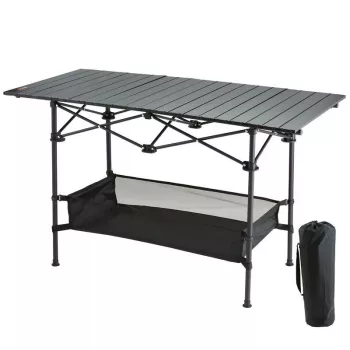
For extra flexibility in tight spaces, adding a dedicated surface can help. A small side station like the Portable Folding Camping Table can serve as a stable prep area for loading or drying, especially in RVs or compact kitchens where counter space is limited.
Loading Tips for Better Cleaning in a Small Chamber
- Scrape solids into the trash/compost to prevent filter buildup.
- Angle bowls and cups downward so water drains rather than pooling.
- Prevent spray-arm blocking by keeping tall items from interfering with rotation.
- Leave small gaps between plates so spray can reach both sides.
- Use dishwasher-safe items only; avoid wood, cast iron, and any finishes the manufacturer warns against.
Care, Cleaning, and Long-Term Reliability
If energy and water efficiency are priorities, it can be helpful to review general efficiency guidance from ENERGY STAR and water-use basics from the U.S. EPA WaterSense program.
What to Expect: Capacity, Performance, and Noise
Product Spotlight
If you want the flexibility of tank fill and the convenience of multiple cycles, consider the Compact Countertop Dishwasher with Built-in Water Tank & Multiple Washing Programs. It’s built to be a space-saving option for everyday dish loads while keeping setup straightforward for apartments, dorm rooms, and small households.
For compact living setups where every surface matters, pairing it with a movable workspace like the Portable Folding Camping Table can make loading and unloading feel far less cramped.
FAQ
Does a countertop dishwasher with a built-in water tank need to be connected to a faucet?
No. The built-in tank lets you fill the reservoir and run a cycle without a permanent faucet hookup, as long as you have power and proper drainage. Some units may also support faucet connection with the right adapter for added convenience.
What can go wrong if the dishwasher isn’t draining properly?
Common causes include a kinked drain hose, a clogged filter, a blocked sink drain, or a drain container that’s too full. Stop use and check the hose path and filter first, then confirm the drain destination is clear before running another cycle.
Which wash program should be used for dried-on food?
Use an Intensive/Heavy cycle for dried-on residue. Scrape off solids first, use the correct detergent amount, and avoid overcrowding so the spray can reach every surface.














Leave a comment