Mini Wooden Tool Bench for Kids: Build, Fix & Learn
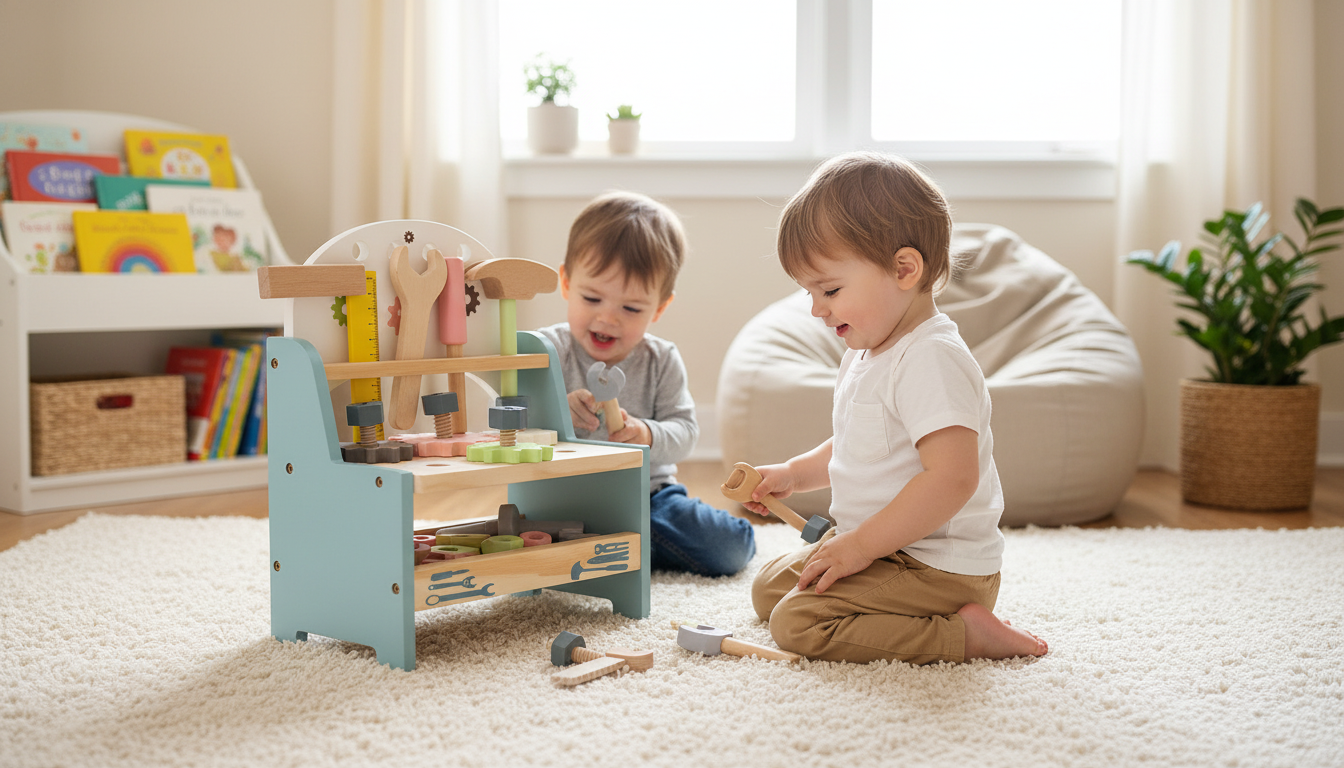
Mini Wooden Tool Bench Set for Kids: Hands-On Building Play That Teaches Real Skills
A wooden tool bench invites kids to build, fix, and create in a way that feels like real-world work—without screens or complicated setup. This mini bench set supports pretend construction play while strengthening fine-motor control, early problem-solving, and confidence through repeatable, open-ended activities.
What Makes a Wooden Tool Bench So Engaging
A good tool bench doesn’t “tell” kids what to make—it gives them a sturdy place to experiment. That freedom is a big reason children return to it day after day.
- Turns everyday “grown-up” tasks into safe, imaginative play: tightening, turning, matching, and assembling.
- Encourages long play sessions because the goal changes—build a car today, a bridge tomorrow, then “repair” it.
- Invites cooperative play: one child holds pieces in place while another “fastens,” mirroring real teamwork.
- Offers a satisfying cause-and-effect loop: align parts → connect → test → rebuild.
That loop is especially powerful for kids who love to see immediate results. They can feel the difference between “loose” and “snug,” notice when a structure wobbles, and try again without the pressure of getting it perfect the first time.
Skills Kids Practice While They Play
Even when it’s pretend play, the actions are real. Rotating, stabilizing, lining up holes, and choosing parts all build foundational skills that show up in school and everyday life.
- Fine-motor strength: grasping tools, turning pieces, aligning holes, and stabilizing parts.
- Hand–eye coordination: fitting connectors, positioning parts, and controlling tool movement.
- Early math thinking: counting pieces, comparing lengths, sorting by shape, and recognizing patterns.
- Problem-solving: figuring out why something wobbles, what piece is missing, or how to make a structure stand.
- Language development: naming tools, describing steps (“tighten,” “loosen,” “turn”), and storytelling through pretend roles.
Common Play Actions and What They Help Develop
| Play action | Skill focus | Simple parent prompt |
|---|---|---|
| Turning nuts/bolts | Grip strength, bilateral coordination | “Can you tighten it until it feels snug?” |
| Sorting parts by type | Classification, attention control | “Let’s make a pile of long pieces and short pieces.” |
| Building a tall structure | Balance, planning ahead | “What could make the base steadier?” |
| Pretend repairs | Sequencing, confidence | “First we check it, then we fix it—what’s step one?” |
For a deeper look at why play matters for development and resilience, the American Academy of Pediatrics explains the power of play in everyday family life. If you’re curious about age-typical skills, the CDC developmental milestones are also a helpful reference point.
How to Set Up the Tool Bench for Easy, Independent Play
A simple setup makes a big difference—especially for kids who want to do it “all by myself.” The goal is to make parts easy to see, easy to reach, and easy to put away.
- Choose a stable, open floor space with enough room to spread pieces without crowding.
- Start with a small “starter set” of parts available, then rotate extras to keep interest high.
- Use a shallow tray or divided container so pieces are easy to see and put back.
- Create a quick routine: build time → display or test → tidy-up (kids can “inventory” parts as a game).
- Keep play goals simple at first: match shapes, connect two pieces, then gradually add multi-step builds.
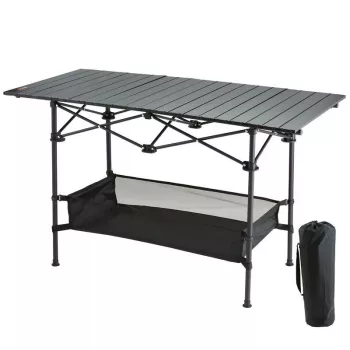
If you’d like an extra surface for building sessions (especially during family craft time), a lightweight side table can help keep pieces contained. A compact option like the Portable Folding Camping Table can work as an easy-to-store “project station” for supervised play and quick cleanup.
Safe, Durable, and Kid-Friendly: What to Look For
Kids tend to repeat the same actions over and over—tighten, loosen, pull apart, rebuild—so durability and safe design matter as much as fun.
- Smooth edges and solid construction that holds up to repeated tightening, loosening, and rebuilding.
- Non-toxic finishes and materials suitable for children’s toys (check labeling and seller details).
- Chunky pieces that are easier for small hands to grasp and less likely to get lost.
- A stable bench base that doesn’t tip easily during turning and pressing motions.
- Easy-clean surfaces and simple storage so the set stays inviting day after day.
For general toy safety guidance and best practices at home, the U.S. Consumer Product Safety Commission (CPSC) toy safety resources are a reliable place to start.
Play Ideas That Keep It Fresh (No Extra Toys Needed)
Gift Guide Notes: Ages, Occasions, and Learning Style
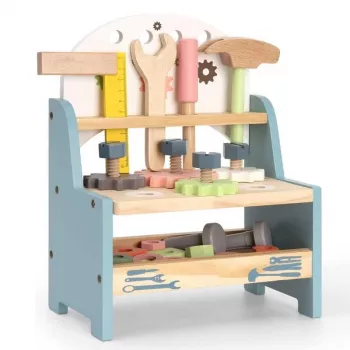
Mini Wooden Tool Bench Set for Kids – Educational Pretend Play Construction Toy
If you’re looking for a compact bench that supports hands-on building without complicated setup, the Mini Wooden Tool Bench Set for Kids – Educational Pretend Play Construction Toy is designed for repeat play: assemble, take apart, reassemble, and experiment with different layouts. It’s a practical gifting option when the goal is screen-free play that still builds everyday skills, and the product page lists current price and availability.
FAQ
What age is a wooden tool bench best for?
Check the product’s listed age guidance, since part size and complexity vary by set. In general, it’s a good fit once a child can grasp and manipulate pieces with control, with close supervision for younger children.
How can a tool bench set be educational if it’s pretend play?
Pretend play still uses real skills: turning and aligning build fine-motor control, multi-step builds support sequencing, and trial-and-error strengthens problem-solving. Kids also practice early math through counting and sorting, plus language as they name tools and describe what they’re doing.
How do you keep the pieces from getting lost?
Use a simple routine: keep parts in a shallow tray or divided container, limit how many pieces are out at once, and end with a quick “inventory game” before putting everything back. Rotating a few pieces in and out can also keep play interesting without increasing mess.














Leave a comment