High-Yield Commercial Electric Ice Crusher for Fast Service
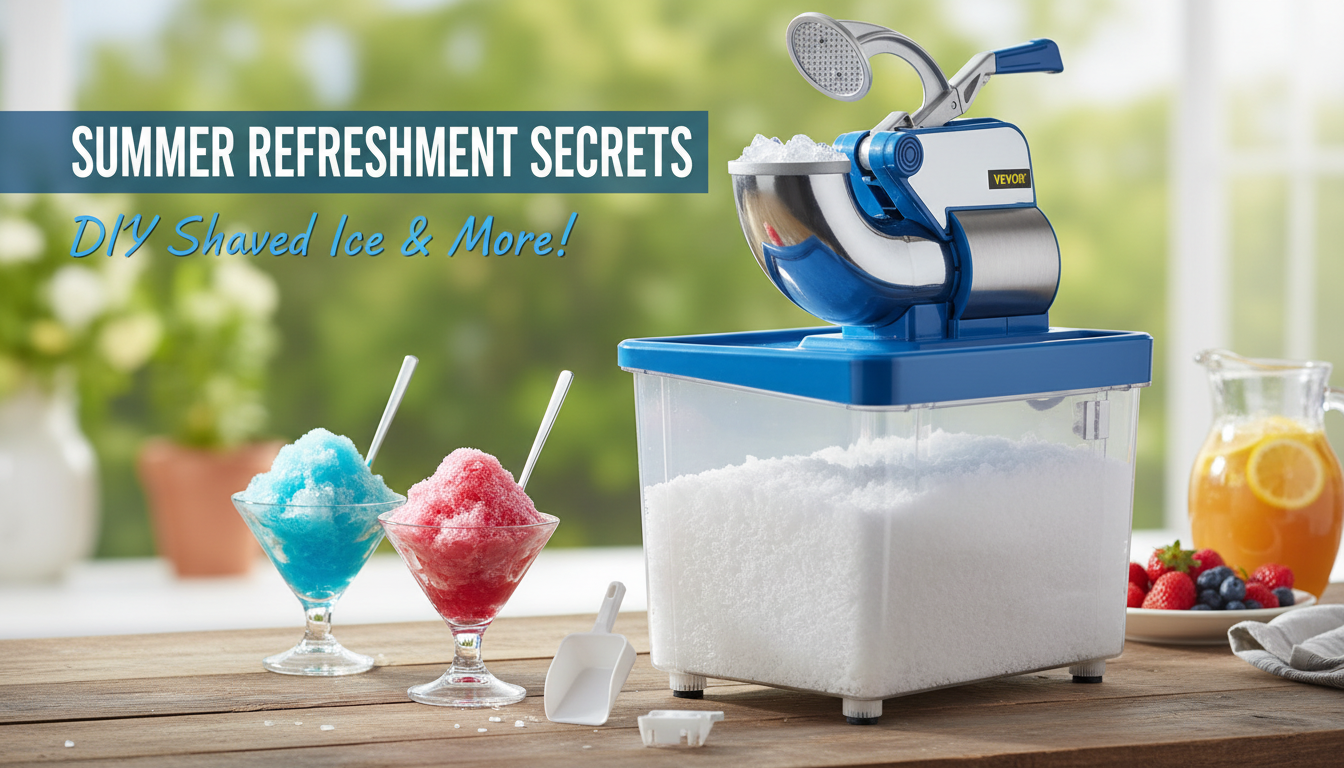
Commercial Electric Ice Crusher Machine with High Ice Yield: Fast, Consistent Ice for Busy Service
High-volume drink service depends on steady, predictable ice output. A commercial electric ice crusher with a high ice yield helps bars, cafés, food trucks, and event setups keep up with rush periods by producing uniform crushed ice quickly while reducing bottlenecks at the prep station. When crushed ice is a core part of the menu—think mojitos, juleps, and tiki-style builds—speed matters, but consistency matters even more. Uniform texture chills quickly, supports repeatable dilution, and makes every glass look like it came from the same well-run station.
Where High-Yield Crushed Ice Makes the Biggest Difference
- Cocktail programs: reliable crushed ice for mojitos, juleps, tiki drinks, and blended-style presentations.
- Bubble tea, iced coffee, and lemonade: rapid turnaround during peak hours when the line doesn’t slow down.
- Seafood display and cold holding: crushed ice beds for short-term presentation (follow local food-code requirements).
- Concessions and events: steady output when demand is unpredictable and restocking runs are costly.
- Back-of-house efficiency: fewer trips to buy bagged ice and less time manually crushing.
In practice, high-yield crushing protects the service flow. Instead of bartenders stepping away to fight a manual crusher or break ice by hand, the station keeps moving—especially during the first 60–90 minutes of a rush when ticket times can spike.
What “High Ice Yield” Looks Like in Daily Operations
- Throughput focus: high yield means more usable crushed ice per minute with less downtime between batches.
- Consistency: uniform ice size improves drink dilution control and presentation.
- Workflow impact: a faster crusher reduces station congestion and keeps bartenders on service, not prep.
- Waste reduction: efficient crushing and stable feed help minimize melt and spillage.
- Peak planning: match output to service volume, number of stations, and menu mix (crushed-ice-heavy vs. standard cubes).
A good way to judge “yield” is to think in service blocks. If your busiest 30 minutes requires multiple pitchers of crushed ice, you’ll want a crusher that can keep pace without repeated pauses, overheating, or frequent reloading interruptions.
Key Features to Compare Before Buying
- Motor power and duty cycle: built for continuous or frequent use without overheating.
- Blade or crushing mechanism: designed for consistent results and long wear life.
- Feed opening and hopper design: supports quick loading and safer operation.
- Ice texture options: fine vs. coarse crushed ice depending on drinks and display needs.
- Noise and vibration control: important for front-of-house bars and compact kiosks.
- Footprint and placement: counter space, clearance for loading, and proximity to drainage/cleaning area.
- Electrical requirements: verify voltage/plug type and plan for a dedicated outlet if needed.
- Safety features: stable base, guarded opening, and simple on/off controls to reduce operator risk.
Foodservice operations also benefit from choosing equipment that aligns with recognized sanitation expectations and durable construction norms. For broader guidance, reference the U.S. Food & Drug Administration Food Code and the role of equipment standards like NSF certification in supporting cleanable design and materials.
Cleaning, Sanitizing, and Maintenance Basics
For a simple refresher on safe cleaning fundamentals, the CDC’s food safety resources provide practical context on cleaning and sanitizing basics. In daily operations, the most common performance killers are scale buildup and inconsistent cleaning between shifts—both preventable with a short checklist and assigned responsibility.
Performance and Fit Snapshot
| What to check | Why it matters | Notes to confirm before purchase |
|---|---|---|
| Output rate (high yield) | Keeps up with rush periods and reduces prep delays | Target your busiest hour demand and add buffer |
| Crushed ice consistency | Improves drink quality and repeatability | Fine vs. coarse options; uniformity across batches |
| Duty cycle / heat management | Supports frequent use without shutdowns | Look for commercial-grade continuous-use readiness |
| Ease of cleaning | Prevents odor, scale, and hygiene issues | Tool-free access and washable parts are ideal |
| Footprint and stability | Safer operation and better station fit | Check counter depth, rubber feet, vibration control |
| Power requirements | Avoids electrical issues during service | Confirm outlet type, amperage, and cord length |
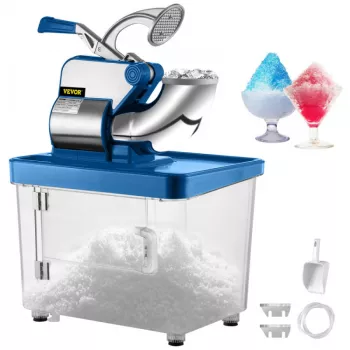
Product Option: Commercial Electric Ice Crusher Machine with High Ice Yield
If the goal is fast, repeatable crushed ice output for drinks and cold presentation, Commercial Electric Ice Crusher Machine with High Ice Yield is built for busy settings where speed and uniformity matter. Electric operation supports consistent results compared with manual crushing, helping the station stay ready for the next ticket rather than catching up after the rush hits.
Helpful Add-On for Events and Mobile Service
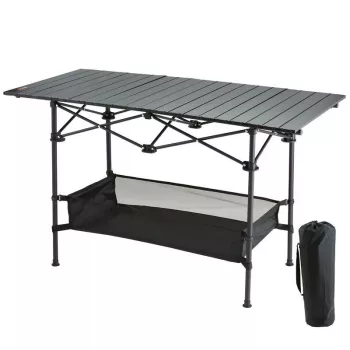
For concessions, pop-ups, and catering where counter space changes from job to job, a stable work surface can make the crusher station more efficient. Consider pairing your setup with a dedicated prep surface like the Portable Folding Camping Table to stage clean bins, scoops, and drink-build tools in one place—especially when the venue’s tables are limited or uneven.
Setup Tips for Faster Service
FAQ
Can a commercial ice crusher handle continuous service during a rush?
Yes, if it’s designed with a commercial-grade motor and appropriate duty cycle/heat management. Match the crusher’s output to your peak-hour demand, and follow any manufacturer guidance on brief pauses if required for long continuous runs.
What ice texture is best for cocktails versus cold display?
Fine crushed ice is ideal for fast chilling and many crushed-ice cocktails, while a coarser crush can melt more slowly for certain presentations and some cold-holding uses. Uniform texture helps keep results consistent from drink to drink and reduces waste from over-melting.
How often should an ice crusher be cleaned and descaled?
Clean food-contact areas daily and sanitize according to local code and the manufacturer’s instructions. Descale on a schedule based on water hardness and usage volume—more often in hard-water locations or when output starts to drop.














Leave a comment