Deep Conversation Starters (Printable) for Dates, Friends

Meaningful Conversation Starter Guide: Deep Questions for Dating, Friendship, and Networking (Printable)
Small talk has its place, but real connection usually starts when a question invites a story—something with texture, values, and a little curiosity. This printable conversation starter guide is built for everyday moments: first dates, new friendships, professional meetups, and reconnecting with people you already know. You’ll find deep questions that still feel natural, plus simple follow-ups that keep the tone respectful and easy.
What makes a conversation feel meaningful (without getting too intense)
Meaningful conversations don’t require heavy topics or perfectly timed vulnerability. They’re usually the result of pacing, consent cues, and questions that let someone choose their level of depth.
- Balance warmth and depth: start light, then move toward values, experiences, and hopes once the vibe feels comfortable.
- Use “shareable” questions: ask things that allow a short answer or a longer story, depending on comfort level.
- Aim for mutuality: alternate asking and answering so it feels like a dialogue, not an interview.
- Watch for consent cues: enthusiasm, eye contact, and longer answers signal openness; short answers signal it’s time to lighten up.
- Prefer curiosity over evaluation: questions should invite, not test.
One underrated skill is listening well enough to reflect back what you heard. If you want to sharpen that, this overview from Greater Good Magazine on active listening is a helpful, practical read.
How to use the printable guide in real situations
The quickest way to make deeper questions feel normal is to keep the structure simple and the pacing gentle.
- Pick a setting: dating, friendship, networking, or reconnecting; choose 5–10 questions to keep it simple.
- Open with a soft entry: “I’ve been trying to ask better questions—mind if I ask you something fun?”
- Use a 3-step flow: opener question → follow-up → reflection (briefly share what stood out).
- Keep pacing gentle: one deeper question, then a lighter one to reset.
- End well: summarize a highlight and name a next step (“I’d love to continue this another time—want to grab coffee next week?”).
Quick conversation flow examples
| Moment | Start with | Follow with | If it gets awkward |
|---|---|---|---|
| First date | “What’s something you’ve been looking forward to lately?” | “What makes it meaningful to you?” | Shift to: “What’s a comfort show or go-to meal?” |
| New friend | “What’s a hobby you wish more people understood?” | “How did you get into it?” | Offer: “Want to trade recommendations?” |
| Networking event | “What kind of problems do you like solving?” | “What project has taught you the most?” | Reset with: “How did you end up in this field?” |
| Reconnecting | “What’s changed for you in the last year?” | “What’s been surprisingly hard or surprisingly good?” | Ground with: “What have you been enjoying day-to-day?” |
Deep questions for dating: values, growth, and day-to-day compatibility
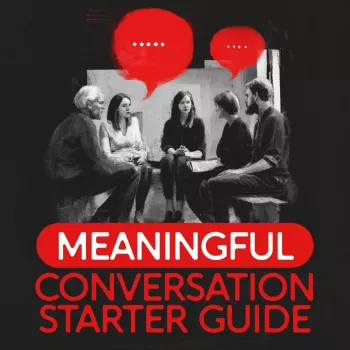
If you’d like a structured set you can print or save to your phone, the Meaningful Conversation Starter Guide (Printable) groups questions by situation and includes natural follow-ups so you’re not scrambling for what to say next.
Questions that build friendships: shared joy, trust, and real support
For a relaxed setting—game night, a backyard hang, or a casual get-together—having a simple surface to set snacks and cards can keep things flowing. A Portable Folding Camping Table works well for impromptu gatherings where you want everyone to stay in the circle.
Networking questions that feel human (and still professional)
For a smart, research-backed approach to building relationships without being pushy, Harvard Business Review’s networking guidance is a strong starting point.
Making deep questions feel safe: boundaries, tone, and timing
Healthy relationships—romantic, friendly, or professional—are built on respect and communication over time. The American Psychological Association’s resources on relationships offer grounded guidance on what supports lasting connection.
Printable guide overview: what’s inside and how people use it
The Meaningful Conversation Starter Guide (Printable) is a curated set of conversation starters grouped by dating, friendship, and networking—designed to invite stories, not one-word answers. It also includes follow-up lines that keep the exchange moving naturally, whether you’re on a first date or meeting a potential collaborator.
Common use cases and simple setups
| Use case | Setup | Tip |
|---|---|---|
| Date night | Pick 8 questions and alternate asking | Keep one playful question ready for a reset |
| New friend hangout | Choose 5 questions + 5 follow-ups | Share your answer first if they seem hesitant |
| Professional meetup | Select 6 work-friendly questions | End with an easy next step to stay in touch |
| Group gathering | Put questions in a bowl and take turns | Let anyone skip without explanation |
Where to start: a quick starter set for the next conversation
If you’re setting a calmer mood for a longer talk—especially in colder months—a warm, comfortable environment can make pauses feel natural instead of awkward. A 60-Inch Wall-Mounted Electric Fireplace Heater with App Control & Remote can help create that cozy, low-pressure atmosphere for conversations at home.
FAQ
Are these questions appropriate for a first date?
Yes—when you start light and let the conversation earn its way into deeper topics. Choose a small set (5–8) and use opt-out language so it stays playful, respectful, and pressure-free.
How can deep questions feel natural instead of forced?
Use a simple flow: one question, one follow-up, then a brief share of your own so it feels mutual. Mixing in lighter questions and matching the depth to the setting also keeps the tone natural.
Can this guide be used for networking without getting too personal?
Yes—stick to curiosity-based prompts about work, learning, strengths, and collaboration. Safe follow-ups include “What did that teach you?” or “What kind of projects are you hoping to do next?”















Leave a comment