8-Panel Dog Playpen With Door for Indoor & Yard Use
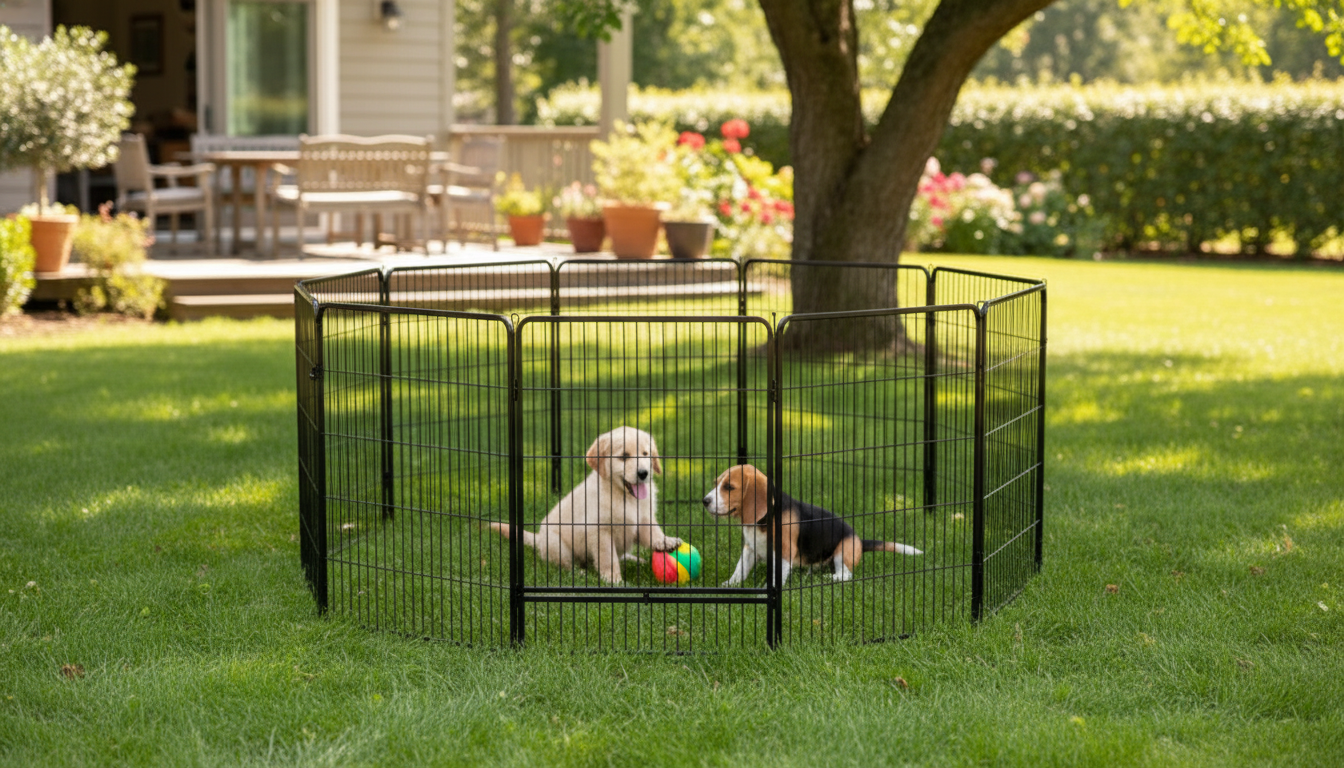
8-Panel Dog Playpen With Door for Indoor Rooms, Yards, and Outdoor Setups
A flexible playpen can create a safe zone for puppies, small dogs, and pets that need boundaries without feeling confined. This 8-panel design is built to shape into common layouts indoors or outside, with a door for easy in-and-out access during training, playtime, and daily routines. When you need a defined area that’s more open than a crate but more reliable than “just watching closely,” a panel pen is a practical middle ground.
What This 8-Panel Playpen Does Best
- Creates a defined space for play, rest, or supervised separation from guests, kids, or other pets.
- Works for quick setups: living rooms, kitchens, patios, camping spots, or a corner of the yard.
- Door panel supports easier handling than lifting a pet over the top.
- Panel format allows multiple shapes to match the available space.
That adaptability is the real advantage: you can keep your pet close to the action without giving them full access to the whole home or yard. It’s especially helpful during transitional moments—doorbells, dinner prep, or visits—when “free roaming” can turn chaotic fast.
Key Features to Look For in Daily Use
- Panel count and footprint: 8 panels provide flexibility for both compact and roomy layouts.
- Door access: reduces escape attempts compared with opening the entire enclosure.
- Stability: consider surface type (smooth flooring vs. grass) and whether additional anchoring is needed.
- Portability: panels are easier to move and store than rigid crates when space is limited.
- Pet fit: best results come from matching pen height and spacing to the pet’s size and jumping ability.
A door seems like a small detail, but it can make routines smoother: leash on/leash off, quick potty breaks, calm greetings, and rewarding “wait” behavior before exiting. For many pets, predictable door habits also reduce bouncing, pawing, and frustration at the boundary.
Sizing and Setup Planning
- Measure the intended area first, then choose a shape (rectangle for efficiency, octagon for open play).
- For puppies: include room for a bed and a pad with separation between sleep and potty zones.
- For outdoor use: place on level ground and away from digging-prone edges; add shade and water.
- For indoor use: protect floors with a mat if the pet is in training or prone to scratching.
Common 8-Panel Layout Ideas
| Layout | Best for | Notes |
|---|---|---|
| Rectangle (wide) | Rooms, hallways, patios | Maximizes usable floor space; fits along walls. |
| Square (compact) | Small apartments, corners | Easy to place; leaves more open room around it. |
| Octagon (open play) | Active pups indoors/outdoors | More central play feel; may need extra anchoring outdoors. |
| Divider line (barrier style) | Blocking off areas | Turns panels into a temporary pet fence across an opening. |
Indoor Use: Safer Boundaries Without a Full Crate
- Use during cooking, deliveries, or busy moments when supervision is limited.
- Introduce gradually: treats and a favorite bed help create positive association.
- Keep the door routine consistent: open only when calm to reduce door-rushing.
- Avoid placing near climbable furniture that could help a pet hop out.
For indoor training, the goal is “calm containment,” not isolation. Set the pen up where your pet can still see you—near the kitchen or living room—then reinforce quiet behavior with short, frequent rewards. If you’re also working on crate comfort, the ASPCA’s guidance on positive training routines can help you keep progress steady without escalating stress: ASPCA — Crate training tips.
Outdoor and Yard Use: Quick Containment for Supervised Time
- Best used as a supervised play zone rather than a set-and-forget enclosure.
- Provide shade, water, and a dry surface; avoid hot pavement and midday heat.
- Check for gaps under panels on uneven ground; reposition to prevent crawling under.
- Bring inside during storms or high winds to prevent tipping or damage.
Heat management matters even during short sessions. On warm days, prioritize shade and airflow, and keep water within easy reach. For practical hot-weather safety reminders (including pavement and overheating risks), reference the AVMA’s pet safety guidance: American Veterinary Medical Association (AVMA) — Hot weather safety for pets.
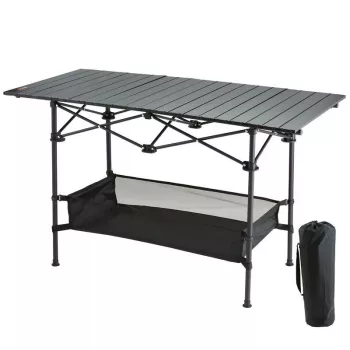
If you’re setting up outdoors for a longer supervised hangout—like a backyard visit or campsite—keeping supplies organized makes the pen more useful. A small surface for treats, a water bowl, and training gear can reduce back-and-forth trips; the Portable Folding Camping Table is a simple add-on for outdoor routines.
Training Routines That Work Well With a Playpen
Care, Cleaning, and Safety Checks
Product Snapshot: 8 Panel Dog Playpen Indoor Pet Fence with Doors for Yard and Outdoor Use
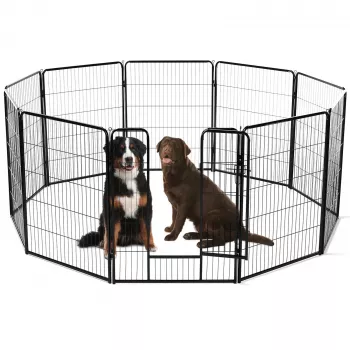
For a ready-to-use option, see the 8 Panel Dog Playpen Indoor Pet Fence with Doors for Yard and Outdoor Use. It’s built around the core advantages that matter day to day: adaptable layouts, straightforward entry through a dedicated door, and quick repositioning when your schedule changes.
FAQ
Can a playpen be used instead of a crate?
A playpen can be a roomy alternative for supervised time, rest, and training routines, especially when you want more space to move around. Crates are still useful for travel, vet visits, and situations where a fully enclosed, den-like space is needed.
How do you keep a dog from pushing or tipping a playpen?
Indoors, place the pen on a non-slip mat, use a stable shape with a wider base, and position it against a wall when appropriate. Outdoors, use ground anchors and avoid uneven surfaces; most importantly, match the pen’s sturdiness and height to your dog’s size and strength.
Is an outdoor playpen safe to leave unattended in the yard?
Temporary outdoor playpens are best used with supervision due to weather changes, tipping risks, and escape attempts. If you use one outside, provide shade and water and treat it as a short, monitored play zone rather than a replacement for secure fencing.










Leave a comment