AI Calm Routine Builder: Morning, Midday & Night Habits
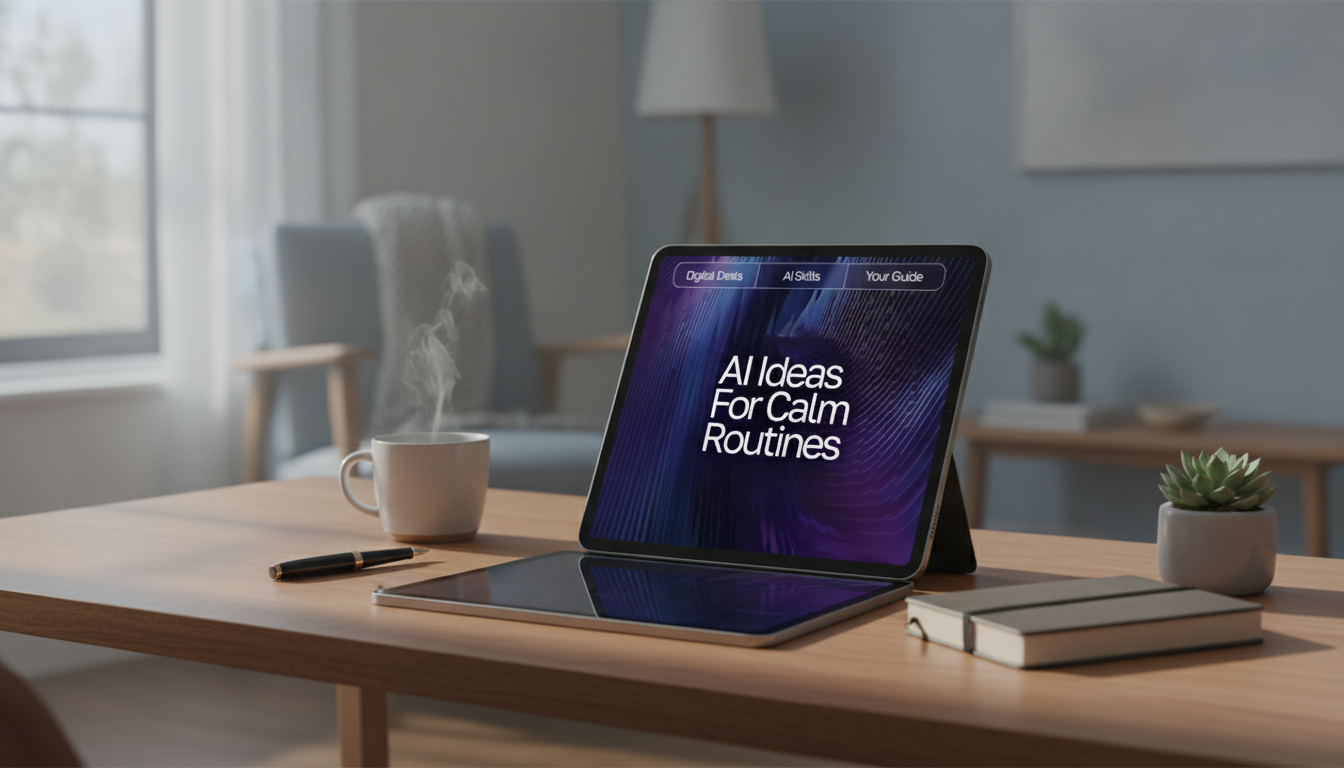
AI Ideas for Calm Routines: A Digital Guide to Mindful Living and Relaxation Habits
Calm routines work best when they feel realistic, repeatable, and tailored to daily constraints like time, energy, and environment. This guide uses AI-style suggestions to help shape gentle morning, midday, and evening habits—plus simple ways to adjust routines for stress spikes, busy weeks, and changing seasons.
What “calm” looks like in daily life
“Calm” is easier to build when it’s defined in practical, observable ways. Look for signals like steadier breathing, fewer reactive decisions, smoother transitions between tasks, and more restorative rest. These markers are especially useful because they show up even when life stays busy.
Instead of relying on motivation, reduce friction. Remove steps, simplify choices, and design routines that still work on low-energy days. Cues and anchors help: attach one calming habit to an existing action (the kettle boils, the laptop closes, the shower ends). Consistency beats intensity—2–5 minute practices repeated often can outperform occasional long sessions.
AI-style calm routine builder: inputs that change the suggestions
Think of your routine like a flexible template. When a few inputs change—time, energy, stress trigger, environment—the best “next step” changes too. Keeping the inputs small prevents overcomplication, while still making the routine feel personal.
| Input | AI-style suggestion | Why it helps |
|---|---|---|
| 3 minutes + racing thoughts | One-minute brain dump + two minutes slow breathing (4–6 pace) | Externalizes thoughts and downshifts arousal |
| 10 minutes + muscle tension | Neck/shoulder release + gentle forward fold + warm drink | Signals safety through body relaxation cues |
| 30 minutes + digital overload | Phone off + tidy one surface + shower + dim lights | Reduces stimulation and creates closure to the day |
| Noisy environment | Noise mask + weighted blanket or firm pillow hug + longer exhale | Adds sensory stability when sound is unpredictable |
| Shared space | Headphones + micro-walk + scent cue (hand lotion/tea) | Creates personal boundaries without needing solitude |
For evidence-based background on mindfulness and stress reduction, see the American Psychological Association overview of mindfulness and the NCCIH (NIH) summary on effectiveness and safety.
Morning calm routines that don’t slow the day down
A calmer morning doesn’t need a perfect sunrise and a 30-minute ritual. It needs one reliable “soft start” that keeps your nervous system from sprinting the moment your eyes open.
The soft start (about 5 minutes)
Drink water, open the curtains (or step into brighter light), take 10 slow breaths, and set one behavioral intention like “take one pause before replying.” Behavioral intentions are easier to follow than mood goals.
Gentle mobility (6–8 minutes)
Rotate wrists, roll shoulders, open hips, and loosen calves—keeping intensity low. The goal is to reduce stiffness and signal safety, not to “push through.”
Caffeine with a buffer
Pair the first sip with a calming cue: feet on the floor, shoulders down, and one long exhale. This prevents an immediate jump into mental acceleration.
If mornings are chaotic
Choose one anchor habit and repeat it daily: the same tea, the same two-minute stretch, or the same calming song. The anchor matters more than variety.
Midday resets for focus, mood, and nervous-system balance
Midday calm is about transitions. When you move from task to task without a reset, stress can build quietly—then spill over as irritability or scattered attention.
The transition ritual (2 minutes)
Close tabs, stand up, look far away, inhale through your nose, then exhale longer than you inhale. Restart the next task only after the exhale finishes.
A walking micro-break (5–12 minutes)
Keep it unstructured. Notice sound, temperature, and foot pressure. Grounding attention in sensory details reduces mental “spin” without requiring silence.
Tension audit (during screens and meetings)
Unclench your jaw, drop your tongue from the roof of your mouth, and soften your hands. These tiny releases reduce the body’s “bracing” pattern.
Food and hydration as boundaries
If anxiety spikes
Evening wind-down routines that support better sleep
Evening calm is less about doing more and more about removing stimulation. Sleep tends to improve when your environment gets simpler and your mind gets closure. For practical sleep hygiene fundamentals, the CDC sleep basics offers a helpful overview.
Dim and simplify
The digital sunset
Body-first calming (8–15 minutes)
Thought closure
If insomnia happens
A 7-day calm plan with small, repeatable habits
Tools that make calm routines easier to keep
- AI Ideas for Calm Routines digital guide can support planning, variety, and consistency with ready-to-use routine variations.
- A warm, steady ambiance can make wind-down rituals more appealing—especially reading, stretching, or breath practice near gentle background heat.
- Heat-based recovery can support relaxation habits when muscle tension is a frequent stress signal.
If evening comfort is part of your calm cue, consider a wall-mounted electric fireplace heater with app control to help standardize a “lights low, day is done” atmosphere. For a higher-intensity heat routine on weekends or after demanding days, an infrared sauna for one person can support a structured wind-down and recovery ritual.
Common obstacles and quick adjustments
FAQ
How long does a calm routine need to be to make a difference?
Even 2–5 minutes can make a noticeable difference when it’s done consistently. Keep a few versions ready (90 seconds, 10 minutes, 30 minutes) so the routine can scale to match the day.
What if relaxing routines make the mind feel busier?
That’s common at first—more awareness can feel noisy before it feels calming. Try body-first options like gentle movement, a warm shower, or progressive muscle relaxation before focusing on breath or meditation.
How can AI-style suggestions be personalized without becoming complicated?
Stick to a few stable inputs—time, energy, trigger, and environment—and choose from a small menu of routines. Keep one anchor habit constant while rotating supporting habits when you need variety.











Leave a comment