Electric Tankless for Whole House? Sizing & Limits
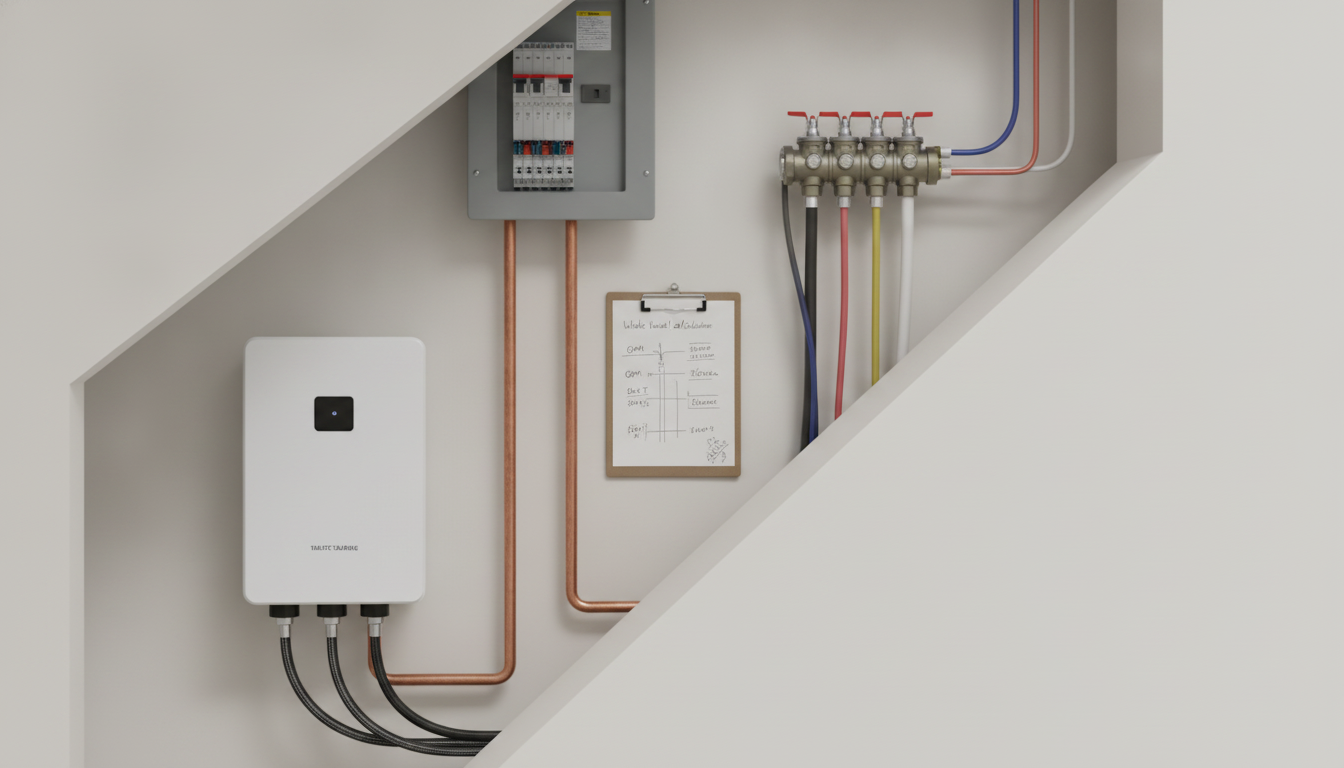
Will an electric tankless water heater work for a whole house?
Yes, an electric tankless water heater can work for a whole house, but only if it’s sized correctly for your home’s peak hot-water demand and your electrical service can support it. “Whole house” performance comes down to flow rate (gallons per minute), incoming water temperature, and how many fixtures might run at the same time.
When it works well
An electric tankless unit is a strong fit when you have moderate hot-water needs, a warmer incoming water supply, and the ability to dedicate the required amperage. In these conditions, a properly sized heater can deliver consistent hot water without the standby heat loss of a storage tank.
What can limit whole-house performance
The biggest constraint is power. Heating water instantly requires a lot of electricity, especially in colder climates where incoming water is much colder. If your home regularly runs multiple showers, a dishwasher, and a washing machine at once, a single undersized electric tankless unit may struggle to keep up—resulting in lukewarm water or reduced flow.
Electrical capacity is the other common obstacle. Many whole-house electric models need high-amperage circuits and sometimes a service panel upgrade. If your panel is already near its limit, installation costs can rise quickly.
Whole-house vs. point-of-use
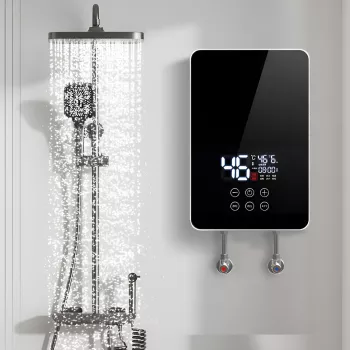
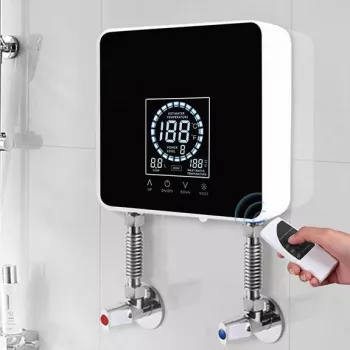
Smaller electric tankless heaters are often best used as point-of-use solutions—supplying one shower, a sink, or a specific area—rather than the entire home. They can be great for a guest bathroom, an addition, an RV/cabin setup, or to reduce the wait time for hot water at a far-away fixture. For a closer look at a compact option and typical use cases, see the main guide here: 220V 6000W mini instant water heater guide.
How to tell if it’ll cover your home
Add up the flow rates of fixtures you may run simultaneously (for example, two showers plus a sink). Then factor in your local groundwater temperature. If the heater’s rated flow at your temperature rise meets that number—and your electrical service can support the required breakers and wiring—then a whole-house electric tankless setup is realistic. Otherwise, consider multiple units (zoned/point-of-use) or a different water-heating approach.
FAQ
What size electric tankless water heater do I need?
Size it based on your maximum simultaneous hot-water flow and the temperature rise required in your area. Homes with multiple showers running at once usually need a higher-kW unit (or more than one unit) than a small household with one primary bathroom.













Leave a comment