Powerful Air Purifier for Rooms: Sizing, CADR, ACH Tips
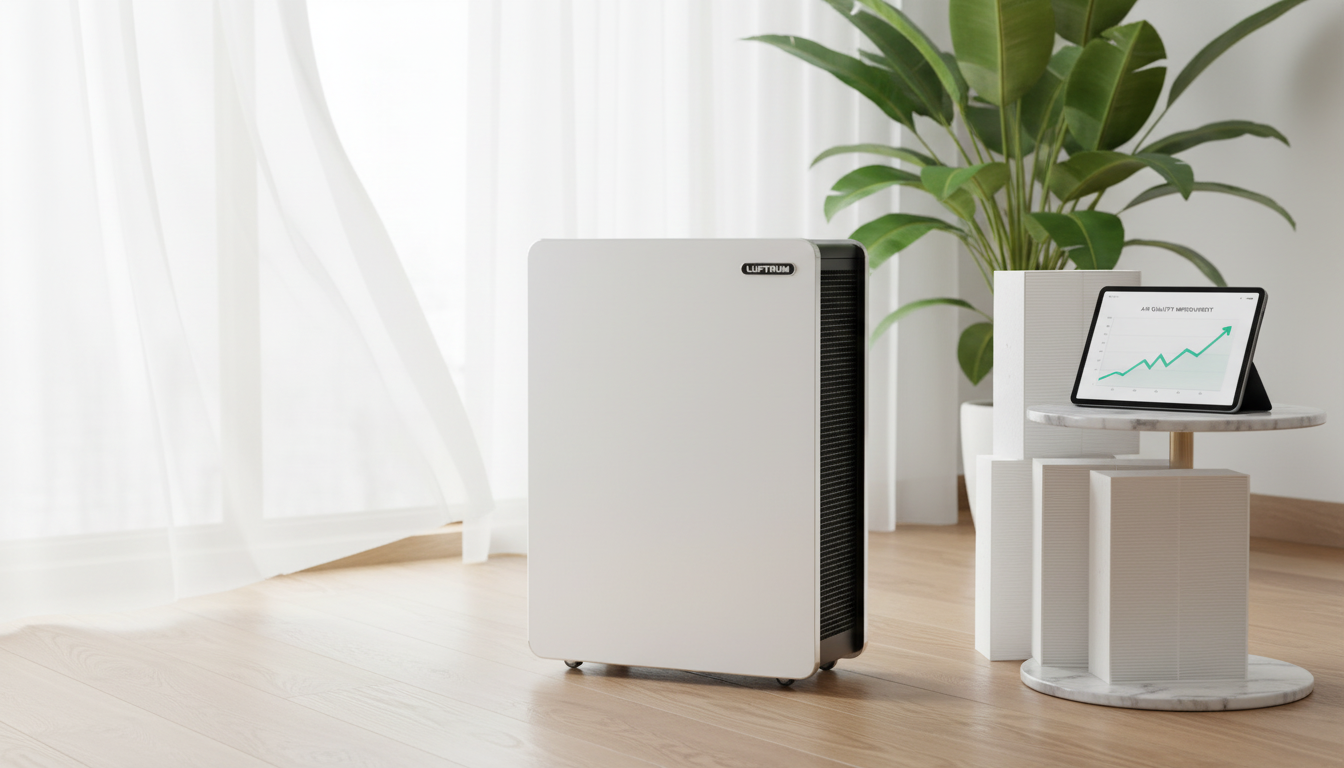
A powerful air purifier can make a noticeable difference in how a room feels—especially when dust, smoke, pet dander, or seasonal pollen builds up. The right unit combines strong airflow, high-efficiency filtration, and practical noise and maintenance levels so it can run consistently where people actually live and sleep.
What “powerful” means in a room air purifier
“Powerful” isn’t just a big fan or a max-speed setting. It’s a mix of measurable airflow, effective filtration, and the kind of day-to-day usability that keeps the purifier running when it matters.
- Airflow capacity: Look for strong clean-air delivery that can circulate and filter the room’s air multiple times per hour.
- Room coverage: Match the purifier to the room’s square footage and ceiling height, not just a broad “large room” claim.
- Filtration performance: A high-efficiency particle filter is the core for capturing fine dust, pollen, and dander; additional stages can address odors and gases.
- Real-world usability: Power matters only if the device is quiet enough and affordable enough to run for long stretches.
For deeper background on how air cleaners work in homes, the EPA’s guidance on air cleaners and air filters is a helpful reference point.
Sizing a purifier to the room (and why it matters)
Correct sizing is the difference between a purifier that “seems to run” and one that actually improves air quality. If a unit is undersized, you’ll often need higher fan speeds to keep up—leading to more noise and faster filter loading.
- Start with room volume: Square footage × ceiling height gives a better picture than floor area alone.
- Air changes per hour (ACH): Higher ACH improves results for allergies, smoke, and high-shedding pets; lower ACH may be acceptable for general dust control.
- Oversizing is often beneficial: A stronger unit can run at a lower fan speed to maintain airflow with less noise.
- Open layouts and frequent door opening: These effectively increase the “room size,” raising the airflow requirement.
Quick airflow targets by room size (rule-of-thumb planning)
| Room size | Suggested use case | Target ACH range | Practical tip |
|---|---|---|---|
| 150–300 sq ft | Bedrooms, offices | 4–6 ACH | Choose a unit that stays quiet on mid settings for overnight use. |
| 300–500 sq ft | Living rooms, studios | 4–6 ACH | If cooking odors linger, prioritize a strong carbon stage. |
| 500–900 sq ft | Large rooms, open plans | 5–8 ACH | Consider oversizing so normal operation can stay on a lower fan speed. |
| Smoke or heavy allergens (any size) | Wildfire smoke, severe allergies, pets | 6–10 ACH | Seal drafts where possible; replace filters on schedule for best results. |
If you like comparing units by standardized performance terms, AHAM’s overview of CADR (Clean Air Delivery Rate) can help clarify what manufacturer ratings generally represent.
Filtration stages that make the biggest difference
Strong airflow only helps if the air is actually being cleaned. A well-designed filtration stack focuses on particle capture first, then adds odor control and practical protection for the main filter.
- Particle filtration: High-efficiency media (commonly HEPA-class) is designed to capture fine particles like dust, pollen, and dander.
- Pre-filter: Helps trap larger debris (hair, lint) and can extend the life of the main filter when cleaned regularly.
- Activated carbon: Useful for odors (cooking, pets) and some gases/VOCs; thicker carbon beds generally perform better over time.
- Seal and fit: A powerful fan paired with leaky filter housing can reduce effective filtration—tight seals help ensure air passes through the filter media.
For many homes, the most noticeable improvement comes from dependable particle filtration plus enough airflow to keep a room’s air cycling. Odor control becomes the next priority when cooking smells, pet odors, or smoke events are common.
Noise, energy use, and where the purifier should run
A purifier is only “powerful” in practice if it can run without becoming a daily annoyance. Most households end up using lower to mid fan speeds for comfort, relying on higher speeds for quick cleanup.
- Noise tradeoffs: The loudest settings are typically for rapid cleanup; day-to-day operation should be comfortable at lower speeds.
- Sleep placement: Place several feet from the bed to reduce perceived noise while still circulating air.
- Energy considerations: Continuous operation is often more effective than occasional bursts; look for efficient motors and sensible auto modes.
- Avoid airflow blockage: Keep the intake and exhaust clear of curtains, sofas, and corners that can choke circulation.
In large rooms, placement matters more than many people expect. If the unit is tucked behind a chair or jammed into a tight corner, even a high-capacity purifier can struggle to move air through the full space.
Maintenance that preserves performance
A strong option for bigger spaces
If you’re shopping for large-room performance, see the Powerful Air Purifier for Large Rooms for an option built around higher airflow needs.
For overall comfort in bigger living areas, some households also pair air cleaning with temperature-focused upgrades such as the 60-Inch Wall-Mounted Electric Fireplace Heater with App Control & Remote, especially in rooms that see the most daily use.
Setting up a purifier for faster results
FAQ
How long should an air purifier run each day?
Continuous operation is commonly recommended for consistent results. If noise or energy is a concern, use a lower speed for maintenance and a higher speed after pollutant events like cooking, smoke, or heavy cleaning.
Do air purifiers help with odors as well as dust and pollen?
Particle filters target dust, pollen, and dander, while odors and some gases typically require activated carbon or other gas-phase media. Carbon capacity and timely replacement are key for noticeable odor control.
Where is the best place to put a purifier in a large room?
Keep the intake and exhaust unobstructed, avoid tight corners, and place the unit where airflow can circulate across the room. A few feet of clearance from walls and furniture usually improves performance.









Leave a comment