Solid Wood Multi-Level Cat Tree: Scratch Posts & Toys
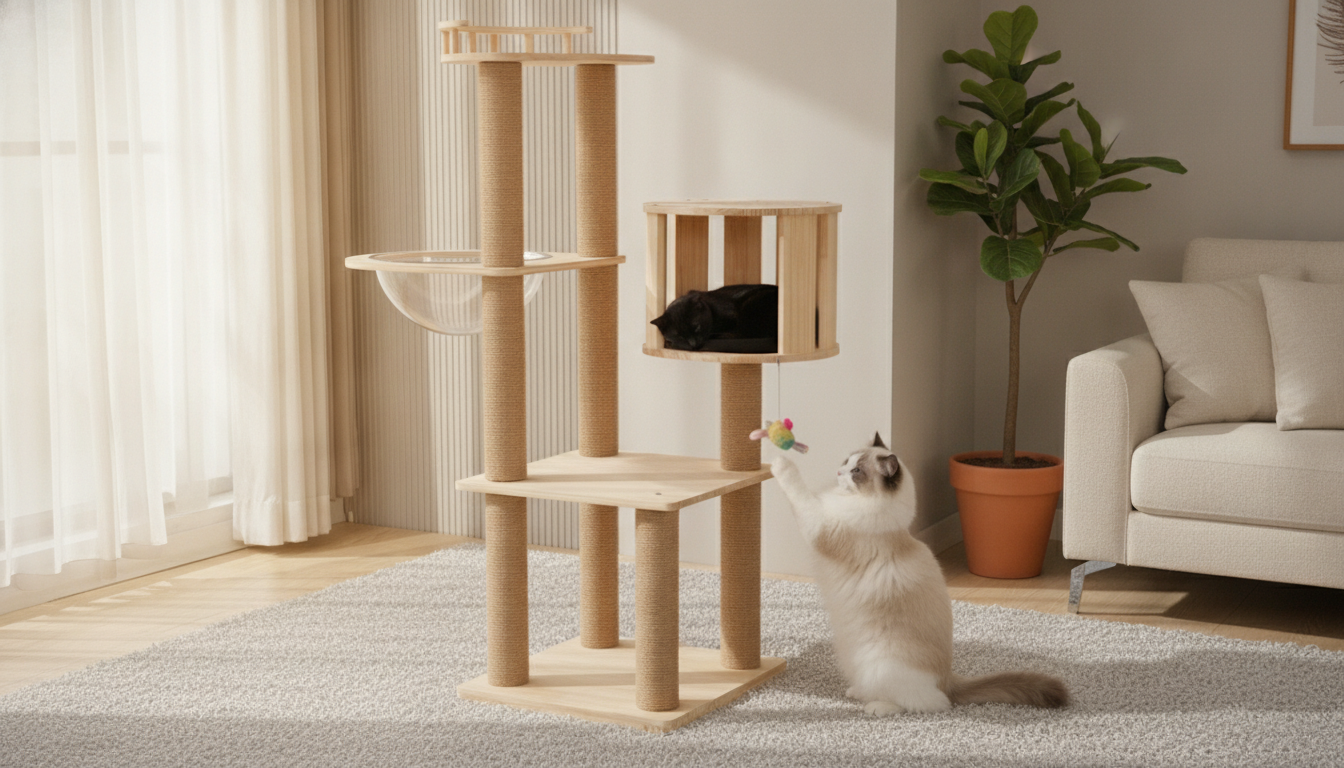
Solid Wood Multi-Level Cat Climbing Tree with Scratching Posts and Toys
A sturdy multi-level cat tree can turn unused vertical space into a daily outlet for climbing, scratching, and play. This solid wood design pairs multiple platforms with built-in scratching posts and dangling toys to encourage movement, reduce boredom, and help protect household furniture—especially in homes where cats spend a lot of time indoors.
If you’re looking for a furniture-like piece that functions as a dedicated “cat zone,” consider the Solid Wood Multi-Level Cat Climbing Tree with Scratching Posts and Toys for a stable, enrichment-forward setup that supports daily routines.
What This Cat Tree Adds to a Home
- Creates vertical territory for cats that prefer height for comfort and confidence.
- Supports natural behaviors: climbing, perching, stretching, and scratching.
- Adds structured play opportunities with attached toys to keep cats engaged between interactive play sessions.
- Helps redirect scratching away from sofas, rugs, and door frames by providing designated scratch zones.
- Works well for multi-cat homes by offering multiple levels that reduce crowding.
Many indoor cats spend long stretches in the same rooms every day. Adding a vertical pathway gives them choices—where to rest, where to watch, and where to “patrol.” Feline enrichment guidelines consistently emphasize the importance of environmental variety, including vertical space and appropriate scratching options, to support healthy behavior. For more background, review the American Association of Feline Practitioners (AAFP) Feline Environmental Needs Guidelines.
Design Highlights: Multi-Level Layout, Scratching Posts, and Toys
- Multi-tier platforms: Encourages step-by-step climbing and gives cats choices for lounging spots.
- Scratching posts along the route: Positioned so cats can scratch while moving up and down, which fits how many cats naturally stretch and mark.
- Hanging toys: Promote batting and pouncing—quick bursts of activity that help break up long naps.
- Vertical routing: Helps energetic cats burn off energy indoors and supports routine enrichment.
- Resting zones: Elevated perches can become reliable nap spots away from foot traffic.
A multi-level tree isn’t just a “climb it once” accessory. Cats often develop habits around it: a morning perch by the window, a mid-day scratch on the way to a nap platform, and a quick play session when they spot movement. The mix of layers plus built-in scratch zones makes it easier for cats to choose the right outlet without needing constant direction.
Why Solid Wood Construction Matters
- Stable feel under paw: Solid wood bases and supports can reduce wobble during jumps and quick turns.
- Durability for frequent use: Scratching and climbing concentrate wear in predictable areas; solid structural elements help the frame hold up over time.
- Suitable for larger cats: Stronger structural materials can better support heavier cats and more vigorous play.
- Cleaner look: Solid wood can blend with home décor while still serving as a functional pet zone.
Choosing the Right Size and Placement
Quick Fit Checklist for a Multi-Level Cat Tree
| Home factor | What to check | Why it helps |
|---|---|---|
| Available floor space | Base footprint and clearance around the tree | Reduces tipping risk and keeps access paths comfortable |
| Ceiling height | Total height + safe jump-off room | Prevents awkward placement and unsafe leaps |
| Number of cats | Multiple perches and separate levels | Cuts down resource-guarding and crowding |
| Cat age/mobility | Distance between platforms and access points | Makes climbing easier and safer |
| Scratch habits | Post height and placement along the climb route | Encourages full-body stretching and consistent use |
Setup, Safety, and Everyday Use
To build interest fast, place the tree in a room your cat already “claims,” and guide the first few interactions: a treat on a lower platform, a wand toy that leads upward, and a reward when they scratch the post. For additional enrichment and behavior tips, the ASPCA’s cat care resources are a helpful reference point.
Care and Maintenance for Long-Term Freshness
Who This Style of Cat Tree Tends to Suit Best
In multi-cat homes, multiple tiers can matter as much as multiple bowls. When cats can pass each other without being forced into close contact, tensions often drop. The Humane Society’s cat behavior and enrichment guidance also highlights how meeting natural needs—like scratching and climbing—supports calmer home dynamics.
In-Stock Picks to Build a Cozy Cat Corner
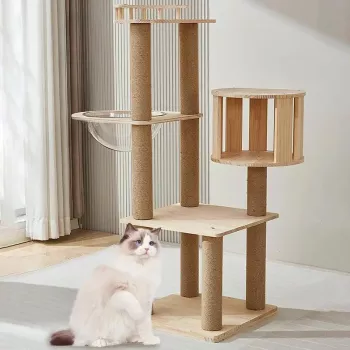
- Solid Wood Multi-Level Cat Climbing Tree with Scratching Posts and Toys — a sturdy vertical setup that combines perches, scratch zones, and play elements.
- 60-Inch Wall-Mounted Electric Fireplace Heater with App Control & Remote — a warm, comfortable living-space upgrade that can make a cat’s favorite room even more inviting (with safe placement and supervision).
- Portable Folding Camping Table — a flexible surface for treats, grooming tools, or toy storage near the cat tree.
FAQ
Is a multi-level cat tree safe for large cats?
It can be safe when the base is stable, the supports are rigid, and the platforms are roomy enough for your cat to turn and rest comfortably. Assemble it tightly, place it on a level surface, and re-check for wobble or loosened hardware as the tree gets regular use.
How do cats learn to use the scratching posts instead of furniture?
Put the tree near current scratch targets, reward scratching on the posts with treats or praise, and make the scratch zones easy to access along common routes. Avoid punishment; instead, keep nails trimmed and offer multiple scratch options so your cat consistently chooses the right place.
Where should a cat tree be placed for the most use?
Place it near a window or in a social room your cat already frequents, away from loud appliances and high-traffic bottlenecks. Make sure there are clear jump-on and jump-off paths, and in multi-cat homes, choose a spot where cats can approach from more than one side.













Leave a comment