2-in-1 RC Car Robot Kit: Build, Transform, Drive
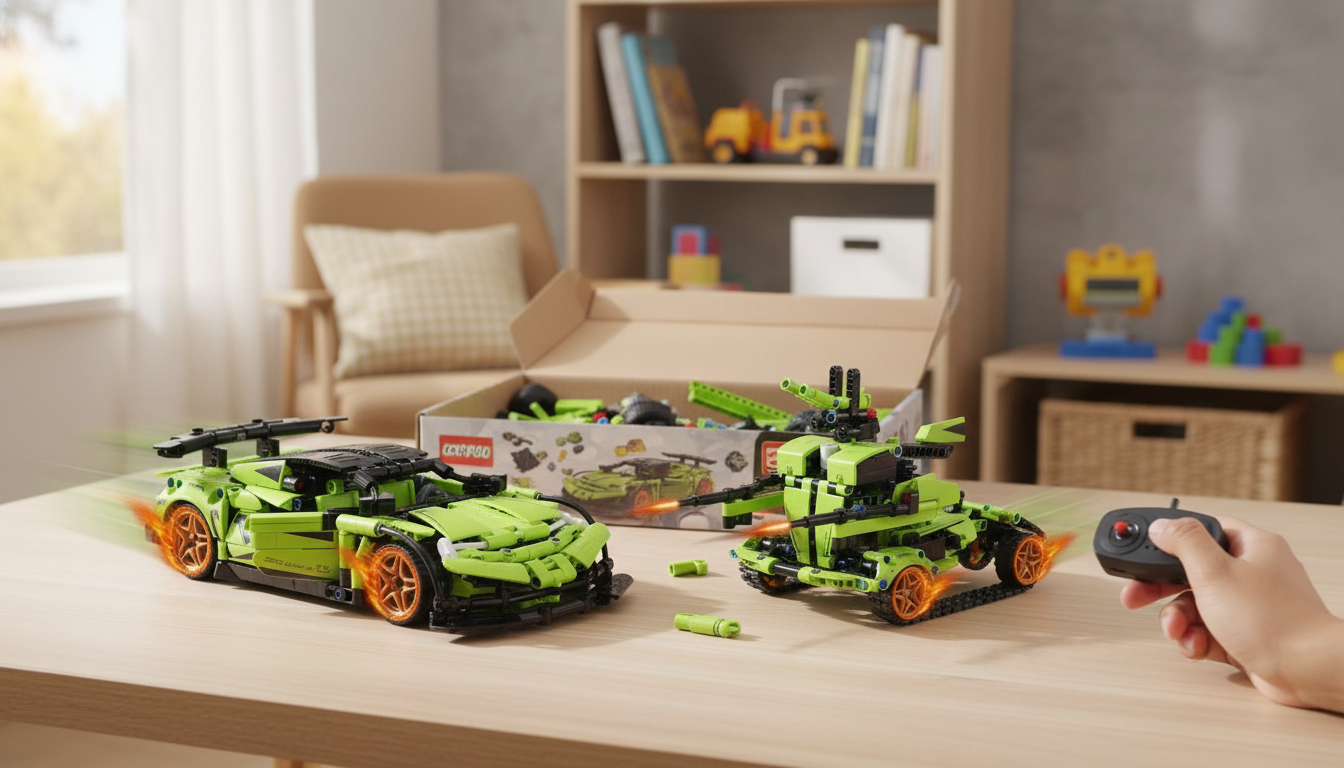
What a 2-in-1 RC Car and Robot Kit Adds to Play
A 2-in-1 RC car and robot building kit brings something many toys don’t: the chance to build, rebuild, and keep the experience fresh. Instead of a single “done once” model, kids can transform the same set of parts into two distinct creations—each with its own style of play and its own little challenges.
That two-build format helps interest last longer, especially for kids who love variety. One day might be all about steering practice and racing lines; the next might be a robot “mission” with storytelling and posing. Just as important, the kit naturally encourages a build-and-test loop: assemble it, run it, notice what wobbles or rubs, then improve the next build. That simple cycle mirrors how real problem-solving works—try, observe, adjust.
Because it’s RC, play tends to get more active. Kids move around to set up routes, chase the car, or create obstacle courses. It also works well as a shared activity—siblings can take turns with the controller, and parents can help with sorting parts, reading steps, and troubleshooting when something doesn’t move smoothly.
Skills Kids Practice While Building and Driving
Even when the goal is “just play,” a buildable RC kit quietly asks kids to practice useful skills. Handling small parts and aligning connections builds fine-motor coordination, while following steps in order supports patience and sequencing. When a wheel doesn’t turn correctly or the build feels unbalanced, kids start forming basic engineering instincts—often without realizing it.
- Fine-motor coordination: connecting pieces, fastening components, and keeping parts oriented correctly.
- Spatial reasoning: understanding how structure affects stability, turning, and motion.
- Basic engineering thinking: experimenting with balance, traction, wheel alignment, and weight distribution.
- Patience and sequencing: completing steps in order and correcting mistakes without restarting from scratch.
- Intro STEM habits: testing, observing outcomes, and iterating on a design.
For families who like toys with learning value, building sets are frequently highlighted as a solid choice for hands-on skills and problem-solving. Resources from Common Sense Media and Understood also point to the way STEM-style play supports flexible thinking and persistence.
RC Car Mode vs Robot Mode: How the Experience Changes
Switching between RC car mode and robot mode isn’t only about a different look—it changes what kids pay attention to. Car mode tends to emphasize speed, steering control, and stability through turns. Robot mode leans more toward transformation steps, balance, and imaginative play. Rebuilding between modes teaches a powerful idea: parts are reusable modules, and one set of components can serve more than one purpose.
A simple routine helps keep the experience smooth: build → short test run → quick check for loose connections → adjust. That quick “maintenance pause” is often the difference between frustration and a successful second attempt.
| Feature | RC Car Mode | Robot Mode |
|---|---|---|
| Primary play style | Driving, racing, obstacle courses | Role-play, movement, display |
| What kids notice first | Speed, turning radius, stability | Transformation steps, balance, articulation |
| Best learning moments | Traction and steering adjustments | Structure, symmetry, and part placement |
| Great add-ons | Masking-tape track, cones, ramps | Story prompts, “missions,” display base |
Setup Tips for Smoother Builds (and Fewer Lost Parts)
A few small habits make build sessions calmer and more successful—especially for first-time builders. The goal is to reduce “where did that piece go?” moments and make troubleshooting feel manageable.
- Choose the right surface: build on a tray or light-colored towel so small parts don’t roll away.
- Sort before step one: place pieces into small bowls by type; it speeds up the build and reduces mix-ups.
- Do a quick tightness check: after the first run (and after a big bump), confirm connections are snug and aligned.
- Store extras together: keep a small box or zip bag for spare parts so rebuilds stay stress-free.
- Pause and diagnose: if something doesn’t move, check alignment, connections, and any obstructions before forcing it.
For general toy safety basics—like age-appropriateness and supervising younger kids with small parts—guidance from the American Academy of Pediatrics is a helpful reference.
Fun Challenges That Turn Play Into Mini Projects
Gift and Age-Readiness Checklist
Featured Pick: 2-in-1 RC Car & Robot Building Kit for Kids
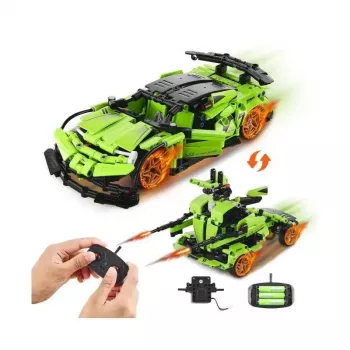
If a project-style toy that blends building time with active RC play sounds like the right fit, take a look at the 2-in-1 RC Car & Robot Building Kit for Kids. It’s designed for rebuildable fun—switching between RC car mode and robot mode—so kids can revisit the set, try new challenges, and enjoy that satisfying build-test-adjust rhythm.
More in-store picks (great for family time)
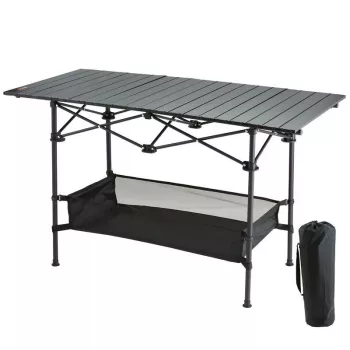
- Portable Folding Camping Table — a practical add-on for outdoor playdays, backyard build sessions, or park meetups.
- The Smart Traveler’s Guide to Global Etiquette (Digital Download) — a useful read for families planning trips and wanting kid-friendly conversation starters about manners and cultures.
FAQ
Is a 2-in-1 RC car and robot kit hard for kids to build?
Difficulty depends on age, attention span, and how many steps are involved. Sorting parts first and helping with the earliest steps usually makes the first build feel achievable, and a short successful test run early on helps keep motivation high.
What’s better for beginners: building the car first or the robot first?
Start with whichever option has fewer steps or reaches a working test faster. Many beginners find car mode builds confidence quickly because driving feedback is immediate, then robot mode feels easier the second time around.
How can parents make the kit last longer than a single weekend?
Create simple repeatable challenges like timed runs, obstacle missions, and “rebuild days,” and store parts in a dedicated bin so setup stays easy. Encourage kids to change one variable at a time—then re-test—so improvements feel real and measurable.














Leave a comment