4WD RC Drift & Rock Crawler Car With Spray + LEDs
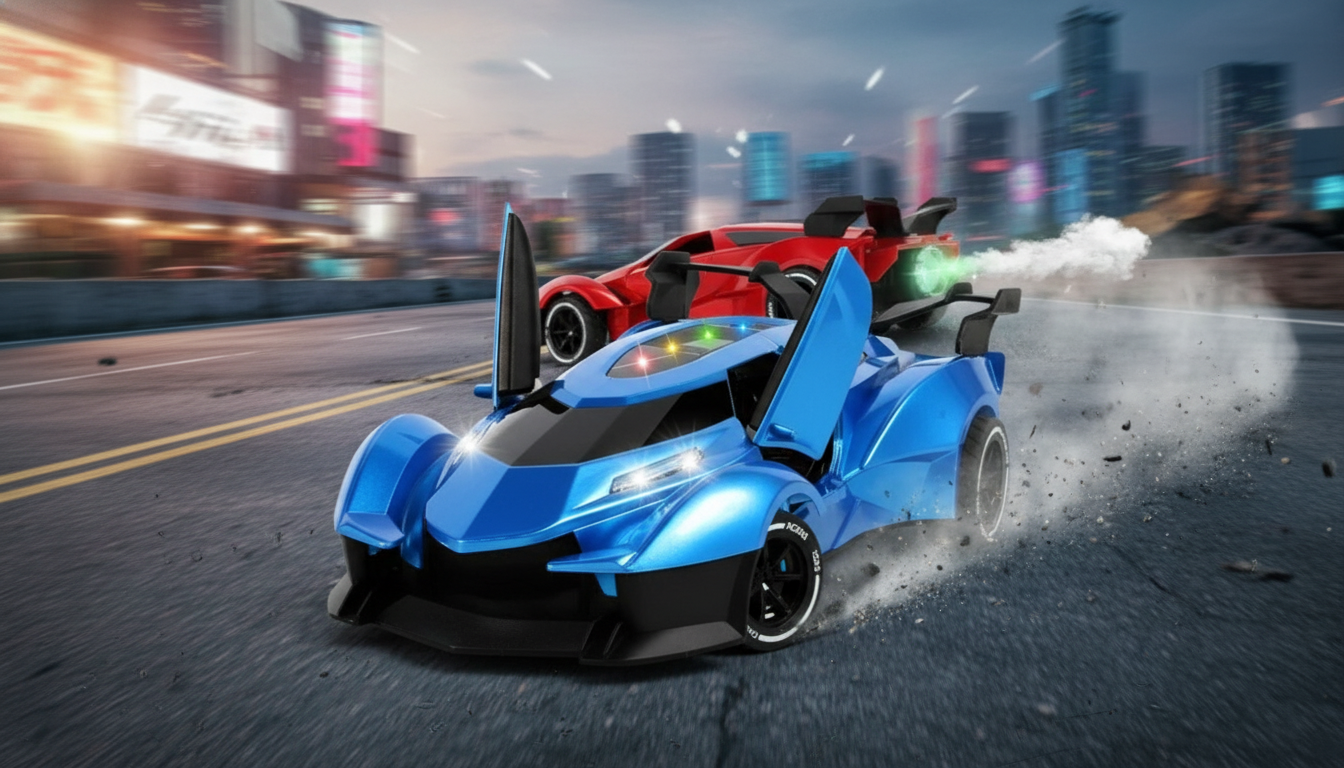
Quick Snapshot of the Car
A 4WD RC drift-and-crawl stunt car with spray and LED lights is built for variety: sliding spins on smooth floors, controlled climbing over small obstacles, and flashy “mini show” effects that make every run feel like a performance. The fun comes from the mix of traction (for ramps and rougher patches) and looseness (for drifting), plus the extra drama of mist and lighting—especially when the room is dim or the sun is going down.
| Feature | What it does | Why it matters for play |
|---|---|---|
| 4WD drive | Power to four wheels | Better traction for ramps, rugs, and outdoor paths |
| Drift capability | Loose, slide-friendly handling | Fun spins and corner slides on smooth surfaces |
| Spray effect | Mist/spray visual while driving | Adds a stunt-show look and boosts imagination play |
| LED lights | Illuminated body and/or headlights | Easier tracking, more exciting in darker spaces |
| Stunt driving | Tricks like spins, quick direction changes | Keeps play varied and skill-based |
If you’re shopping for a feature-packed option, see the 4WD RC Car Drift Rock Crawler Remote Control Stunt Car for Boys, Spray & Light Toys.
Drift vs. Rock-Crawling: How One Car Can Do Both
Drifting and rock-crawling are almost opposites, which is why it’s so satisfying when one RC stunt car can handle a bit of both. Drifting is all about controlled loss of traction—tires sliding predictably on hard, smooth surfaces like tile, sealed wood, or polished concrete. The goal is a clean slide through a corner or a tight spin without tumbling or biting into the surface.
Rock-crawling style play (in a toy-grade stunt car) is more like “small obstacle exploration.” Think door thresholds, thin rugs, driveway seams, packed dirt, sidewalk gaps, or short grass. Here, you want the wheels to keep contact and keep pulling even when one side hits a bump. That’s where 4WD helps: torque is spread out, so the car is less likely to stall when a single wheel slips.
Even with 4WD, surface choice matters. Tire material, tread pattern, and weight balance determine whether the car slides smoothly or grips hard. A practical approach is to create two safe zones: an indoor drift track for spins and slides, and an outdoor obstacle lane for “crawl and conquer.” If your stunt car offers multiple driving modes, switching modes can change steering response and stability so you can match the car to the terrain instead of fighting it.
Spray Effect and Lights: Safe, Simple Setup Tips
The spray feature is usually a fine mist made from a small onboard water reservoir. For the cleanest and safest use, fill only with clean water unless the included instructions explicitly allow anything else. The visible mist tends to look best in lower light, where LEDs and “smoke-like” spray create a dramatic trail behind the car.
A few habits keep the effect strong and hassle-free:
- Keep the spray outlet clear. Dust or dried residue can reduce mist output.
- Use spray in open, well-ventilated areas and avoid aiming the mist toward faces, electronics, or paper surfaces.
- For indoor sessions, place a towel or play mat nearby—especially if kids use the spray button constantly on smooth floors.
LED lights aren’t just for looks. They help kids keep orientation—front vs. back—when learning reverse turns, drifting circles, and quick direction changes. That small boost in “where is it pointing?” can reduce crashes and make practice more rewarding.
For general toy safety guidance and recall resources, refer to the U.S. Consumer Product Safety Commission toy safety pages and the American Academy of Pediatrics’ tips on choosing age-appropriate toys.
Controls and Handling: Helping Kids Build Driving Skills
This kind of RC car is most fun when kids feel improvement quickly. Start simple and layer skills:
- Straight-line runs first: Practice gentle acceleration and braking so the car doesn’t fishtail unexpectedly.
- Throttle control: Short bursts often work better than staying at full speed, especially when learning to drift without spinning out.
- Make a mini course: Use cups or soft markers as cones to encourage precision (parking, slalom, “stop on the line”) instead of only top speed.
- Practice stunts in a clear zone: Quick direction changes and spins need space—keep the car away from stairs, fragile décor, and pet areas.
For younger kids, a short “driving area rule” helps: no driving behind furniture, no launching near people, and no chasing pets. Less chaos leads to longer play sessions and fewer broken parts.
Battery, Charging, and Playtime Planning
Performance tends to feel best right after a full charge. For a smoother experience, fully charge before first use and plan play in rounds: drive hard, cool down, quick wipe-down (especially after using spray), then head back out. Letting the battery cool briefly before recharging can help maintain battery health over time.
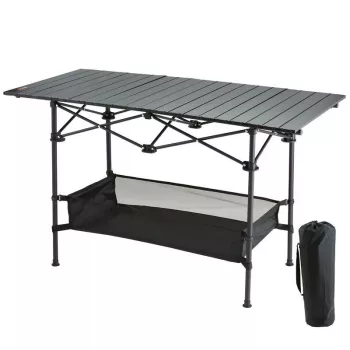
For an easy outdoor “pit setup” (a spot for water refills, battery swaps, and a clean surface), a simple folding table can make sessions smoother. The Portable Folding Camping Table is a handy add-on for backyard driving days or driveway obstacle courses.
Where It Shines: Best Places and Play Ideas
Common Issues and Easy Fixes
FAQ
Is the spray effect safe to use indoors?
Generally yes when used with clean water and reasonable amounts. Keep mist away from faces and electronics, use it in a ventilated space, and wipe floors if they get damp.
What surfaces are best for drifting?
Smooth, hard surfaces like tile, sealed wood, or smooth concrete work best. Very rough ground and thick carpet reduce sliding and make controlled drifting harder.
Can it handle outdoor terrain like grass or gravel?
It typically does best on firm ground, patios, and short, low obstacles. Tall grass, deep gravel, mud, and water can reduce performance and increase the chance of damage.














Leave a comment