Brushed Gold Brass Shower System with LED Temp Display
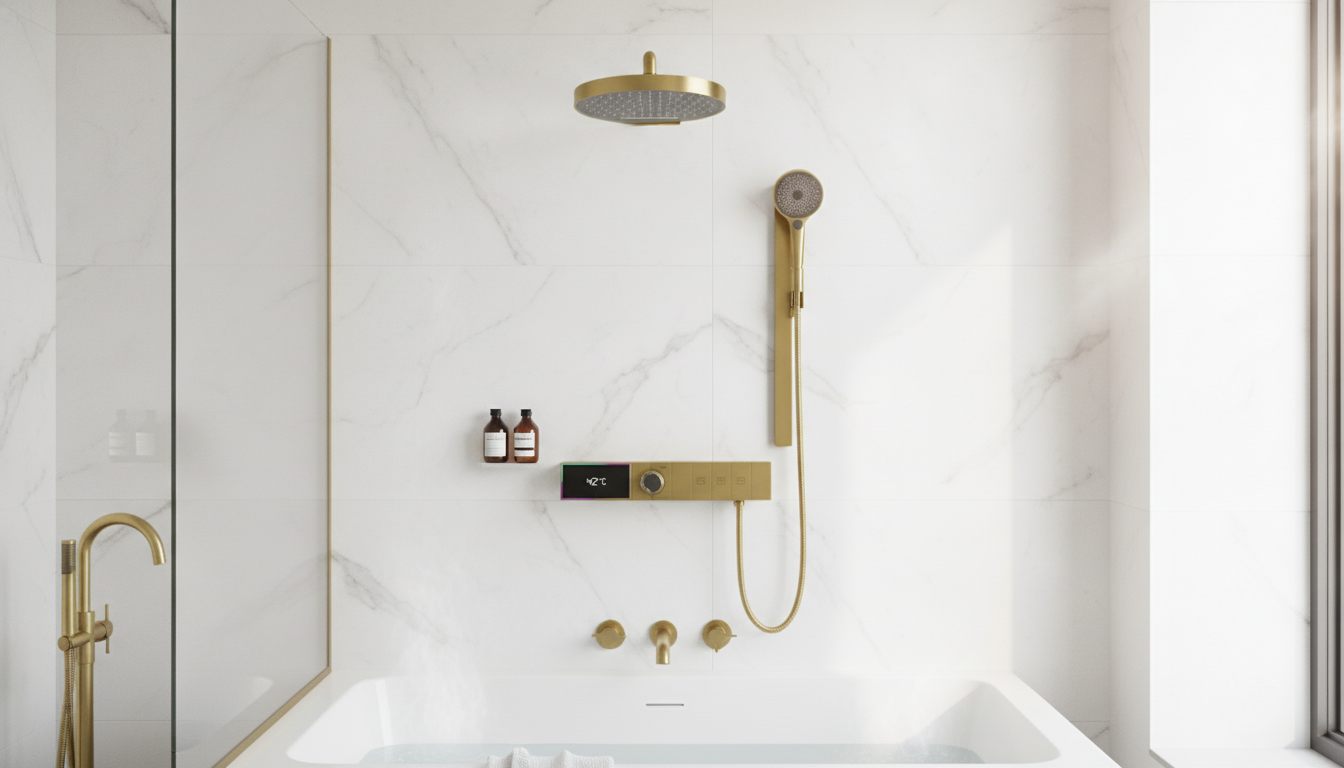
Luxury Brass Brushed Gold Shower System with LED Digital Display
A brushed gold shower system can turn an ordinary rinse into something that feels closer to a private spa—especially when solid brass construction is paired with a clear LED digital display for quick temperature awareness. If you’re upgrading a primary bath or finishing a high-end guest space, a cohesive brushed gold set can deliver both the “designed” look and the daily comfort that makes the investment feel worthwhile. Below is what to expect from a luxury brass brushed gold shower system, how the digital display fits into real-life use, and what to verify before installation.
What Makes This Shower System Feel “Luxury”
- Premium materials: Solid-feel brass components in the parts that matter most for long-term durability and a reassuring, substantial weight.
- Brushed gold finish: A warm, modern tone that pairs naturally with stone, marble, matte whites, and deep charcoal or black tile.
- LED digital display: A quick temperature readout helps reduce guesswork when stepping in or when someone else has just used the shower.
- Cohesive fixture set: Matching trim, handle(s), and accessories create a cleaner wall aesthetic than piecing together separate parts.
Brushed Gold Brass: Look, Durability, and Daily Practicality
Brushed finishes are popular for a reason: the subtle texture tends to disguise fingerprints and minor water spotting better than mirror-polished metals. That’s a practical advantage in bathrooms where the shower is used daily, especially in homes with hard water.
- Better everyday appearance: Brushed surfaces usually camouflage small smudges and light spotting.
- Brass performance in wet areas: Brass is widely valued for corrosion resistance and stability under repeated hot/cold cycles.
- Easy to style: Brushed gold can harmonize with warm palettes (cream, beige, travertine) and also add warmth to cool palettes (gray concrete, white tile, black accents).
- Finish care matters: Always check recommended cleaning methods to preserve the sheen and avoid micro-scratches that can dull the brushed look over time.
LED Digital Display: Comfort, Awareness, and What to Verify
A digital temperature display is most useful in the “first 10 seconds” of a shower—when comfort and safety depend on getting the mix right. It can also help households where multiple people share a morning schedule and prefer consistent temperature settings.
- At-a-glance confirmation: The readout helps you confirm the water temperature quickly without testing by hand.
- Visibility in real bathrooms: Confirm the display can be read under bright vanity lighting and from a normal standing distance.
- Power approach: Some displays are water-powered (turbine) while others use batteries. Verify which type you’re buying so installation and upkeep are predictable.
- Safety is still about the valve: Temperature awareness supports safer habits, but true anti-scald protection depends on valve design, setup, and limit-stop adjustment.
- Allow readings to stabilize: After changing settings, give the flow a brief moment to stabilize so the display reflects the newly mixed water.
Key Components to Look For in a Complete Shower System
- Valve and control handle(s): The valve determines how smoothly temperature and flow can be adjusted and maintained.
- Showerhead / top spray (if included): Look for even spray distribution and easy-clean nozzles to reduce mineral buildup.
- Hand shower (if included): Useful for rinse-down, cleaning the shower, bathing kids, and targeted spray control.
- Hose and connectors: Metal-braided hoses often feel more durable and kink-resistant than basic plastic.
- Mounting hardware and escutcheons: Tight tolerances reduce wobble and create a more seamless finished-wall look.
Feature Snapshot: What to Compare Before Buying
Quick Comparison Checklist for Brushed Gold Digital-Display Shower Systems
| Item to Compare | Why It Matters | What to Confirm |
|---|---|---|
| Valve type (pressure-balance/thermostatic) | Affects temperature stability and comfort | Compatibility with local code and desired control style |
| Display power method | Impacts long-term upkeep | Water-powered vs. battery-powered; access for battery changes if applicable |
| Finish care | Keeps the brushed look consistent | Approved cleaners; avoid harsh acids/abrasives |
| Spray options | Determines shower experience | Rain, massage, handheld, or multi-mode depending on configuration |
| Water pressure requirements | Prevents weak flow or uneven mixing | Recommended pressure range; performance in low-pressure homes |
| Connections and rough-in | Controls installation complexity | Pipe size, in-wall depth, and wall opening needs |
Installation Notes: What Typically Requires Planning
Water Temperature Stability and Anti-Scald Considerations
For additional guidance on scald prevention, see the U.S. Consumer Product Safety Commission overview on scald burns.
Cleaning and Maintenance for Brushed Gold Fixtures
If you’re also choosing water-efficient spray options, the EPA WaterSense showerhead resource is a helpful reference point for understanding efficiency and performance goals.
Who This Style Suits
In-Stock Picks to Complete the Spa-Like Setup
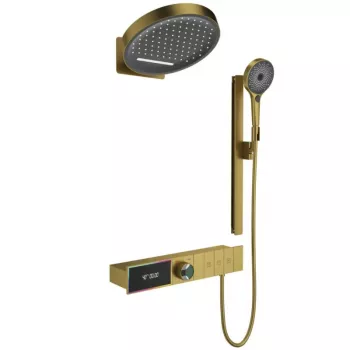
- Luxury Brass Brushed Gold Shower System with LED Digital Display (in stock)
- Infrared Sauna for One Person (in stock)
- 60-Inch Wall-Mounted Electric Fireplace Heater with App Control & Remote (in stock)
For shoppers who like to confirm fixture conformity and performance benchmarks, the ASME A112.18.1/CSA B125.1 overview is a useful starting point when reviewing plumbing fitting standards and documentation.
FAQ
Does the LED digital display require wiring?
Many shower temperature displays don’t require household wiring because they’re either water-powered (using a small turbine) or battery-powered. Check the product details to confirm the power method so you can plan access for batteries if needed.
Will a brushed gold finish show water spots and fingerprints?
Brushed finishes typically hide minor fingerprints and light spotting better than polished finishes. Gentle cleaning with mild soap, followed by a rinse and dry, helps keep the tone consistent—especially in hard-water areas.
Is a digital temperature display enough to prevent scalding?
No—the display improves temperature awareness, but scald protection depends on the valve type, correct limit-stop setup, and safe water-heater temperature settings. A properly installed pressure-balance or thermostatic valve is still the main safeguard.










Leave a comment