Easy-Store Foldable Utility Cart with Telescopic Handle
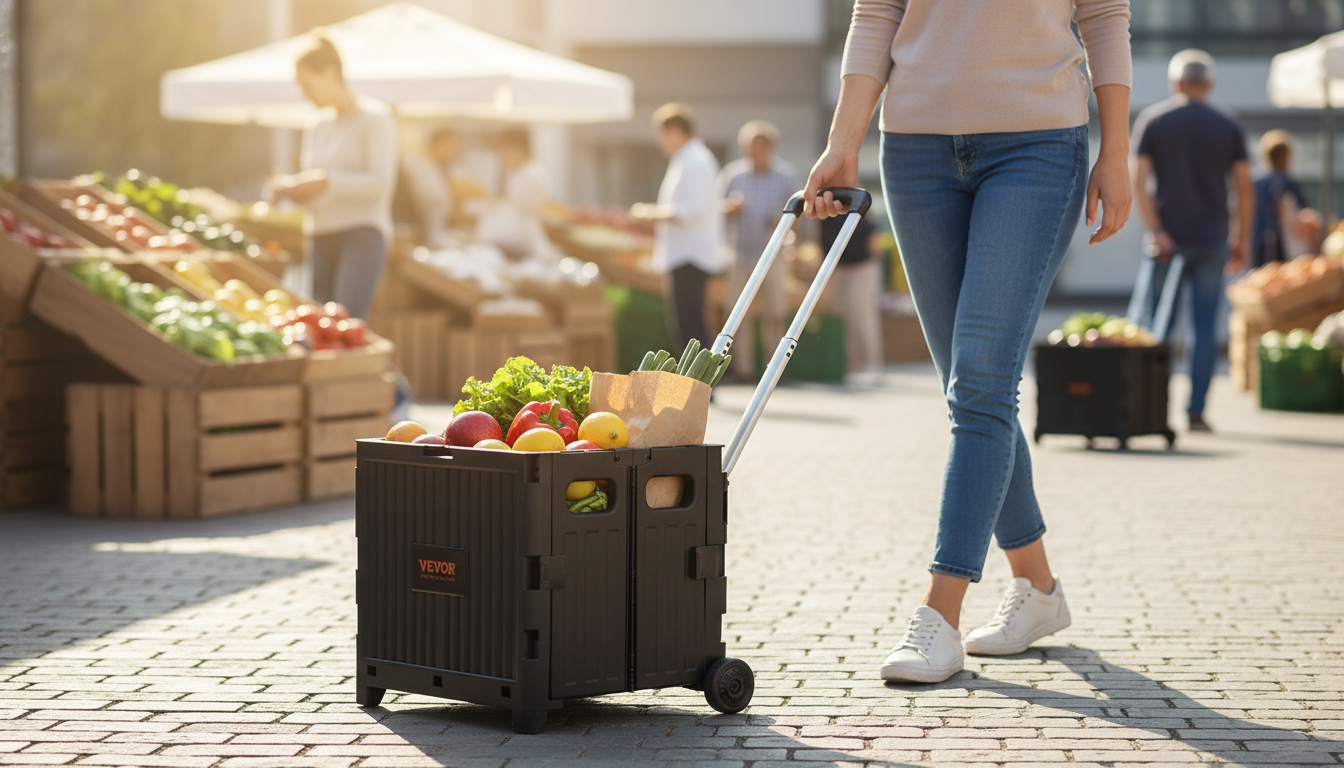
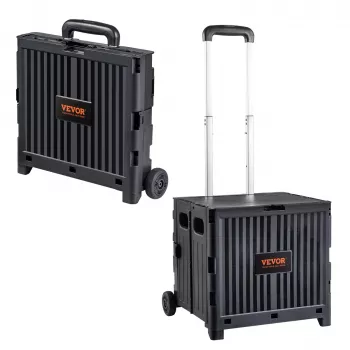
Foldable Utility Shopping Cart with Wheels & Telescopic Handle
A foldable utility cart takes the strain out of hauling groceries, laundry, parcels, and bulky essentials—especially when stairs, long hallways, or public transit are involved. With smooth-rolling wheels and a telescopic handle, it’s designed to pull comfortably, store compactly, and keep everyday errands organized.
What This Cart Helps With Day to Day
For many households, the hardest part of shopping isn’t the store—it’s getting everything home without sore hands, shoulder strain, or a juggling act at the front door. A foldable utility shopping cart is built for those “in-between” moments where carrying becomes uncomfortable or unsafe.
- Grocery runs: reduces the need for multiple hand-carry trips and keeps bags upright.
- Laundry and linens: easy transport to shared laundry rooms or laundromats.
- Apartment living: helpful for elevators, long corridors, and parking-to-door carries.
- Errands and deliveries: supports carrying boxes, packages, and household supplies.
- Outdoor and event use: useful for farmers markets, community events, and light gear hauling.
It’s also a practical option for anyone trying to reduce repetitive lifting. General ergonomics guidance (like keeping loads manageable and close to the body) can help lower strain during daily tasks—see OSHA ergonomics guidance for helpful basics.
Key Features to Look For
Not all carts feel the same in real use. The best experience usually comes down to how smoothly it rolls, how stable it is when loaded, and how easy it is to fold and store.
- Foldable frame: closes down for storage in closets, car trunks, or behind doors.
- Wheels built for real surfaces: stable rolling on sidewalks, tile, and slightly uneven pavement.
- Telescopic handle: adjusts height to reduce wrist strain and improve pulling leverage.
- Handle grip and control: comfortable grip helps steady the cart on ramps and turns.
- Carry capacity and stability: wider base and balanced loading reduce tip-over risk.
- Practical details: bag support, frame rigidity, and easy-clean surfaces for spills.
Quick checklist before buying
| Feature | Why it matters | What to verify |
|---|---|---|
| Folded size | Fits in storage and vehicles | Measure closet/trunk space; check folded dimensions |
| Wheel type | Controls rolling and vibration | Look for durable wheels; consider larger diameter for rough sidewalks |
| Handle range | Comfort for different heights | Confirm minimum/maximum handle height and lock positions |
| Load rating | Prevents frame and wheel failure | Stay within the stated capacity; avoid overloading with dense items |
| Cart stability | Reduces tipping on turns/curbs | Check base width and how weight sits over the axle |
| Ease of folding | Faster setup and pack-away | Test latch/hinge design; ensure it locks open and closed |
Using a Telescopic Handle Comfortably
A telescopic handle is more than a convenience—it’s one of the biggest comfort upgrades, especially for users who are taller, shorter, or switching between quick indoor trips and longer outdoor walks.
- Set the handle so the wrist stays neutral while pulling; avoid excessive bending at the elbow.
- Pull with steady, moderate force rather than jerky starts; this helps keep the load centered.
- On ramps or uneven surfaces, slow down and keep one hand ready to steady the cart.
- When crossing curbs, tilt slightly and guide the front wheels up rather than forcing the cart straight on.
- If lifting is unavoidable (stairs), lighten the load and make two trips instead of one overloaded trip.
If you routinely handle heavier household loads, conservative lifting habits matter. The CDC/NIOSH ergonomics tools are a solid reference point for reducing strain and keeping handling tasks within safer limits.
Loading Tips for Better Balance and Fewer Spills
Even a sturdy cart can feel awkward if the load is stacked high, shifts during turns, or puts too much weight on one side. A few simple packing habits can make the cart easier to steer and help protect the wheels over time.
- Heaviest items low and close to the wheels: improves stability and reduces tipping.
- Prevent shifting: place boxed items flat; avoid stacking tall, narrow items at the top.
- Separate crushables: keep eggs, bread, and produce in a top bag or separate tote.
- Distribute weight evenly left to right: uneven loads make steering harder and increase wheel wear.
- Watch the “dense item” trap: a small number of canned goods can exceed capacity quickly.
For smoother steering, aim for a “low, wide, and centered” load profile. If the cart starts to feel twitchy on turns, it’s often a sign the weight is too high or too far back from the axle.
Care, Storage, and Longevity
For general product safety updates across consumer goods, the U.S. Consumer Product Safety Commission (CPSC) recalls page is a helpful resource to bookmark.
When a Foldable Utility Cart Is the Best Fit
Product Pick
- Foldable Utility Shopping Cart with Wheels & Telescopic Handle: designed to keep errands manageable while storing easily at home or in the trunk.
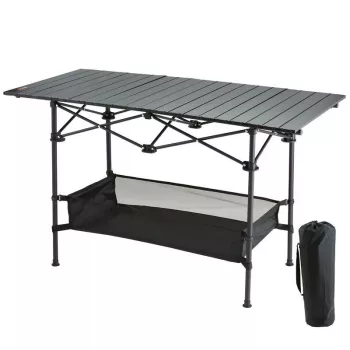
- Portable Folding Camping Table: a convenient add-on for picnics, pop-up meals, and outdoor setups.
FAQ
How much weight can a foldable utility shopping cart safely carry?
Refer to the cart’s stated load rating and stay under it, especially with dense items like canned goods. For stability, keep weight low and centered and avoid overloading to help protect the wheels and folding hinges.
Do shopping carts with telescopic handles work well for taller or shorter users?
Yes—adjustable handle positions can improve comfort across a wide range of heights. Set the handle so your wrist stays neutral and you can pull without hunching or reaching too far back.
What wheel size is best for sidewalks and uneven pavement?
Larger, more durable wheels typically roll more smoothly over cracks and bumps, while smaller wheels can be fine on flat indoor floors. On rough areas, slow down and keep the load balanced to reduce vibration and tipping.














Leave a comment