Stainless Manual Dicer: Fast 3/8 & 1/4 Inch Cubes
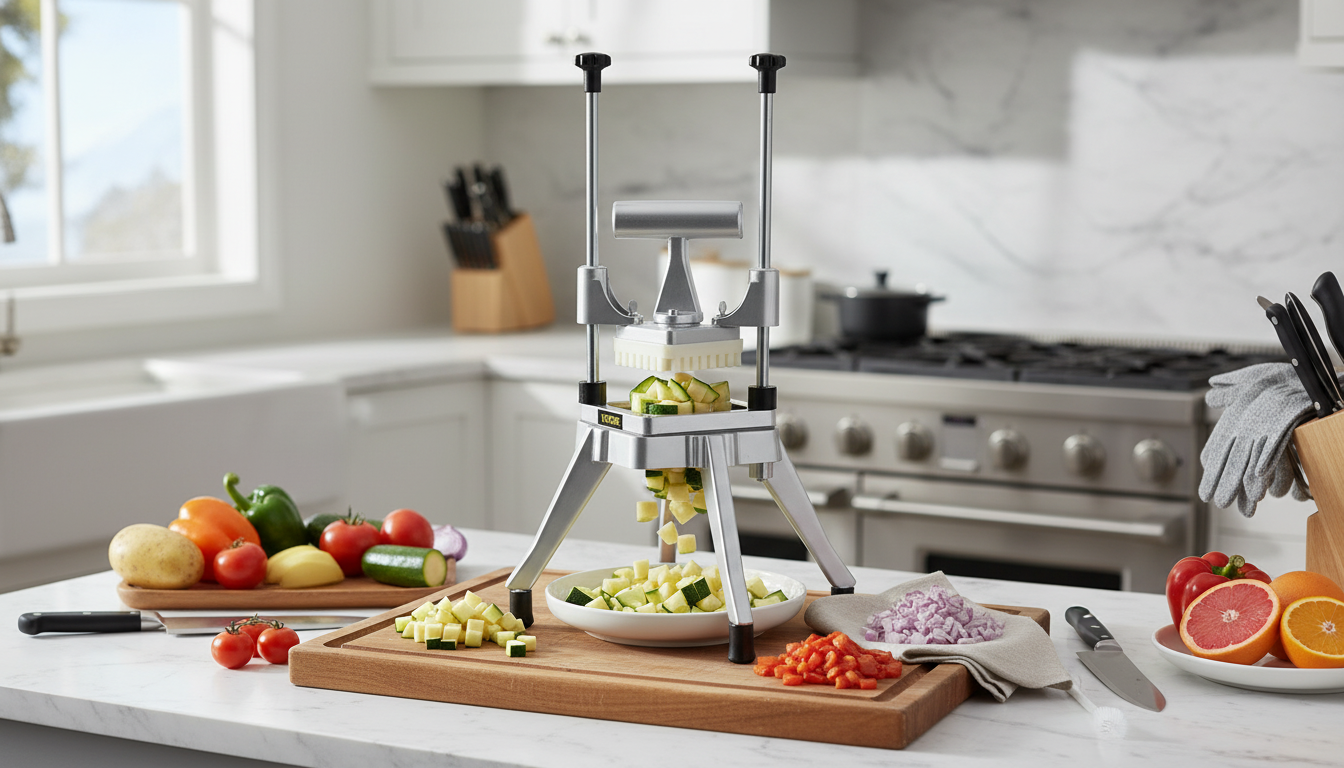
Commercial Manual Vegetable & Fruit Dicer Cutter (3/8″ & 1/4″) in Stainless Steel
Fast, uniform prep changes the pace of any kitchen. A manual stainless-steel dicer with two cube sizes supports consistent presentation, quicker batch prep, and cleaner portioning for salads, salsas, soups, and fruit trays—without relying on electricity. When the workload ramps up, a lever-style press turns repetitive knife cuts into a smooth, repeatable routine that keeps your pans and bowls moving.
What This Dicer Cutter Is Designed For
This style of commercial manual dicer is built for consistent cubes, batch after batch. Instead of “close enough” knife cuts, the grid helps standardize size so your finished dishes look intentional and cook predictably.
- Creates uniform cubes for vegetables and fruit using a lever-style manual press.
- Supports two common dice sizes: 3/8″ for hearty prep and 1/4″ for finer garnish and quick-cook applications.
- Fits high-volume tasks where speed and consistency matter: meal prep, catering, food trucks, and busy home kitchens.
- Works best with firm produce (onions, potatoes, cucumbers, apples, pears) and properly pre-cut pieces sized to the blade grid.
Key Features That Matter in Daily Use
In a real prep environment, the details determine whether a tool feels dependable or fiddly. The combination of stainless cutting components, interchangeable grids, and a rigid frame is what makes a manual dicer practical for routine use.
- Stainless-steel cutting components for durability and corrosion resistance in wet prep areas.
- Two interchangeable blade grids (3/8″ and 1/4″) for flexible menu prep.
- Manual lever operation keeps output steady without heat, batteries, or motor maintenance.
- Rigid frame helps reduce flex during pressing, improving cut consistency and reducing jams.
- Simple, repeatable workflow: prep produce → position on grid → press → empty catch area and repeat.
3/8″ vs 1/4″ Dice: When to Use Each
| Dice size | Best for | Typical examples | Notes |
|---|---|---|---|
| 3/8″ | Chunkier texture and visible dice | Potatoes for home fries, hearty salsa, soups, fruit salad | Less compression on softer produce; faster throughput |
| 1/4″ | Finer, quicker-cooking dice and garnish | Onions for mirepoix, cucumbers for salad, apples for topping | More uniform presentation; may require firmer produce for clean cuts |
Common Prep Wins: Speed, Consistency, and Portion Control
A manual press dicer earns its keep when you need the same result repeatedly—especially across multiple ingredients or multiple staff members.
- Reduces knife time for batch jobs like pico de gallo, prep bowls, or multi-ingredient salad kits.
- Uniform cubes cook more evenly (especially potatoes and root vegetables), helping reduce undercooked centers or mushy edges.
- Improves plating consistency for catering trays and buffet pans where appearance matters as much as flavor.
- Supports portioning by making volume-based measuring more predictable across batches.
Consistency also supports better food handling habits: when your prep process is controlled and repeatable, it’s easier to keep work areas cleaner and separate ready-to-eat items from raw ingredients. For practical guidance on cleaning and preventing cross-contamination, reference the USDA’s food safety basics on Clean and the standards outlined in the FDA Food Code.
How to Use It Without Jams or Crushed Produce
Clean cubes come from a little setup. Most “dicer problems” trace back to pieces that are too large, too soft, or not aligned to the grid.
- Trim produce to fit the blade area; oversized pieces increase resistance and uneven cuts.
- Remove tough skins or ends when needed (thick rinds and fibrous ends can snag).
- Use steady, controlled downward pressure rather than sudden force to keep cubes clean.
- For slippery items (tomatoes or very ripe fruit), chill briefly and cut into firmer segments first.
- Clear the grid between batches so buildup does not force misalignment on the next press.
For onions and potatoes, a helpful rhythm is: square off the ends, cut to a thickness that matches the grid depth, place the flat side down, then press in one smooth stroke. If you feel a hard stop, back off and re-seat the piece rather than forcing it through.
Cleaning and Care for Stainless-Steel Food Prep Tools
Stainless cutting parts are built for busy kitchens, but they still benefit from quick, consistent care—especially after starchy or sugary foods.
- Rinse promptly after use to prevent starches and sugars from drying on the grid.
- Use a soft brush to clear blade openings; avoid aggressive scraping that can dull edges.
- Dry thoroughly after washing to reduce spotting and protect surrounding components.
- Store blade grids safely to prevent edge damage and accidental contact.
- Periodically check fasteners and moving joints so the press action stays smooth.
Who This Tool Fits Best
Recommended In-Stock Picks
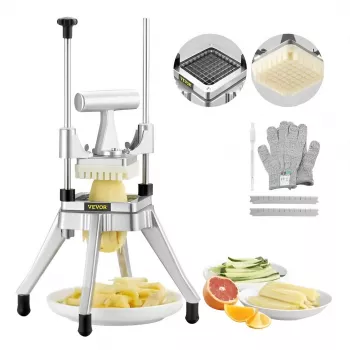
- Commercial Manual Vegetable Fruit Dicer Cutter 3/8″ & 1/4″ Stainless Steel (manual lever press with two grid sizes for flexible diced prep)
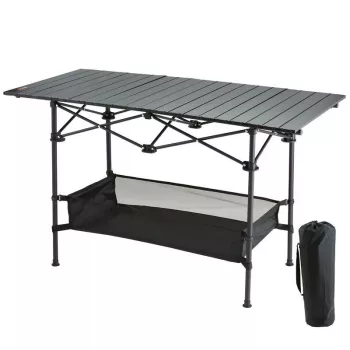
- Portable Folding Camping Table (a handy extra surface for off-site prep, vending setups, or staging pans during catering)
Product Snapshot
At-a-Glance Details
| Detail | Value |
|---|---|
| Cube sizes | 3/8″ and 1/4″ |
| Operation | Manual lever press |
| Material | Stainless steel (cutting components) |
| Typical use cases | Vegetable dice, fruit cubes, meal prep, catering |
FAQ
What foods work best in a manual dicer like this?
Firm produce cuts cleanly, including onions, potatoes, cucumbers, carrots, apples, and pears. Softer items may need chilling, pre-cutting into firmer segments, or may not cube as neatly depending on ripeness.
How are 3/8″ and 1/4″ dice sizes used differently?
3/8″ is ideal for chunky salsas, soups, and hearty sides where you want visible texture. 1/4″ is better for finer garnish, faster cooking, and a more delicate, uniform look.
How should the blade grid be cleaned safely?
Rinse promptly after use, then use a soft brush to clear the openings without scraping the edges. Dry fully before storage to reduce spotting and help keep the cutting area in good condition.














Leave a comment