Wall-Mounted Cat Shelves & Perches: Safe Vertical Route
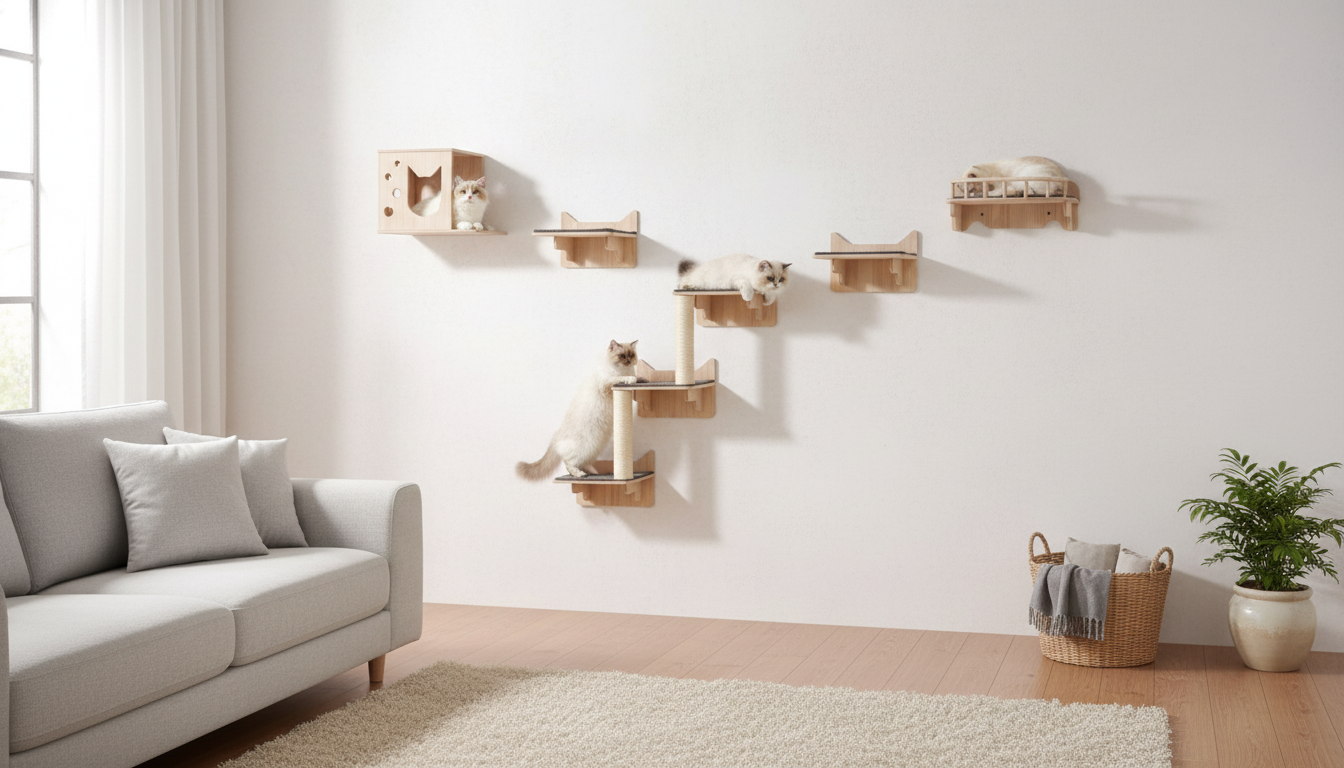
What a Wall-Mounted Shelves & Perches Set Adds to a Home
Wall-mounted cat shelves turn blank wall space into a usable “upper floor” that feels natural to cats. Instead of relying on one bulky cat tree, a shelf-and-perch route can create a calm, predictable climbing path that fits your room and your cat’s personality.
- Creates a vertical “cat highway” that expands territory without taking up floor space
- Encourages natural behaviors: climbing, perching, observing, and retreating
- Supports multi-cat harmony by adding more elevated lanes and rest stops
- Helps redirect jumping and scratching toward appropriate, cat-friendly zones
Enrichment matters for indoor cats, and adding height is one of the most effective ways to make a home feel bigger. For more enrichment guidance, see International Cat Care (iCatCare) and the ASPCA’s enrichment tips.
Key Features to Look For in Cat Wall Shelves
A great setup isn’t only about looks—it’s about stability, traction, and smart spacing. Before buying (or before installing), check the practical details that make cats actually want to use the route.
- Stable mounting system designed for wall studs or appropriate anchors
- Non-slip surface (carpeted, textured, or padded) for confident footing
- Rounded edges and usable depth that supports turning and lounging
- Weight capacity appropriate for your cat’s size, plus a safety margin
- Modular pieces that can be arranged into steps, corners, and routes
If your cat is hesitant on slippery surfaces, prioritize grip over aesthetics. Cats often “vote with their paws,” choosing the safest-feeling path even if it’s not the one you intended.
Set Overview: Wall Mounted Cat Shelves & Perches Set
The Wall Mounted Cat Shelves & Perches Set is designed to build climbable levels along a wall—supporting play, rest, and observation in one vertical route. It works well as a standalone climbing lane or as an add-on near a cat tree or sturdy furniture that already serves as a “launch point.”
- Designed to create climbable levels along a wall for play, rest, and observation
- Works as a standalone route or as an add-on near existing cat trees
- Best results come from installing pieces as a sequence: launch point → steps → perch → resting shelf
- Ideal placement includes living rooms, home offices, and spaces where cats already like to watch activity
Quick planning checklist
| Planning item | Practical target |
|---|---|
| Route length | At least 3–5 feet of usable wall run if possible |
| Step spacing | Shorter gaps for kittens/seniors; longer for athletic jumpers |
| Perch height | One mid-level perch plus one higher “lookout” |
| Traffic flow | Avoid door swing paths and narrow hall pinch points |
| Landing zones | Keep clear space under high shelves for safer jumps |
Where to Install for Maximum Use (Room-by-Room Ideas)
Placement can make the difference between shelves your cat ignores and shelves your cat claims on day one. Start with where your cat already prefers to lounge or patrol, then build upward.
- Near a window: place a perch facing outside for bird-watching and sun naps
- Above a sofa or sturdy bench (with safe clearance): creates a cozy “cat balcony” that feels social yet secure
- Along a hallway wall: turns a dead zone into a movement corridor that reduces zoomies around fragile items
- In a multi-cat home: build two routes that don’t force cats to pass each other closely
- In small apartments: stack shelves vertically to create height without crowding the floor
If you enjoy a more coordinated look—especially in shared spaces—consider pairing your layout with a simple color plan so the shelves feel intentional. The Colorful Quiet Luxury Palettes Checklist can help keep the wall setup cohesive with your room’s tones.
Installation Basics and Safety Notes
Safe installation is non-negotiable. A stable shelf feels predictable underfoot, which encourages use and reduces awkward “panic jumps.” For general cat care and home safety guidance, the AVMA cat resources are a helpful reference point.
- Locate studs when possible; use heavy-duty wall anchors only when stud mounting isn’t available
- Measure twice and level each piece so cats feel stable when stepping or jumping
- Set a “training path” with shorter jumps at first; increase spacing once your cat is confident
- Keep shelves away from fragile décor and from surfaces where slipping could cause injury
- Check hardware periodically (especially in the first 2–4 weeks) and re-tighten as needed
For higher perches, keep the space below clear so a missed landing doesn’t turn into a collision with furniture corners, planters, or décor.
Comfort, Traction, and Easy Cleaning
The easiest way to increase use is to make each step feel secure and each perch feel inviting. Comfort also reduces “edge sitting” where a cat perches cautiously instead of settling in.
Helping a Cat Start Using Wall Shelves
Who Benefits Most from a Vertical Perch Setup
Common Mistakes to Avoid
FAQ
How far apart should cat wall shelves be?
Start with shorter gaps your cat can step or hop comfortably (often around 10–16 inches), then adjust based on confidence and agility. Kittens and seniors usually need closer spacing, while athletic adult cats may handle larger jumps once they’ve learned the route.
Are wall-mounted cat shelves safe for large cats?
They can be safe when mounted correctly into studs (or with proper heavy-duty anchors), with adequate shelf depth, traction, and a weight rating that exceeds your cat’s weight by a clear safety margin. Re-check and re-tighten hardware periodically, especially early on.
How do cats learn to use wall perches?
Guide them gradually using treats or a wand toy, beginning with low shelves and short gaps. Add a familiar blanket on the “goal” perch and reward calm sitting or lounging; avoid pushing them into jumps that look uncertain.














Leave a comment