BTU vs GPM: Sizing Tankless Water Heaters Correctly
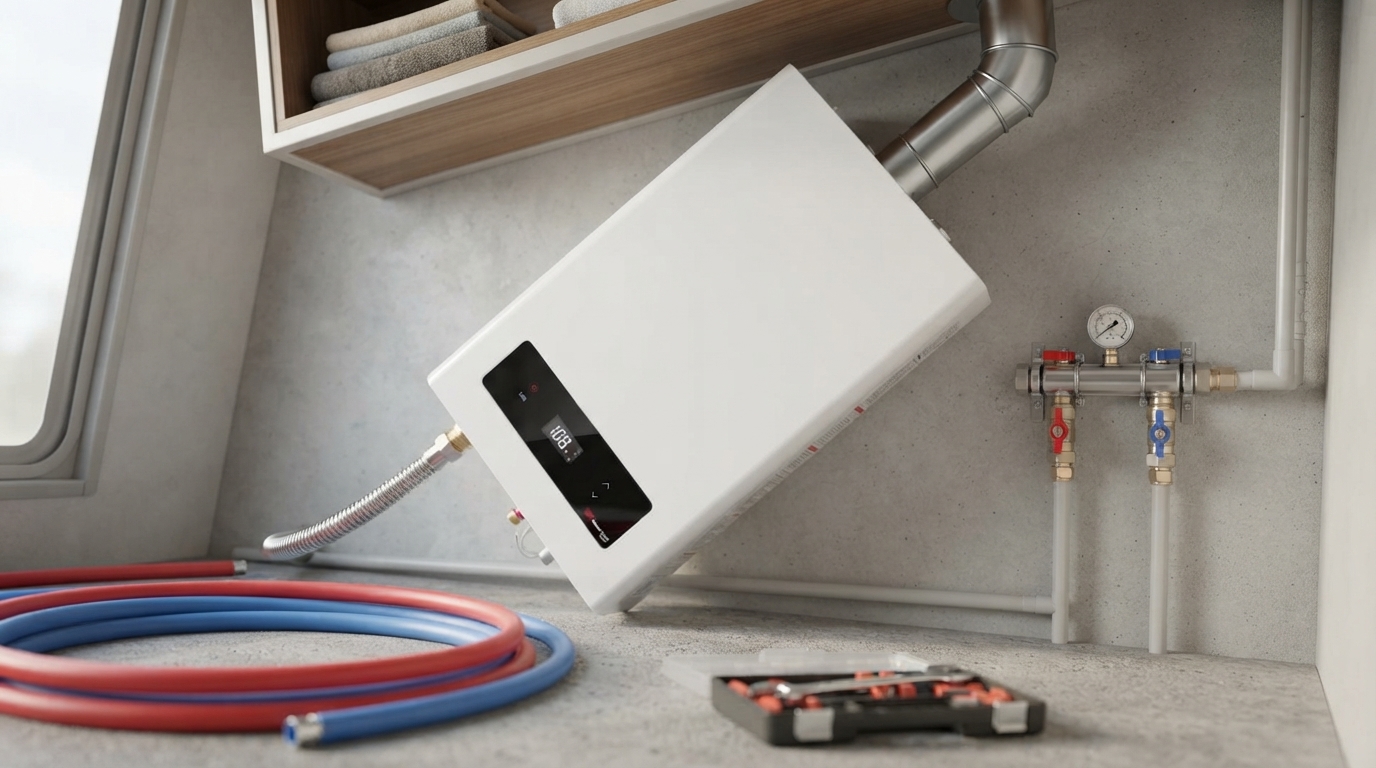
What is the difference between BTU and GPM for tankless water heaters?
BTU and GPM measure two different sides of tankless water heater performance. BTU (British Thermal Units) describes how much heat energy the unit can produce. GPM (gallons per minute) describes how much hot water the unit can deliver at a given temperature rise. In practical terms, BTU is the “heating muscle,” and GPM is the “hot-water flow you actually get” once that muscle is applied to your incoming water temperature.
How BTU affects what a tankless unit can do
A higher BTU rating means the heater can add more heat to the water as it passes through. This becomes critical when your incoming water is cold (winter or cold-climate groundwater) or when you want a larger temperature rise (for example, taking 50–60°F water up to 120°F). When BTU is too low for your needs, the unit may still run, but it will reduce flow to keep up—so the shower can feel weaker or fluctuate when other fixtures turn on.
How GPM is determined (and why it changes)
GPM is not a fixed “always-on” number. Manufacturers typically list GPM at specific temperature-rise conditions. The same heater might supply a higher GPM with a 35°F rise and a lower GPM with a 70°F rise. That’s why comparing only the advertised GPM without checking the temperature rise can be misleading.
Putting BTU and GPM together for sizing
The goal is to match your peak simultaneous hot-water demand (multiple fixtures at once) with a heater that has enough BTU to maintain your target outlet temperature at your local incoming-water temperature. If you’re choosing between models, a higher BTU unit generally supports higher usable GPM under tougher conditions. For a deeper walkthrough on connecting fixture flow rates, temperature rise, and heater capacity, see the sizing guide here: https://supremefindsworld.shop/guide-indoor-tankless-gas-water-heater-sizing-gpm-btu/.
FAQ
What temperature rise should I use when sizing a tankless water heater?
Use the difference between your incoming cold-water temperature and your desired hot-water setpoint (often around 120°F). In colder regions, the needed rise is larger, which reduces the GPM a given unit can provide.













Leave a comment