3000W 30.6Qt Commercial Electric Deep Fryer Guide
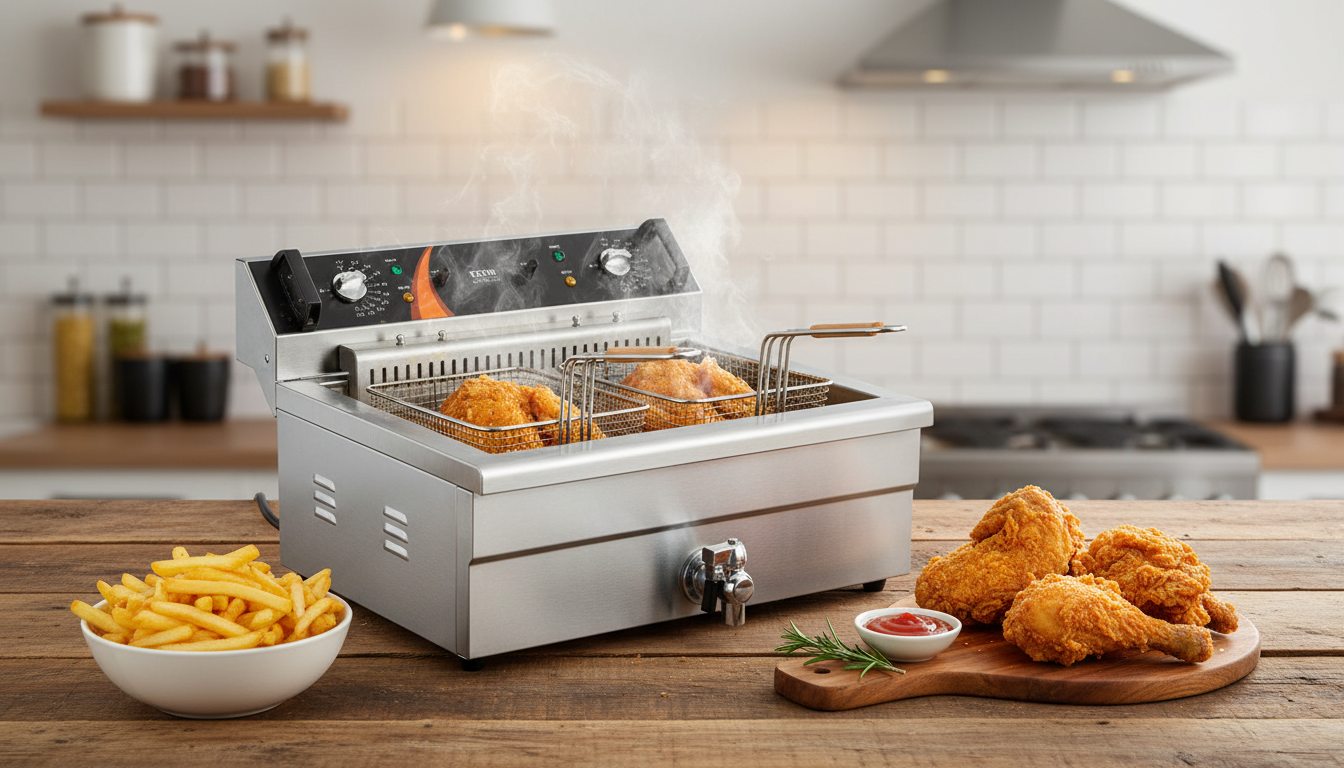
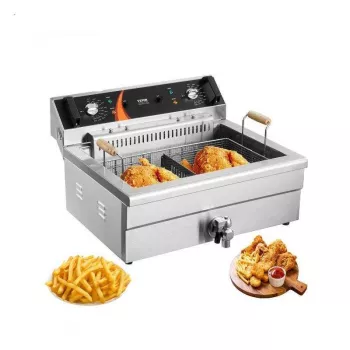
3000W Commercial Electric Deep Fryer with 30.6Qt Capacity (Stainless Steel): Setup, Use, and Buying Details
A large-capacity stainless steel electric deep fryer can speed up service, keep batches consistent, and simplify cleanup in busy kitchens. A 30.6Qt commercial unit is built for repeated drops and steadier recovery, helping the line stay on pace when tickets stack up. Below are practical buying checkpoints, placement and electrical basics, and day-to-day operating habits that protect oil quality and food safety.
What This Fryer Is Designed For
- High-volume batch frying for restaurants, bars, food trucks, concessions, and catering prep lines
- Stainless steel construction for durability and faster wipe-downs in commercial environments
- Electric operation suited to kitchens where gas lines are unavailable or undesirable
- Large oil capacity for handling repeated loads without dramatic temperature swings
If your menu depends on consistent texture—crisp fries, evenly browned wings, breaded appetizers that don’t go soggy—capacity and recovery are often more important than extra features. A 3000W-class countertop fryer is typically chosen when the goal is to keep output steady through peak service rather than cooking a few occasional baskets.
Key Specs That Matter in Daily Service
- Power (3000W class): Supports faster heat-up and better temperature recovery after loading baskets.
- Capacity (30.6Qt oil): Larger thermal mass helps reduce temperature dips across consecutive drops.
- Material (stainless steel): Resists corrosion and stands up to frequent sanitation routines.
- Commercial workflow: Basket handling, drainage approach, and stable placement affect speed and repeatability.
| Spec | What it changes | Why it matters during rush periods |
|---|---|---|
| 3000W heating | Heat-up and temperature recovery | Helps reduce soft/greasy results caused by slow recovery |
| 30.6Qt capacity | Batch volume and oil stability | Bigger thermal mass can keep temperatures steadier across consecutive drops |
| Stainless steel build | Durability and cleaning | Faster wipe-downs and better resistance to daily wear |
| Commercial basket workflow | Speed and consistency | More repeatable cook times and less product breakage when loading/unloading |
Best Uses: Foods and Workflows That Benefit Most
- Frozen-to-fryer items (fries, wings, breaded appetizers) where predictable recovery keeps texture consistent
- Breaded proteins and seafood where stable oil temperature reduces blowouts, patchy browning, and soggy crust
- High-throughput sides (chips, onion rings) where multiple rapid drops are common
- Catering prep runs where large capacity supports longer continuous batches with fewer interruptions
For operations running back-to-back baskets, a larger oil reservoir can act like a buffer: temperature still drops when food hits the oil, but it tends to rebound more reliably when you keep loads consistent and avoid overcrowding.
Placement, Electrical Needs, and Safety Basics
- Confirm electrical capacity before setup: Higher-wattage countertop equipment may need a dedicated circuit depending on local code and your kitchen’s total load.
- Maintain working clearance: Leave space around the fryer for ventilation and safe basket movement.
- Avoid splash and pinch points: Keep away from sink spray zones and tight traffic areas to reduce slip/burn risk.
- Verify temperature with a thermometer: Even with a built-in control, do an oil temp check before service and after long idle periods.
Fire and burn prevention is part equipment, part routine. Review commercial cooking safety practices and staff habits (such as never leaving hot oil unattended) and keep your work area clear; the U.S. Fire Administration has a helpful overview of cooking fire safety at usfa.fema.gov.
Operating Tips for Crisp Results and Cleaner Oil
| Problem | Likely cause | Adjustment |
|---|---|---|
| Food turns greasy | Oil temperature too low or slow recovery | Preheat longer; reduce load size; allow recovery between drops |
| Outside browns too fast | Oil too hot or sugars in coating | Lower set temperature slightly; monitor actual temp with a probe |
| Breading falls off | Wet surface or overhandling | Pat dry; rest breaded items; lower gently into oil |
| Oil darkens quickly | Crumbs burning; infrequent skimming | Skim more often; filter and replace on schedule |
For food safety, always confirm the final internal temperature of proteins with a calibrated probe thermometer. The USDA’s safe minimum internal temperature chart is a solid reference at fsis.usda.gov.
Cleaning and Maintenance Routine
For sanitation and operational guidance, many kitchens align procedures with principles found in the FDA Food Code (overview at fda.gov), then tailor details to their local health department requirements.
Who This Size Makes Sense For (and When It Doesn’t)
Price, Value, and What to Confirm Before Ordering
In-Stock Options on Supreme Finds World
- 3000W Commercial Electric Deep Fryer with 30.6Qt Capacity, Stainless Steel
- Portable Folding Camping Table (a convenient extra surface for staging baskets, trays, or packaging in tight prep areas)
FAQ
How long does it take a 3000W electric deep fryer to heat up?
Plan on roughly 20–45 minutes depending on starting oil temperature, fill level, and your target set point. A 30.6Qt-capacity fryer can take longer than smaller units, so preheat before service and confirm actual oil temperature with a separate thermometer.
What temperature should oil be for fries and wings?
Fries are commonly fried around 325–375°F depending on thickness and whether they’re blanched first, while wings are often fried around 350–375°F for crisp skin. Use your recipe as the final authority and maintain steady recovery between drops for consistent color and texture.
How often should fryer oil be changed in a commercial setting?
It depends on volume, breading load, and how often you skim and filter; heavier breading usually shortens oil life. Change oil when it stays dark, foams persistently, smells off, or smokes at normal frying temperatures, and use a regular filter/top-off routine to extend usable life.













Leave a comment