Air Compression Leg Massager: Foot, Calf, Thigh & Knee Ease
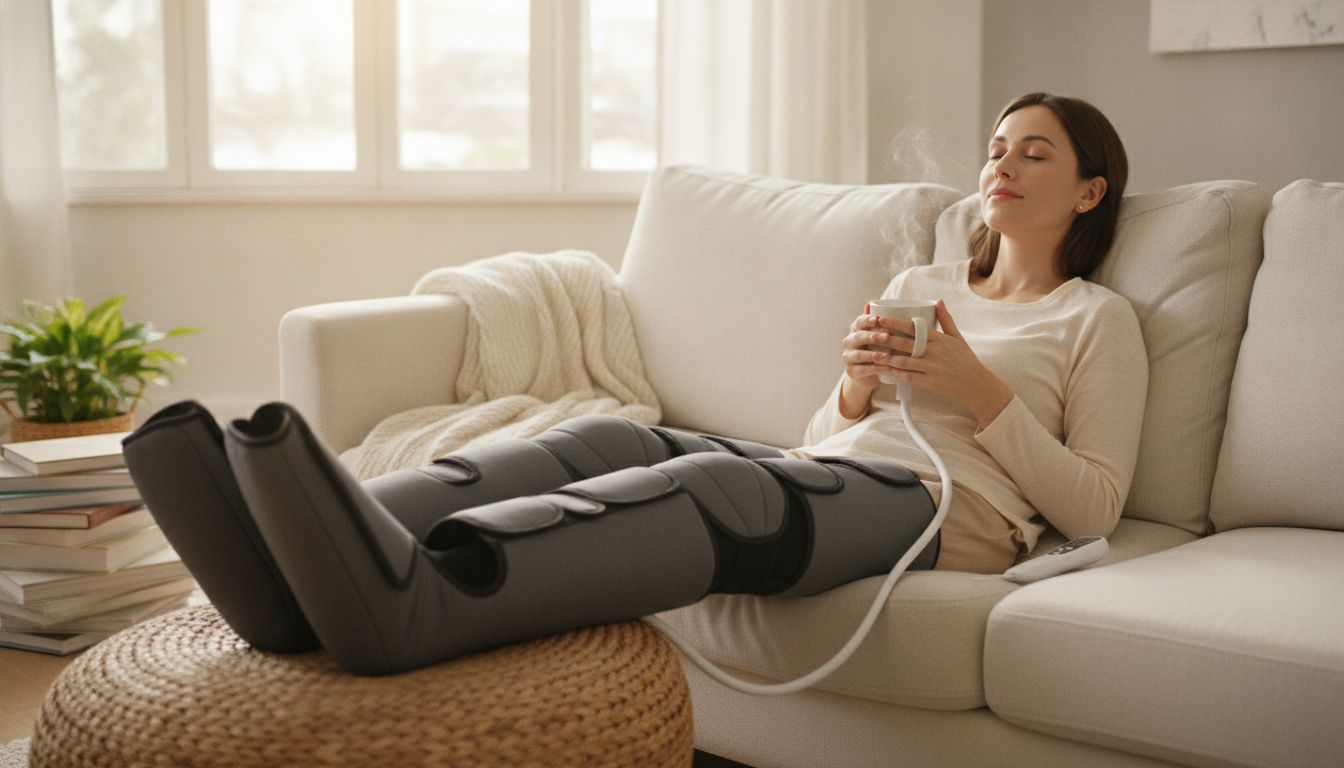
Air Compression Leg Massager for Foot, Calf, Thigh & Knee Pain Relief
Leg heaviness, swelling, and muscle tightness can build up from long days standing, workouts, travel, or limited circulation. An air compression leg massager uses rhythmic inflation and deflation to apply consistent pressure along the foot, calf, thigh, and around the knee area, helping legs feel looser and more comfortable after daily strain.
What Air Compression Does for Tired Legs
Air compression massage is a squeeze-and-release experience that can feel steady and structured compared to hand massage. The wraps fill with air, then release, creating a cycling pressure that many people use to unwind after a demanding day.
- Applies cyclical pressure that feels similar to a squeeze-and-release massage
- Helps reduce the “heavy legs” sensation after prolonged sitting or standing
- Supports recovery comfort after exercise by relaxing tight muscle groups
- Can be used as a routine for end-of-day relaxation or pre-sleep wind-down
- Targets multiple zones (foot, calf, thigh, knee area) so relief isn’t limited to one hotspot
Compression is also commonly discussed as a comfort and support tool for swelling and circulation habits. For background on compression therapy, see Cleveland Clinic’s overview of compression therapy. If leg swelling is a concern, learning common causes and warning signs can be helpful; Mayo Clinic’s overview of edema (swelling) is a good reference.
Who This Type of Massager Fits Best
Air compression leg massagers are often chosen by people who want a simple, repeatable routine without scheduling appointments or learning advanced techniques.
- Desk workers and drivers who sit for long stretches and want an easy reset
- People who stand all day (retail, healthcare, hospitality) and need decompression for lower legs
- Walkers, runners, and gym-goers looking for a gentle recovery tool between workouts
- Frequent flyers or travelers who want post-travel leg comfort
- Anyone managing occasional stiffness around the calf, thigh, or knee area from daily activity (non-medical use)
Features That Matter Most (and Why)
Not all compression massagers feel the same. Small differences—like how many intensity steps you get or how well the wraps fit—can change the entire experience from “too much” to “just right.”
- Compression intensity levels: Lets pressure stay comfortable rather than overpowering.
- Massage modes/patterns: Alternate sequences can lean more relaxing or more stimulating.
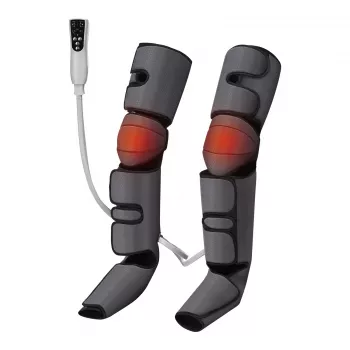
- Zone coverage: Foot + calf + thigh coverage helps address tightness that can radiate up the leg.
- Fit and adjustability: Secure wraps improve consistency and comfort across different leg sizes.
- Session timer/auto shutoff: Encourages safe, repeatable routines without overdoing it.
- Noise level: Quieter pumps are easier to use while reading, watching TV, or winding down.
- Portability and storage: Foldable wraps and a compact controller are easier to keep in a daily rotation.
Quick checklist for comparing air compression leg massagers
| Feature | Why it matters | What to look for |
|---|---|---|
| Compression levels | Comfort and control for different sensitivities | Multiple intensities with easy adjustment |
| Coverage zones | Targets more than one problem area | Foot + calf + thigh coverage; knee-area support |
| Modes/patterns | Variety prevents the massage from feeling repetitive | At least a few distinct patterns |
| Fit/straps | Even pressure depends on secure contact | Adjustable wraps and stable closures |
| Timer/auto-off | Consistent sessions and safer routines | Built-in session timing |
| Ease of use | More likely to be used regularly | Simple controls and clear indicators |
How to Use It for Foot, Calf, Thigh, and Knee-Area Comfort
A good session should feel supportive, not intense. The goal is a comfortable rhythm that helps your legs “downshift” after stress.
- Start low: Begin with the lowest intensity for the first few sessions, then increase gradually.
- Positioning: Keep legs supported on a couch or bed so muscles can relax while compression cycles.
- Routine idea: Try 10–20 minutes after work or after training, then reassess comfort before repeating.
- Targeting: If one area feels more tense (calves after standing, thighs after training), choose a mode that emphasizes that zone when available.
- Hydration and movement: Pair sessions with light walking and regular hydration for everyday comfort habits.
- Stop if uncomfortable: Discontinue use if numbness, sharp pain, or unusual discomfort occurs.
Comfort and Safety Notes
Product Spotlight: Air Compression Leg Massager
If you want one device that covers multiple lower-body zones, the Air Compression Leg Massager for Foot, Calf, Thigh & Knee Pain Relief is built for all-in-one use from the feet up through the calves and thighs, with supportive coverage around the knee area.
Simple Pairings That Make Recovery Feel Better
- Warmth and relaxation: A quiet, warm room can help muscles release during compression sessions. For cozy at-home comfort, consider ambient heat options like the 60-Inch Wall-Mounted Electric Fireplace Heater with App Control & Remote.
- Stretching after compression: Gentle calf and hamstring stretches can extend the “loose legs” feeling.
- At-home heat therapy: Warmth can complement compression on days of general stiffness (avoid combining if it causes discomfort).
- Full-body recovery upgrade: Sauna sessions can support relaxation on non-training days for those who tolerate heat well; the Infrared Sauna for One Person is an at-home option for longer relaxation routines.
FAQ
How long should a compression leg massage session be?
A practical range is often 10–20 minutes. Start shorter on a low setting for your first few sessions, and stop right away if you feel numbness, sharp pain, or unusual discomfort.
Can an air compression leg massager be used every day?
Many people use air compression daily as long as it stays comfortable and doesn’t cause lingering soreness or irritation. Consider alternating intensity levels, and get clinician guidance if you have circulation, clotting, neuropathy, or other medical concerns.
Is it safe to use an air compression massager around the knee area?
For general comfort and relaxation, knee-area compression is commonly used when wraps fit properly and aren’t overly tight. Avoid use over acute injuries or during post-surgical recovery unless a healthcare professional has cleared it.













Leave a comment