48×30 Metal Bathroom Mirror: Sizing, Style & Mounting
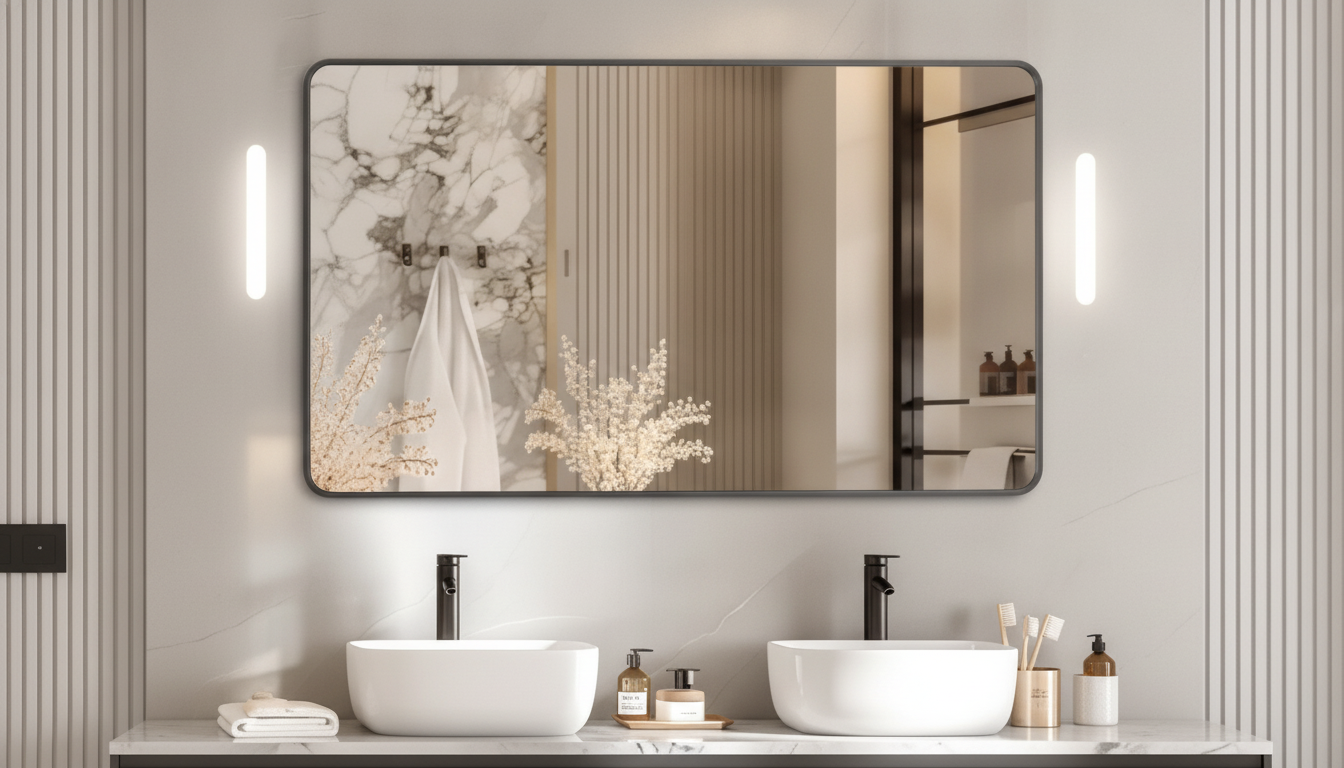
A metal-framed bathroom mirror in a 48×30 size can instantly sharpen a vanity area—adding contrast, structure, and a more finished look. This guide covers what the dimensions mean in real bathrooms, how a black metal frame changes the room, where it fits best, and what to know before mounting.
What a 48×30 Mirror Looks Like on a Bathroom Wall
A 48-inch-wide mirror reads “vanity-spanning” in most bathrooms. Over a double-sink setup, it often covers the primary grooming zone without needing two separate mirrors. Over a single vanity, that width creates a generous viewing area that feels boutique-hotel polished—especially when the countertop is wide and the wall is relatively open.
The 30-inch height adds presence without turning the mirror into a floor-to-ceiling feature. In many homes with typical ceiling heights, 30 inches is tall enough to feel substantial while still leaving comfortable space above for lighting, art, or breathing room to the ceiling line.
For the cleanest layout, center the mirror on the vanity and align it thoughtfully with your light fixtures. Before ordering, measure the available wall width between side walls, tall cabinets, and planned sconces so the mirror doesn’t feel squeezed in or force awkward lighting placement.
Where This Size Fits Best
Double vanity setups
One wide mirror can look calmer than two smaller mirrors, particularly when the countertop is continuous and the backsplash runs uninterrupted. A 48×30 mirror is a common “sweet spot” when you want a unified look without committing to an extra-wide, wall-dominating mirror.
Single vanity in a primary bath
If your vanity is roughly 42–48 inches wide, a 48-inch mirror can create an upscale, nearly wall-to-wall impression. It’s a simple way to make a standard vanity feel more custom, especially when paired with a streamlined light bar or symmetrical sconces.
Powder rooms
In compact powder rooms, a 48×30 mirror can feel oversized—but that can be the point. If the rest of the decor stays minimal, a larger black-framed mirror becomes an intentional statement that adds drama without clutter.
Narrow bathrooms
In tighter layouts, consider door swing, towel bars, and wall cabinets. A mirror should be the focal point, not something that competes with nearby obstacles or visually crowds the vanity wall.
Black Metal Frame: The Design Impact
A black metal frame creates crisp contrast against white tile, pale paint, and marble-look surfaces. Instead of the mirror “disappearing” into the wall, the frame defines the vanity zone and gives the room a stronger outline—particularly helpful in bathrooms dominated by light neutrals.
Black-framed mirrors pair naturally with matte black faucets, cabinet pulls, shower trim, and even black grout lines. When repeated in just a few places, black accents can make a bathroom feel intentional rather than pieced together.
Mounting Options and Placement Tips
Orientation
Height and spacing
Lighting
Moisture considerations
Bathrooms are humid by nature, so use appropriate anchors and mounting hardware for your wall type and mirror weight. Good ventilation helps protect finishes over time; the EPA’s indoor air quality guidance is a helpful reference for moisture control basics (https://www.epa.gov/indoor-air-quality-iaq).
If you’re mounting into drywall and not hitting studs, choose wall anchors rated for the load, and follow safe wall-mounting practices; the Consumer Product Safety Commission’s general anchoring guidance is a useful starting point (https://www.cpsc.gov/Safety-Education/Safety-Guides/General-Information/Anchor-It).
Quick Sizing Guide (With a Practical Rule of Thumb)
| Vanity width | Typical mirror width range | Notes |
|---|---|---|
| 24 in | 20–24 in | Compact spaces; consider a taller mirror to add vertical presence. |
| 30 in | 24–30 in | Leave a small margin on both sides for a clean framed look. |
| 36 in | 30–36 in | Common single-vanity size; choose based on sconce spacing. |
| 48 in | 42–48 in | A 48-inch mirror can match the vanity for a bold, seamless look. |
| 60 in | 48–60 in | Often used for double vanities; verify light placement and wall space. |
Care and Long-Term Durability
Product Picks for a Polished Vanity Upgrade
- 48×30 Inch Black Metal Bathroom Mirror — A wide, metal-framed option that suits contemporary, industrial, and modern farmhouse spaces. Confirm wall measurements and planned light placement before installation for the cleanest final look.
- Infrared Sauna for One Person — A spa-style add-on for a primary suite or wellness corner; pairs nicely with a bathroom refresh when you’re building a more relaxing routine at home.
- 60-Inch Wall-Mounted Electric Fireplace Heater with App Control & Remote — A comfort-focused upgrade for adjacent spaces like a primary bedroom or lounge area, helping extend the “suite” feel beyond the vanity.
FAQ
Should a bathroom mirror be the same width as the vanity?
Most bathrooms look balanced when the mirror is close to the vanity width but slightly smaller, leaving a bit of space on each side. Matching the vanity width can also look intentional, but you’ll want to account for sconces, side walls, and any tall cabinets.
Can a 48×30 mirror be hung vertically?
Yes—if the mirror’s mounting hardware is designed to support vertical installation. Vertical orientation is especially useful on narrow walls or when you want a taller, more architectural look; verify stud placement and clearance before drilling.
How do you clean a black metal-framed bathroom mirror without streaks?
Use a microfiber cloth with a small amount of gentle glass cleaner, preferably sprayed onto the cloth instead of the mirror edge. Wipe the glass, then dry-buff, and keep moisture from lingering along the frame seams to help prevent residue lines.
















Leave a comment