52-Inch Bird Cage on a Rolling Stand: What to Look For
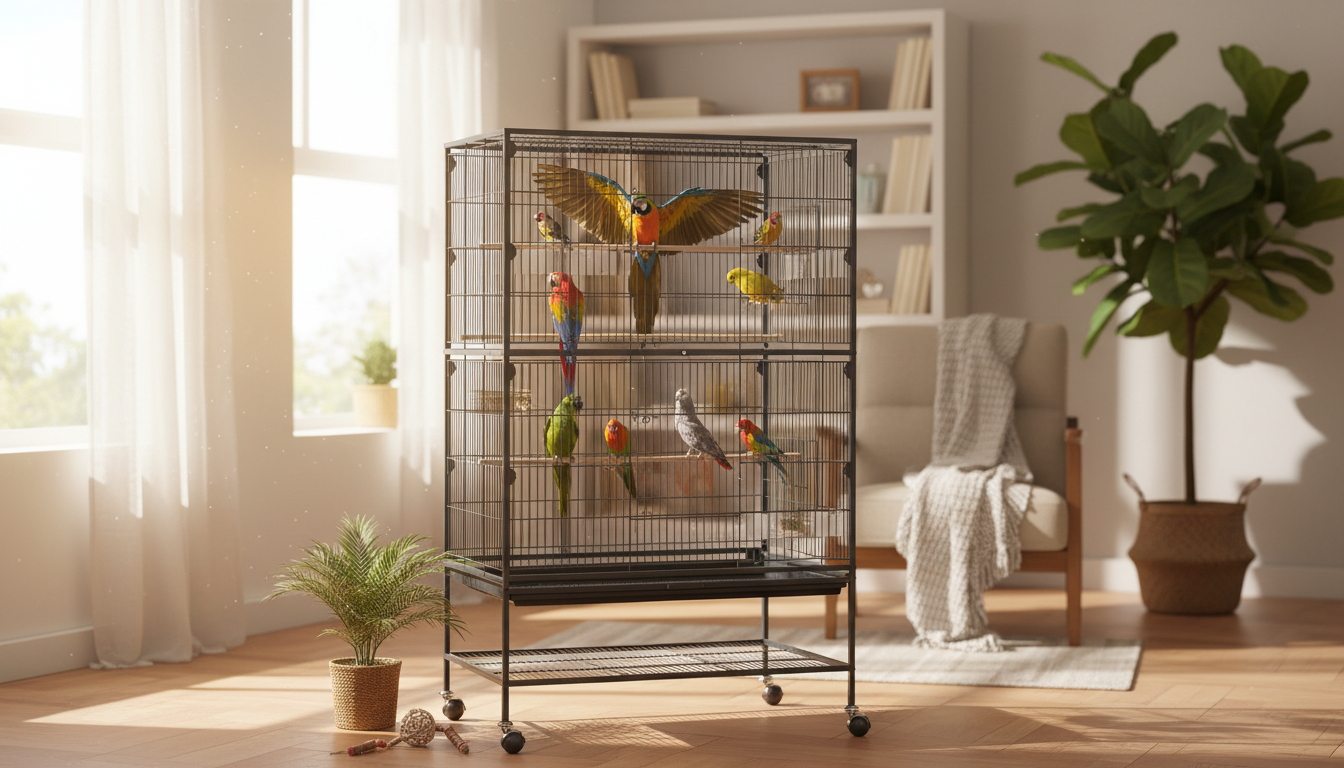
52-Inch Bird Cage with Rolling Stand: Space, Mobility, and Everyday Comfort for Pet Birds
A tall bird cage on a rolling stand can make daily care easier while giving birds room to climb, perch, and play. The best results come from focusing on the details that affect comfort and safety every day: usable interior space, species-appropriate bar spacing, secure doors, easy cleaning, and a stable stand that moves when you want it to—and stays put when you don’t. For more guidance, see Jaula Para Pajaritos FDW 39 Inch Play Top Bird Cage With Rolling ….
What a 52-inch cage with a rolling stand does well
A 52-inch cage (typically referring to overall height) often hits a practical sweet spot for many companion bird homes: it’s tall enough for multi-level perching, but still manageable to place in common living spaces. For further reading, see 55 Inch Double Stackable Wrought Iron Bird Cage | Rolling Stand ….
- Vertical room for climbing: Many birds spend the day moving up and down, especially parrots that like to scale side bars and travel between perches.
- Mobility without heavy lifting: A rolling stand makes it simpler to shift the cage for daylight, airflow, or family time—then return it to a consistent “home base.”
- Elevated base: Keeping the cage off the floor can reduce exposure to floor-level drafts and makes it easier to vacuum around fallen seed and feather dust.
- More layout options: A larger footprint usually supports better perch spacing and more toy variety, which helps reduce boredom and repetitive behaviors.
Size and bar spacing: matching the cage to the bird
Height is helpful, but usable interior space matters most. Birds benefit from width and depth for wing stretches and short “hops” between perches. Before buying, confirm the interior dimensions (not just overall dimensions that include the stand), and picture where bowls, perches, and toys will actually sit.
Bar spacing is a safety issue, not a preference. If spacing is too wide, a bird can slip its head between bars, risking injury or worse. Also check gaps at feeder doors and main door edges—some cages have safe side bars but wider openings around access points.
Quick bar-spacing checkpoints by common bird size
| Bird type (examples) | Typical safe bar spacing range | Notes to double-check |
|---|---|---|
| Small (finches, canaries) | 1/4 in to 1/2 in | Very small heads require tight spacing; avoid wide-bar cages |
| Small parrots (budgies, parrotlets) | 1/2 in | Check door gaps and feeder-door spacing too |
| Medium parrots (cockatiels, conures) | 1/2 in to 5/8 in | Look for sturdy locks if the bird is an escape artist |
| Large parrots (African greys, amazons) | 3/4 in to 1 in | Bar thickness and weld quality become critical |
| Extra-large (macaws) | 1 in to 1 1/2 in | Cage must be purpose-built for size and bite force |
A bigger cage also helps prevent “enrichment clutter.” Instead of cramming everything into a tight space, you can add swings, foraging toys, and perches while still keeping a clear path for movement. For multi-bird households, consider separate cages if compatibility is uncertain or if either bird shows territorial behavior around food, favorite perches, or doors.
Rolling stand features that matter day to day
A rolling stand is only convenient when it’s stable. The cage should feel solid when the bird climbs side bars, flaps, or launches between perches.
- Locking casters: At least two wheels should lock firmly, and the locks should be easy to engage without putting fingers near curious beaks.
- Wheel size: Larger casters tend to roll more smoothly over thresholds and low-pile rugs, reducing wobble.
- Storage shelf: A lower shelf is useful for liners, spare toys, treats, and a small cleaning kit—so you’re less likely to leave supplies scattered around the room.
- Anti-wobble stability: If the stand flexes when pushed, consider whether the floor is uneven or whether the cage footprint is mismatched to the stand.
Cleaning and access: trays, doors, and feeder systems
Easy cleaning is one of the biggest quality-of-life upgrades a taller cage can offer—especially when paired with a stand that brings the tray to a comfortable working height.
Comfort setup: perches, bowls, and enrichment layout
Safe placement in the home
Product options to consider
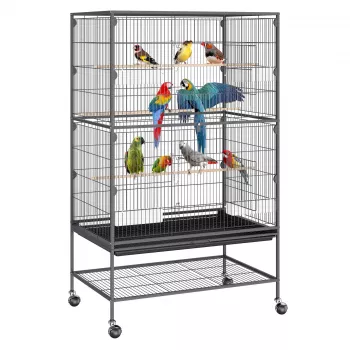
- 52-Inch Large Bird Cage with Rolling Stand — a tall cage design paired with a rolling stand for easier repositioning during cleaning or room changes.
- Portable Folding Camping Table — a handy side station for prepping chop, organizing toys, or staging cleaning supplies near (but not on) the cage.
At-a-glance checklist before purchase
| Check | Why it matters | What to verify |
|---|---|---|
| Interior dimensions | Room to move and spread wings | Compare to current cage and bird’s activity level |
| Bar spacing and thickness | Safety and durability | Species-appropriate spacing; sturdy welds |
| Door sizes and latches | Stress-free handling and escape prevention | Main door access + secure locks |
| Tray/grate design | Cleaner cage with less mess | Slide-out tray; easy alignment; liner compatibility |
| Caster locks and stability | Safety on hard floors | Locks hold; cage doesn’t wobble when pushed |
FAQ
Is a rolling stand safe for a bird cage?
Yes when the casters lock firmly and the stand is stable. Lock the wheels after moving, avoid uneven floors, and don’t roll the cage during stressful moments (like loud vacuuming) if your bird startles easily.
How often should a large bird cage be cleaned?
Spot-clean daily by changing liners and removing obvious droppings and food mess, and wash bowls daily. Plan a deeper clean weekly for the tray, grate, perches, and high-touch bars, adjusting for how messy your bird is.
What bar spacing is safest for small parrots like budgies or cockatiels?
Budgies typically do well around 1/2 inch spacing, while cockatiels often fit 1/2 to 5/8 inch. Always confirm your bird can’t fit its head between bars, and check feeder-door gaps too.














Leave a comment