65-Inch White Arched Cabinet with Reeded Glass Door
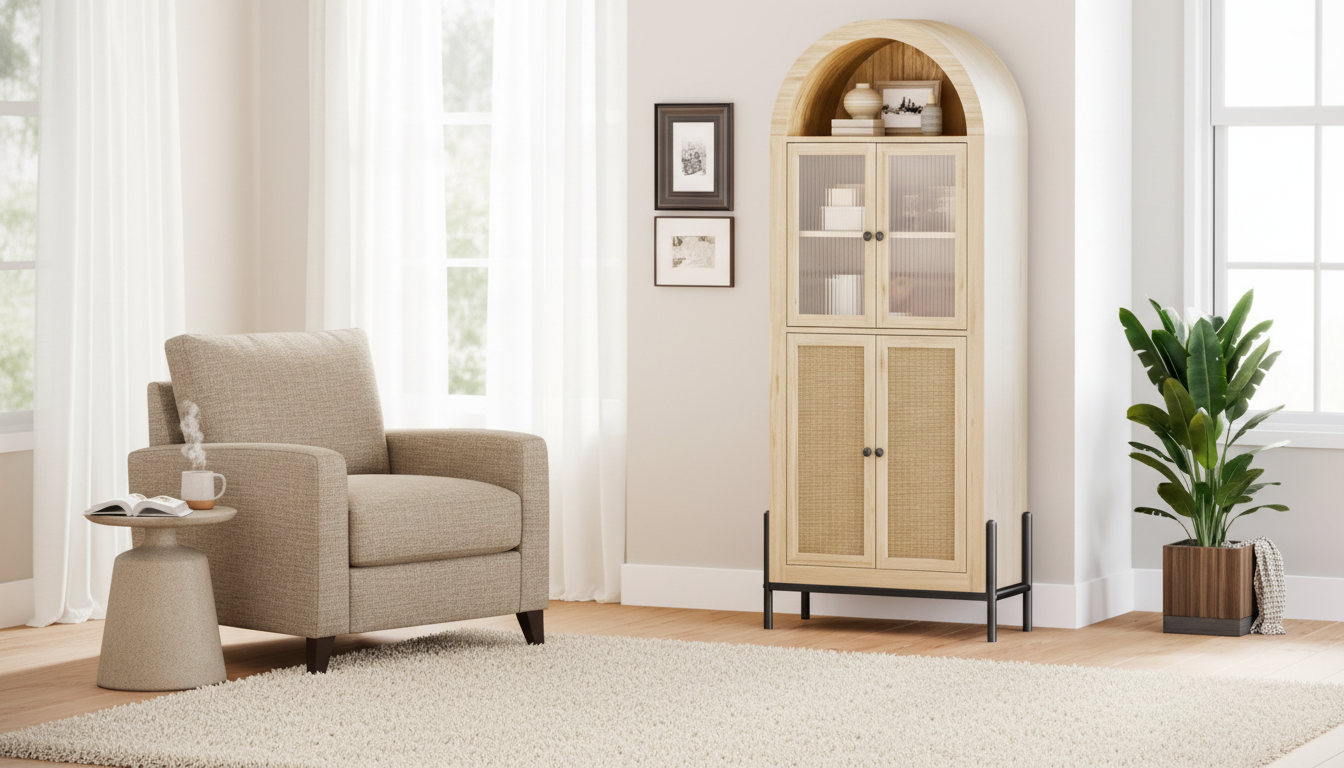
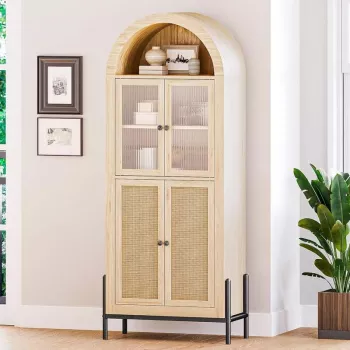
65 Inch White Freestanding Arched Storage Cabinet with Reeded Glass Door
A tall, freestanding cabinet with an arched top and reeded glass door brings a softer architectural shape and lightly obscured display storage to a room. The result is storage that feels curated rather than cluttered—especially helpful in open-concept spaces where everything is visible. Below, you’ll find practical guidance on where this style works best, how to measure and place it, what to consider during setup, and how to style and maintain a white arched cabinet so it stays functional and polished over time.
What Makes an Arched Reeded-Glass Cabinet Feel Different
An arched silhouette naturally draws the eye upward, adding height and a focal point without needing built-in or wall-mounted cabinetry. It reads as furniture, not construction—ideal for rentals or rooms where permanent changes aren’t an option.
Reeded (fluted) glass is the quiet hero here: it filters visual noise by blurring outlines while still letting light pass through. That balance makes everyday storage—glassware, dishes, baskets, books—feel more intentional than it would behind clear glass.
A white finish also does a lot of heavy lifting. It brightens darker corners, plays well with warm woods, and looks crisp next to cooler materials like stone, concrete, or mixed metals.
Quick Specs and At-a-Glance Details
For a clean, tailored upgrade in a dining room, living room, or entryway, the 65 Inch White Freestanding Arched Storage Cabinet with Reeded Glass Door offers a tall profile and a softer view of what’s stored inside. It can also work as bathroom/linen overflow as long as humidity is controlled and spills are wiped promptly.
| Detail | What to expect |
|---|---|
| Product | 65 Inch White Freestanding Arched Storage Cabinet with Reeded Glass Door |
| Height | 65 inches |
| Color | White |
| Door style | Arched front with reeded glass |
| Type | Freestanding storage cabinet |
| Availability | In stock |
| Price | $335.47 USD |
Where It Works Best (Room-by-Room Ideas)
Dining room
Use it for glassware, bar accessories, and serving pieces. The reeded glass keeps stacks and silhouettes from looking busy, so the room stays relaxed even when the shelves are doing real work.
Living room
It’s a strong fit for books, framed photos, and decorative objects—while still giving you a place to hide remotes, candles, or small tech accessories. If you like a styled look without dusting dozens of open shelves, this is a happy medium.
Entryway
Store hats, gloves, small bags, and seasonal extras. If you use the top as a surface, keep it simple: a tray for keys and a small lamp or vase to echo the cabinet’s height.
Bedroom
Think of it as a wardrobe supplement: folded knits, accessories, and extra linens. Behind textured glass, even practical categories (like workout gear) look more composed when they’re grouped.
Home office
Great for paper goods, printer supplies, and devices you don’t want on display. The white finish keeps the workspace light, and the arched shape adds softness to rooms filled with straight lines.
Choosing Placement and Measuring for a Tall Freestanding Cabinet
Start with the basics: measure the cabinet’s intended wall space (height and width) and confirm door swing clearance. A door that can’t open fully becomes an everyday frustration—especially in tight dining rooms or narrow hallways.
Leave a small gap from the wall for baseboards and to prevent scuffs during door operation. If floors are slightly uneven, furniture pads can reduce wobble and help the door align more smoothly.
Also consider sightlines and lighting. Reeded glass looks best when natural light or a nearby lamp grazes the texture, creating subtle shadows that highlight the fluting. Finally, protect pathways: if it’s near a dining table, sofa, or main hallway route, keep clearance comfortable so the cabinet reads as purposeful, not crowded.
Styling the Reeded Glass: What to Put Inside So It Looks Intentional
Assembly, Setup, and Safety Notes for Freestanding Storage
During assembly, check for squareness as you go; a cabinet that’s slightly out of square can lead to a door that rubs, won’t latch cleanly, or sits unevenly against the frame. When available, use the included anti-tip hardware—especially in homes with kids, pets, or high-traffic areas. The U.S. Consumer Product Safety Commission’s Anchor It! campaign is a helpful reference for tip-over prevention: https://www.cpsc.gov/Safety-Education/Safety-Guides/Anchor-It.
Care and Cleaning for White Finishes and Textured Glass
If the cabinet sits in a space that can get humid, keep airflow steady and wipe spills promptly to protect edges and seams. For broader home comfort considerations (including indoor humidity and air quality), the EPA’s indoor air quality guidance is a useful resource: https://www.epa.gov/indoor-air-quality-iaq.
How to Make It Coordinate With the Rest of the Room
If you want a color plan that complements white furniture without overpowering it, the Colorful Quiet Luxury Palettes Checklist can help you choose a restrained set of tones that still feels layered and elevated.
FAQ
Does reeded glass hide clutter or still show what’s inside?
Reeded glass blurs shapes and softens outlines while still letting light through, so it reduces the look of clutter without fully hiding contents. For the neatest result, group items by category and use baskets or matching containers to keep small pieces visually organized.
Should a tall freestanding cabinet be anchored to the wall?
Yes—anchoring is strongly recommended for tip-over prevention, especially with kids, pets, uneven floors, or heavy items stored inside. Use any included anti-tip hardware and follow the manufacturer’s setup instructions for the safest placement.
What’s the best way to clean reeded glass without streaks?
Use a microfiber cloth with minimal cleaner, wipe in the direction of the grooves, and dry-buff with a second clean cloth. Avoid harsh abrasives, which can leave residue in the fluting and make streaks more noticeable.











Leave a comment