3-Way AC Manifold Gauge Set: Setup, Readings & Safety
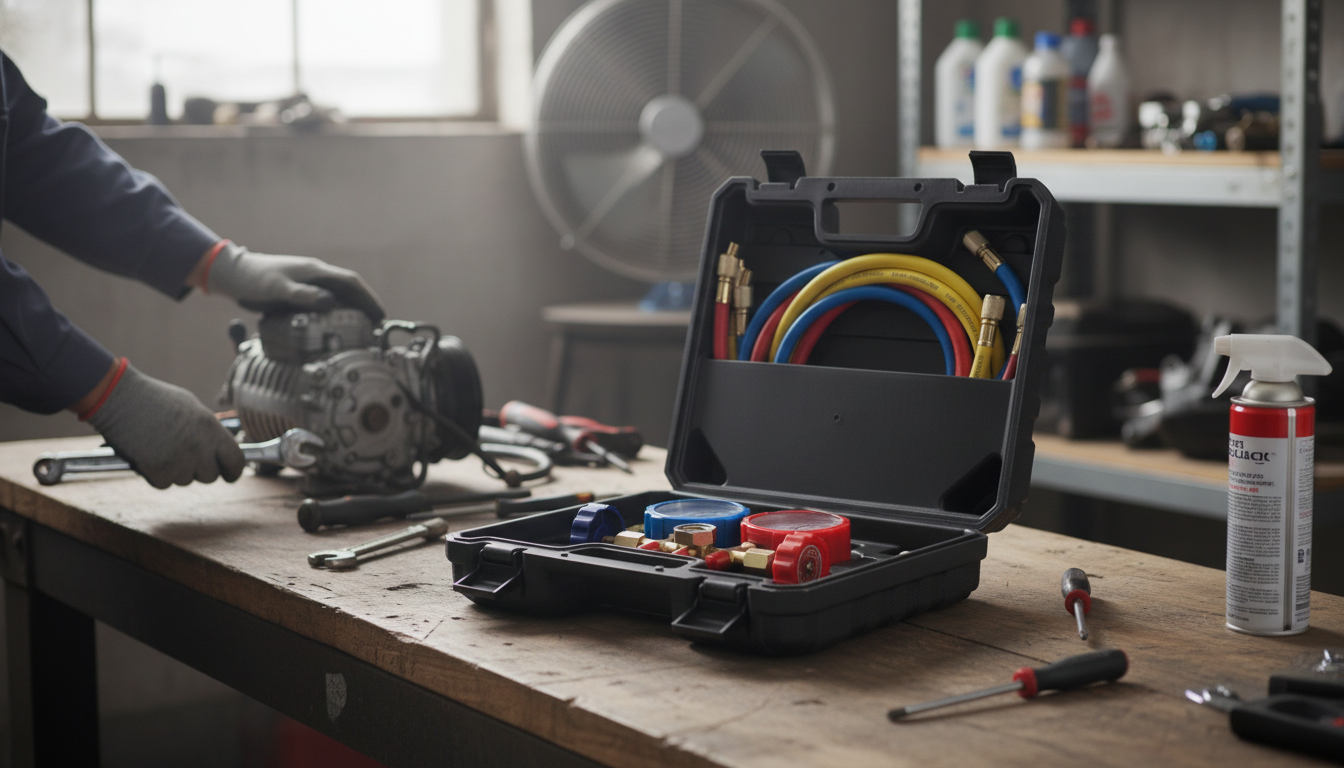
3-Way AC Manifold Gauge Set for R134A, R22, R12, and R502: Setup, Readings, and Safe Use
A 3-way manifold gauge set is used to monitor system pressures, evacuate air and moisture, and charge refrigerant with more control than single-gauge tools. With both low-side and high-side readings available at the same time, it supports clearer troubleshooting and more repeatable service results across many common A/C and refrigeration workflows. The sections below explain what a 3-way set does, how to connect it correctly, how to interpret common gauge readings, and practical safety steps for working with R134A, R22, R12, and R502 systems.
What a 3-way manifold gauge set does
- Measures low-side (suction) and high-side (discharge) pressure so operating conditions can be assessed during service and verification.
- Provides three ports/paths to connect to the system, a vacuum pump (or recovery machine), and a refrigerant source for evacuation and charging workflows.
- Supports common service tasks such as evacuation, charging by weight, and performance checks after repairs; leak checking requires appropriate test methods and tools.
- Helps diagnose restrictions, airflow problems, overcharge/undercharge, non-condensables, and compressor issues by comparing pressure and temperature behavior.
What’s included and how the parts work together
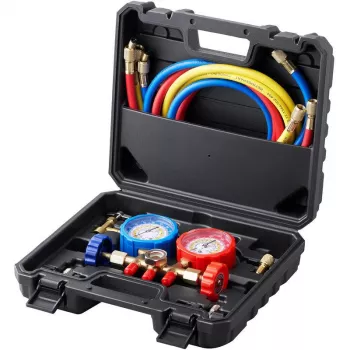
- Low-side (blue) gauge/valve: connects to the suction service port and is typically the path used for pulling vacuum and feeding refrigerant (when the procedure calls for low-side charging).
- High-side (red) gauge/valve: connects to the discharge service port and is primarily used for monitoring head pressure and certain recovery/charging procedures where allowed by the equipment instructions.
- Center (yellow) service hose/port: connects to a vacuum pump, recovery machine, or refrigerant cylinder depending on the step you’re performing.
- Hoses, seals, and fittings: hose condition matters; cracked hoses or worn gaskets can leak, introduce moisture, and skew readings.
- Gauge face scales: some dials include multiple refrigerant temperature scales; always use the scale that matches the refrigerant in the system (or a PT chart/digital tool for higher accuracy).
Refrigerant compatibility and typical service uses
Compatibility goes beyond what’s printed on the gauges. It also depends on whether hoses and seals are rated for the refrigerant and the lubricant family used in the system (mineral oil, POE, PAG). Mixing refrigerants or oils can create contamination problems that are expensive to correct.
- R134A: common in automotive and some refrigeration applications; follow the system service procedure for port locations and charge amount.
- R22: a legacy HVAC refrigerant; service typically emphasizes leak repair and charging by weight. Regulations can restrict purchase/use depending on location and certification.
- R12 and R502: legacy refrigerants found on older equipment; handling is highly regulated and may require certified service and approved alternatives.
- Accuracy tip: gauge pressure alone is not a reliable indicator of correct charge. Use a scale and the equipment’s specified charge whenever possible.
Quick reference: common connections and best-practice workflow
| Task | Blue (Low) Hose | Red (High) Hose | Yellow (Center) Hose | Notes |
|---|---|---|---|---|
| Pressure check (system running) | Connect to suction port | Connect to discharge port | Capped/closed | Open valves only as required; read pressures after conditions stabilize at normal load. |
| Evacuation (after repair) | Connect to suction port | Connect to discharge port | Connect to vacuum pump | Confirm with a micron gauge; pull to an appropriate vacuum and perform a hold test to verify dryness/leak tightness. |
| Charging by weight | Connect to suction port (typical) | Connect if procedure requires | Connect to refrigerant cylinder on scale | Follow refrigerant-specific method (vapor vs liquid) and equipment instructions; prevent liquid slugging. |
| Recovery (when required) | Connect as directed | Connect as directed | Connect to recovery machine | Recovery is often legally required before opening a system; use approved recovery equipment and cylinders. |
Step-by-step: connecting the gauge set correctly
How to interpret readings without guessing
Safety and handling essentials
- Wear eye protection and gloves; refrigerant contact can cause frostbite and serious eye injury.
- Work in ventilated areas and avoid inhalation. Prevent refrigerant release when possible.
- Never use oxygen or compressed air to pressure test a refrigeration system; use dry nitrogen with the correct regulator.
- Use recovery equipment when opening a system, and comply with refrigerant management rules, especially for regulated legacy refrigerants. Reference: U.S. EPA Section 608 requirements.
- Keep hoses away from hot surfaces and moving parts, and confirm manifold valves are closed before connecting or disconnecting.
Care, maintenance, and troubleshooting the gauge set
When a 3-way set is the right tool (and when it isn’t)
A 3-way manifold gauge set is ideal when you need controlled evacuation and charging workflows and want to monitor both sides at the same time. It’s not a complete service solution by itself: vacuum verification is best done with a micron gauge, accurate charging requires a scale, and leak detection needs appropriate test methods and tools. For broader refrigerant context and safety considerations, see the ASHRAE refrigerants resources.
Shop related gear
- 3-Way AC Manifold Gauge Set for R134A R22 R12 R502 ($47.82)
- Portable Folding Camping Table ($73.51) — a convenient portable surface for staging tools, a scale, and hoses during setup.
FAQ
Can the same manifold gauge set be used for R134A, R22, R12, and R502?
Yes, if the manifold, hoses, and seals are rated appropriately and the gauge/PT reference matches the refrigerant. Avoid cross-contamination, verify oil compatibility, and follow all regulations for legacy refrigerants.
Why do the gauge needles move a lot right after starting the system?
Startup causes rapid pressure changes as the compressor loads and refrigerant flow stabilizes. Wait for steady operating conditions and use temperature measurements (superheat/subcooling) to interpret the readings accurately.
Is a manifold gauge set enough to charge refrigerant correctly?
No. Correct charging should be done by weight using a scale and the manufacturer’s specified charge, while the gauge set is used to monitor pressures and confirm the system is operating as expected.















Leave a comment