House Bunk Bed with Slide & Trundle: Shared Room Win
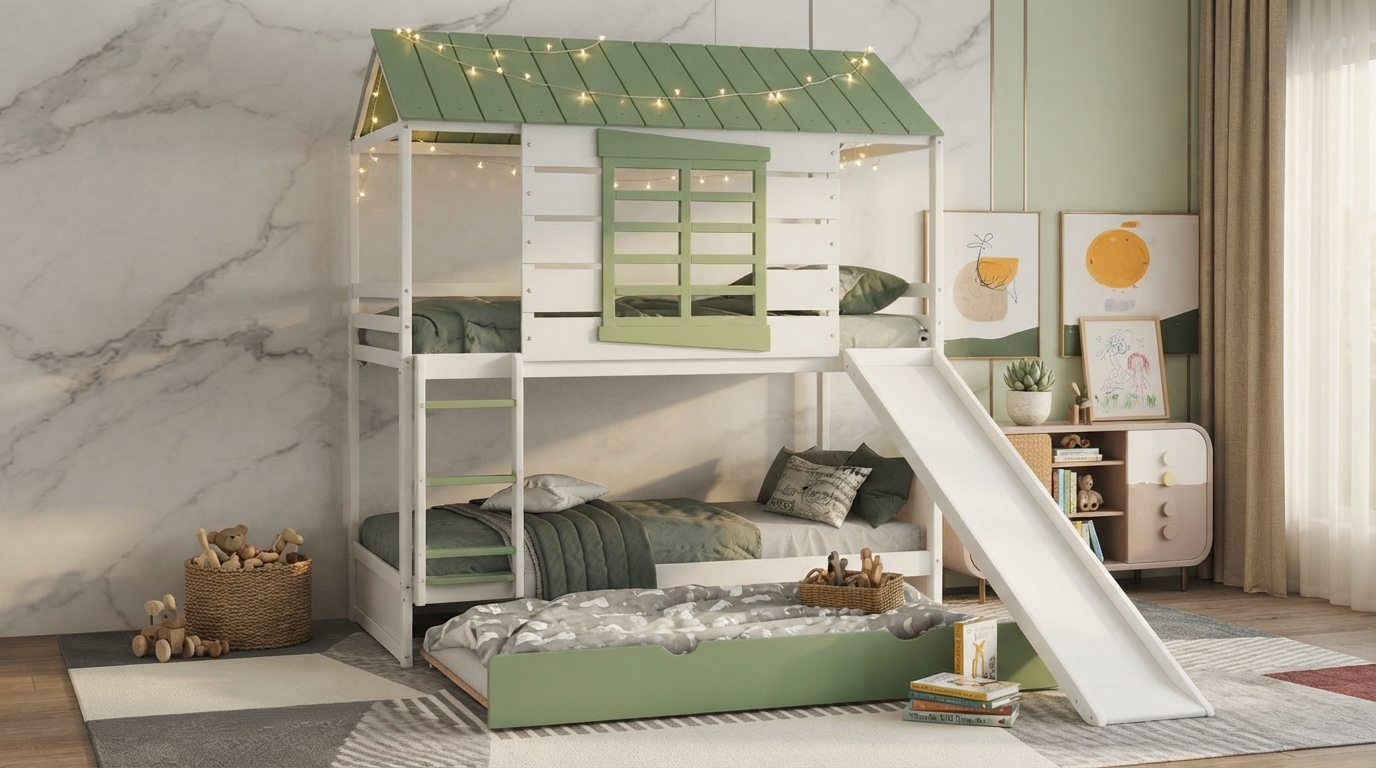
House Bunk Bed with Slide and Trundle: Space-Saving Sleep and Play for Shared Rooms
A house-style bunk bed with a slide and trundle can turn one footprint into multiple sleep spaces while adding built-in play value. This layout is especially useful for siblings, sleepovers, and smaller bedrooms where floor space matters as much as comfort and safety. With the right room plan and a few smart choices around mattresses and setup, it becomes a reliable “sleep + play” hub that keeps the rest of the room open for storage, homework, and everyday movement.
What Makes the House-Style Bunk with Slide and Trundle Different
Unlike a standard bunk, the house-frame silhouette brings a cozy, themed feel that kids naturally gravitate toward. It can double as a reading nook, a spot for imaginative play, or a place to add soft decor touches like string lights or a light canopy (kept well away from climbing paths).
The built-in slide is more than a novelty: it provides an alternative to climbing down a ladder first thing in the morning. Even so, safe daily use depends on secure guardrails, a stable frame, and a clear landing zone. The trundle adds a third sleep surface that tucks away when not needed, making it ideal for sleepovers or siblings sharing a room without permanently sacrificing floor space. In compact bedrooms, that combination can reduce the need for separate play furniture by keeping “activity” contained to the bed zone.
Room Fit and Layout Planning
Before ordering, measure carefully and think through how the bed will function day to day. Ceiling height matters for comfort and safety—kids should be able to sit up on the top bunk without feeling cramped, and adults should be able to change sheets without a struggle.
Slide placement is just as important. A slide needs an unobstructed run-out area so kids aren’t stepping into clutter or bumping into furniture. Also check that the slide won’t block doors, closet access, vents, or the main walkway. For the trundle, confirm it can pull out fully and still allow a child to climb in and out comfortably—thick rugs, nightstands, and baseboard heaters can all get in the way.
Quick Room-Planning Checklist
| Item to Check | Why It Matters | What to Do |
|---|---|---|
| Ceiling height | Comfort and safety on the top bunk | Allow headroom for sitting up and changing sheets |
| Slide landing space | Prevents collisions and trip hazards | Keep a clear area at the slide exit |
| Trundle pull-out path | Ensures the third bed is usable | Measure full extension and mattress thickness |
| Door/closet swing | Avoids daily frustration and pinches | Place the bed so doors open freely |
| Vent/heater clearance | Reduces overheating and blocked airflow | Avoid placing slide/trundle in front of vents |
Sleep Comfort: Mattresses, Weight Limits, and Trundle Use
Comfort starts with choosing the right mattress thickness for each level. On the top bunk, mattress height must still allow guardrails to extend sufficiently above the mattress surface—too thick and the rail becomes less protective. For the lower bunk, a more supportive mattress is often worth it when it’s the primary everyday sleeper. Trundles typically pair best with thinner-profile mattresses so they roll easily and fit under the frame without scraping.
Safety Essentials for Slides, Guardrails, and Climbing
Age guidance is another non-negotiable. Upper bunks are generally not recommended for children under 6, and manufacturer instructions should always take priority for proper use. Also pay attention to potential entrapment hazards: gaps around rails and decorative house-frame openings should be designed to avoid risky spaces. Finally, skip hanging items near bunks and slides—no ropes, belts, or long cords—so the sleep/play area stays safer during both daytime use and nighttime movement. For additional guidance, review resources from the U.S. Consumer Product Safety Commission, ASTM International, and the American Academy of Pediatrics.
Materials, Finish, and Build Quality Signals
Assembly and Ongoing Care
Featured Options to Complete a Shared Room Setup
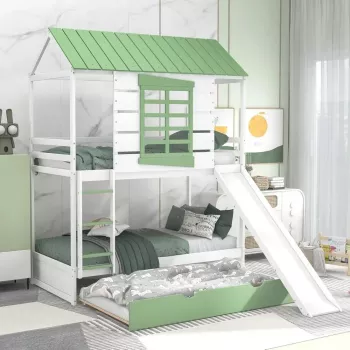
If the goal is to combine sleep spaces with built-in fun, House Bunk Bed with Slide and Trundle brings together a playful house silhouette, a slide, and a pull-out trundle for flexible sleeping arrangements. It’s a strong match for shared bedrooms, frequent overnight guests, or anyone trying to keep floor space open during the day. Before ordering, confirm room measurements, preferred slide orientation (left/right if applicable), and mattress sizing requirements.
To make the room feel extra cozy for reading time and wind-down routines, consider a compact heating option like the 60-Inch Wall-Mounted Electric Fireplace Heater with App Control & Remote, which can add ambiance without taking up floor space.
FAQ
Is a bunk bed with a slide safe for young kids?
Upper bunks are generally not recommended for children under 6, and it’s important to follow the manufacturer’s age guidance, guardrail requirements, and weight limits. Keep the slide landing area clear and check fasteners regularly so the frame and rails stay secure.
What mattress thickness works best for the top bunk and trundle?
The top bunk mattress should be thin enough that the guardrails still extend safely above the mattress surface. Trundles usually work best with a thinner-profile mattress so it can roll smoothly and fit under the bed without rubbing.
Does the trundle need a box spring?
Most trundles are designed to support a mattress directly on slats or a platform, without a box spring. Check the product’s support system and recommended mattress type to ensure proper fit and comfort.











Leave a comment