Stainless Manual Meat Grinder: Suction Base & Clamp
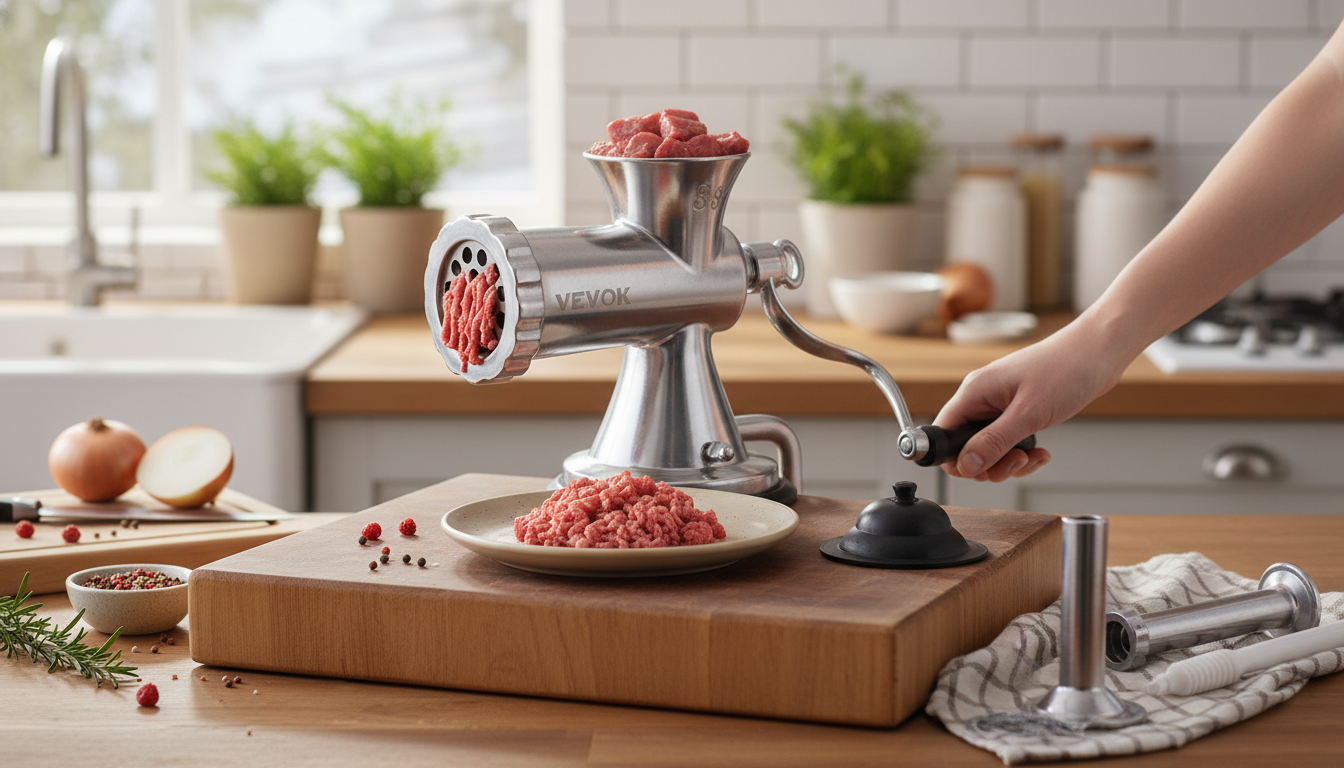
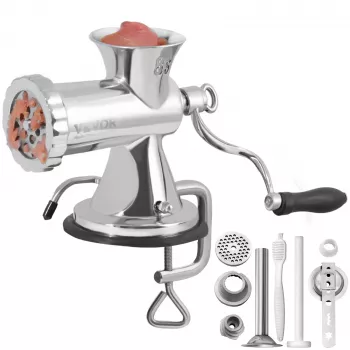
Manual Meat Grinder Stainless Steel with Suction Base & Table Clamp
A manual meat grinder can handle quick batches of ground meat, burger blends, and sausage prep without relying on electricity. This stainless steel model pairs two mounting options—suction base and table clamp—so it can stay stable on different work surfaces while cranking. It’s a practical choice for home cooks who want hands-on control over texture, don’t want to store a bulky motorized unit, or need a dependable backup when power isn’t available.
What This Grinder Is Best For
Manual grinding shines when you want fresh, small-to-medium batches and the ability to fine-tune the result. This style of grinder is especially useful for everyday recipes that benefit from a cleaner, less “smeared” texture when you keep everything cold.
- Small-to-medium home batches: burgers, meatballs, dumpling filling, chili, and sausage mixes
- Controlling texture by grinding chilled cubes and running a second pass when needed
- Home kitchens, cabins, and power-outage backups where an electric grinder is inconvenient
- Occasional grinding for people who prefer a simple tool over a motorized appliance
For a dedicated option, see the Manual Meat Grinder Stainless Steel with Suction Base & Table Clamp.
Stability: Suction Base vs. Table Clamp
Stability is the difference between a smooth crank and a frustrating wobble. Having both suction and clamp mounting makes it easier to set up on the surface you actually use—whether that’s a polished kitchen counter, a farmhouse table, or a portable prep station.
- Suction base works best on smooth, non-porous countertops (sealed stone, glass, polished laminate); wipe the surface dry before mounting
- Table clamp is more reliable on textured or porous surfaces (butcher block, worn wood) where suction may slip
- Clamp option helps prevent twisting when grinding firmer cuts or partially frozen meat
- For maximum stability, position the grinder so the crank clears drawers/backsplashes and the body sits fully on the edge
| Mounting method | Best surfaces | Strengths | Watch-outs |
|---|---|---|---|
| Suction base | Smooth, non-porous counters | Fast setup; no edge required | Needs clean, dry surface; less effective on textured wood |
| Table clamp | Tables/counters with an edge | Strong hold for tougher cranking | Requires clearance; protect delicate surfaces with a thin pad |
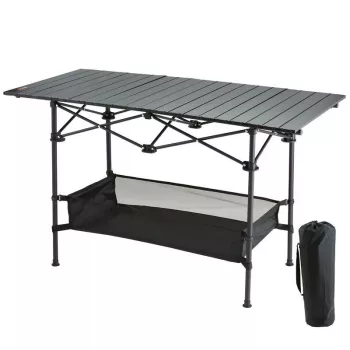
If you prep outside, at a cabin, or on a flexible workstation, a sturdy surface helps. A compact option like the Portable Folding Camping Table can be useful when you need a dedicated edge for clamping (or simply want to keep raw-meat prep separate from your main kitchen counter).
Materials and Food-Contact Considerations
Stainless steel is a solid pick for food tools because it’s durable and generally easier to keep clean than many painted or plated components. Even with stainless construction, the biggest factor in great results is temperature management—cold meat and cold parts help preserve a defined grind rather than a paste.
- Stainless steel construction supports durability and easier cleanup compared with many painted or plated parts
- Keep meat cold: chill the meat, the grinder head, and the auger (when possible) to reduce smearing and help maintain a clean grind
- Avoid cross-contamination: separate raw-meat tools from ready-to-eat foods; sanitize boards and countertops after grinding
- Use only food-safe lubricants if the unit has any moving joints that require occasional maintenance (never household oils on food-contact paths)
For safe handling basics around ground meats, consult the USDA FSIS — Ground Beef and Food Safety guidance, and use a thermometer to verify doneness per USDA FSIS — Thermometer Basics.
Setup and Grinding Workflow (Reliable Results, Less Effort)
A smooth workflow reduces strain on your hands and helps prevent clogs. The general rule: prep consistently, keep everything cold, and crank steadily instead of forcing the feed.
- Cut meat into consistent cubes/strips that feed smoothly; remove large sinew and very hard connective tissue
- Chill meat until firm but not solid; partially frozen meat cranks more cleanly and reduces clogging
- Feed steadily with the pusher; avoid forcing with improvised tools
- Grind once for a coarse texture, then mix seasonings and grind again for a tighter bind (useful for sausages and meatballs)
- If the grind starts to smear, pause and re-chill the meat and grinder parts
| Step | What to do | Why it matters |
|---|---|---|
| Mount | Choose suction or clamp and test for movement | Prevents wobble and uneven grinding |
| Chill | Cool meat and parts 15–30 minutes | Cleaner grind; less fat smear |
| Prep | Trim and cube meat | Steadier feed; fewer jams |
| Grind | Use a consistent crank speed | Uniform texture |
| Clean | Disassemble and wash promptly | Reduces odor and residue buildup |
Cleaning and Care
For deeper cleaning and sanitation principles commonly used in food service, the FDA — Food Code (2022) is a helpful reference point.
Common Issues and Quick Fixes
When a Manual Grinder Is the Right Choice
Recommended Picks (In Stock)
- Manual Meat Grinder Stainless Steel with Suction Base & Table Clamp — a stable, electricity-free option for fresh ground meat and sausage prep.
- Portable Folding Camping Table — a handy extra work surface for clamping and keeping raw-meat prep organized.
FAQ
Does the suction base work on all countertops?
No. Suction works best on smooth, non-porous surfaces like sealed stone, glass, or polished laminate—clean and dry the area first. For textured wood, porous butcher block, or uneven surfaces, the table clamp is usually more secure.
How do you keep meat from turning pasty when grinding?
Keep the meat and grinder parts cold, cut uniform pieces, and work in small batches. If you see smearing, pause and re-chill the meat and components before continuing.
What is the safest way to clean a meat grinder after raw meat?
Disassemble promptly, wash parts with hot soapy water, and sanitize any boards or counters that contacted raw meat before drying everything thoroughly. Keep raw-meat tools separate from ready-to-eat foods to avoid cross-contamination.














Leave a comment