Stone Floor Sculptures: Entryway & Living Room Styling
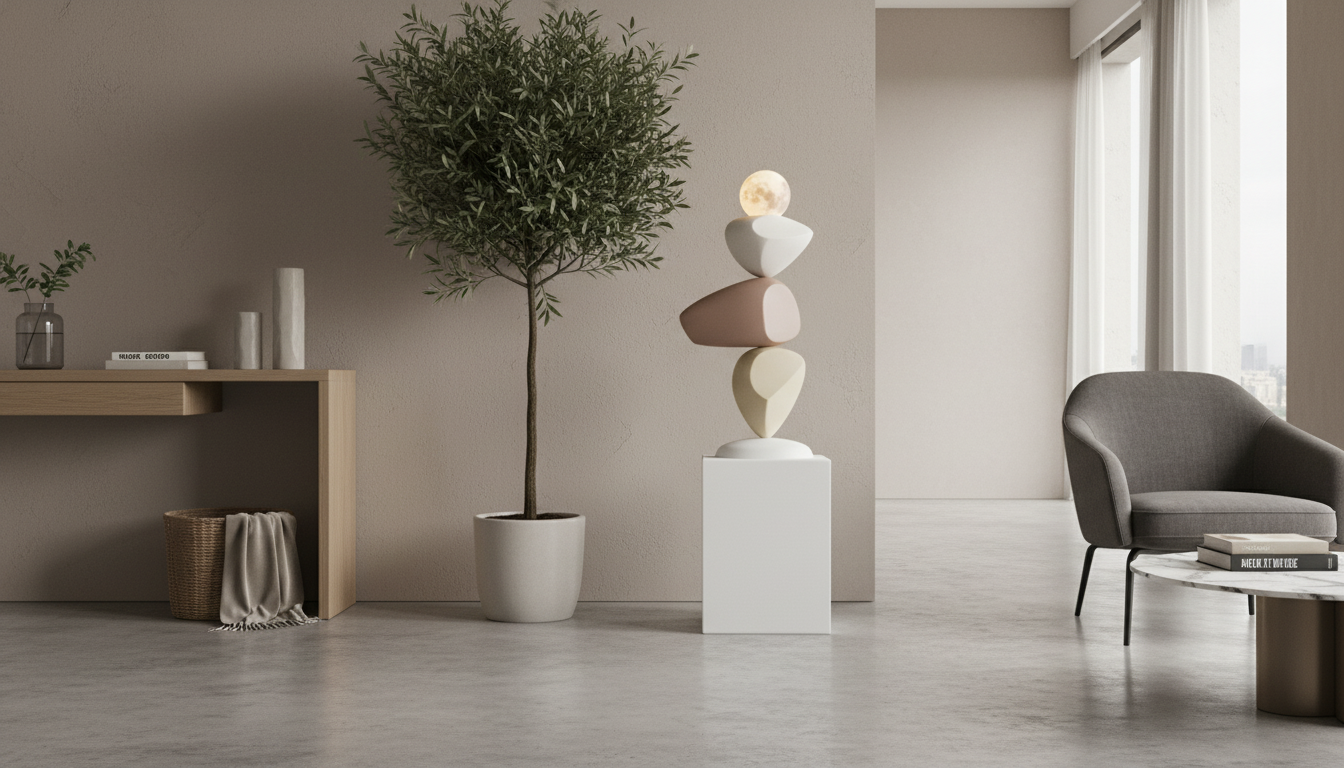
Creative Stone Floor Sculptures for Living Room and Entrance Home Decor
A stone floor sculpture can anchor an entryway, create a focal point in the living room, and add texture that reads as timeless rather than trendy. The best pieces feel “collected” rather than placed—substantial enough to hold their ground, but calm enough to live with every day. Below are practical placement ideas, styling principles, and care tips so your sculpture looks intentional from every angle.
Why a Floor Sculpture Changes a Room
Most rooms are designed from the midline up: art at eye level, lighting overhead, shelves and cabinetry filling vertical space. A stone floor sculpture flips that script and adds a sense of permanence where the room physically meets the ground.
- Adds visual weight at floor level, balancing tall furniture and large wall art so the room doesn’t feel “top heavy.”
- Creates a pause point in open layouts, subtly defining zones without adding walls or bulky dividers.
- Brings natural texture that pairs easily with wood, metal, glass, and soft textiles.
- Works as a standalone statement or as an anchor for layered decor (plants, lighting, rugs) without needing constant rearranging.
Best Placement Ideas for Entryways
Entryways benefit from one clear statement that feels welcoming, not busy. Stone works especially well here because it’s durable, grounded, and visually calming after a long day.
- Near a console table: Place the sculpture beside (not in front of) the console to visually ground the vignette while keeping a clear path.
- In a corner with an uplight: A small uplight or directional floor lamp creates sculptural shadows and a warm, gallery-like glow.
- Visible from the door, outside the traffic line: If the entry opens into a hallway, position it where it can be seen immediately—but doesn’t steal inches from the walkway.
- Frame with a runner or small rug: A slim runner helps define the area and protects flooring from tracked-in grit that can scratch finishes over time.
Living Room Styling That Feels Collected, Not Cluttered
In a living room, the goal is presence without visual noise. Stone is naturally commanding, so it benefits from restraint around it.
- Near a low media console or hearth: Place the sculpture where it can act as a grounded focal point—especially effective near a fireplace surround (with safe distance from heat).
- Soften the “hard” material story: Balance stone with boucle, linen, wool throws, or the edge of a plush rug nearby so the room feels inviting, not austere.
- Use repetition for cohesion: Echo the stone’s tone in a pillow, a vase, a wood frame, or a muted print to make the piece feel integrated.
- Keep nearby decor minimal: One strong object reads more luxurious than several small accents competing for attention.
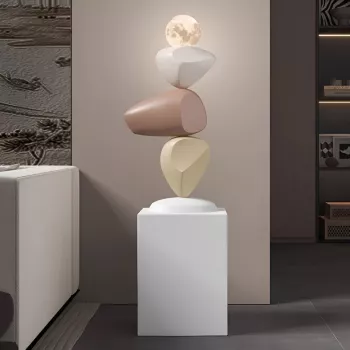
If you want a ready-to-style focal point that can work in both the entry and living room, explore Creative Stone Floor Sculptures for Living Room and Entrance Home Decor as a single anchor piece you can build around season after season.
Choosing the Right Size and Visual Weight
With floor sculptures, “size” isn’t only height—it’s footprint, silhouette, and how bold the form reads from across the room. A smaller piece with a strong contour can have more impact than a tall piece with a thin profile.
- Start with footprint: Tight entries and narrow landings do best with compact bases; larger footprints shine where there’s negative space.
- Match height to nearby furniture: Many floor sculptures look best below seat height, unless you’re intentionally choosing a taller statement.
- Let the room’s scale decide the contour: Compact rooms favor simpler silhouettes; large rooms can handle bolder contours and thicker forms.
- Use contrast to break up straight lines: If your room is dominated by rectangles (sectionals, coffee tables), an organic form adds relief and movement.
Quick placement guide by room zone
| Zone | What works well | Avoid |
|---|---|---|
| Front door / entry corner | Compact footprint, strong silhouette, uplight nearby | Blocking shoe/coat area or narrowing walkway |
| Beside a console table | Medium height, complementary tones to wood/metal | Too many small objects competing for attention |
| Near fireplace / media wall | Heavier visual weight, simple surrounding decor | Placing too close to heat or high-traffic cable paths |
| Open-plan boundary | Sculpture as a “marker” between zones | Centering in a main circulation route |
Floor Protection, Safety, and Everyday Practicalities
Stone looks effortless when it’s stable and secure. A few small setup choices can prevent scratches, shifting, and accidental bumps.
Care and Maintenance for Stone Decor
For deeper guidance on safe stone upkeep, consult the Natural Stone Institute’s care & maintenance resources. For broader object-handling best practices, the conservation notes from The Metropolitan Museum of Art and Cleveland Museum of Art offer practical at-home handling reminders.
A Ready-to-Style Option
If you want help choosing refined, modern color pairings that work especially well with natural materials, reference Colorful Quiet Luxury Palettes Checklist to coordinate textiles, woods, and finishes around your stone focal point.
FAQ
How can a stone floor sculpture be placed without scratching hardwood floors?
Use felt or rubber pads under the base, or set the piece on a thin protective mat or low plinth. Clean any grit beneath it before placement, and avoid dragging it when repositioning—lift and set instead.
What’s the safest way to clean and maintain stone decor indoors?
Dust with a microfiber cloth and use a pH-neutral cleaner for occasional marks, keeping water to a minimum and drying promptly. Avoid acidic cleaners like vinegar or lemon-based products, and consider sealing only if the stone is porous and the material calls for it.
Where should a floor sculpture go in an entryway so it doesn’t feel in the way?
Place it in a corner, beside a console table, or along a wall where there’s comfortable clearance for the main walkway. Adding a small uplight helps it feel purposeful while keeping the center path open.










Leave a comment