Portable Folding Camping Table: Stable Prep Anywhere
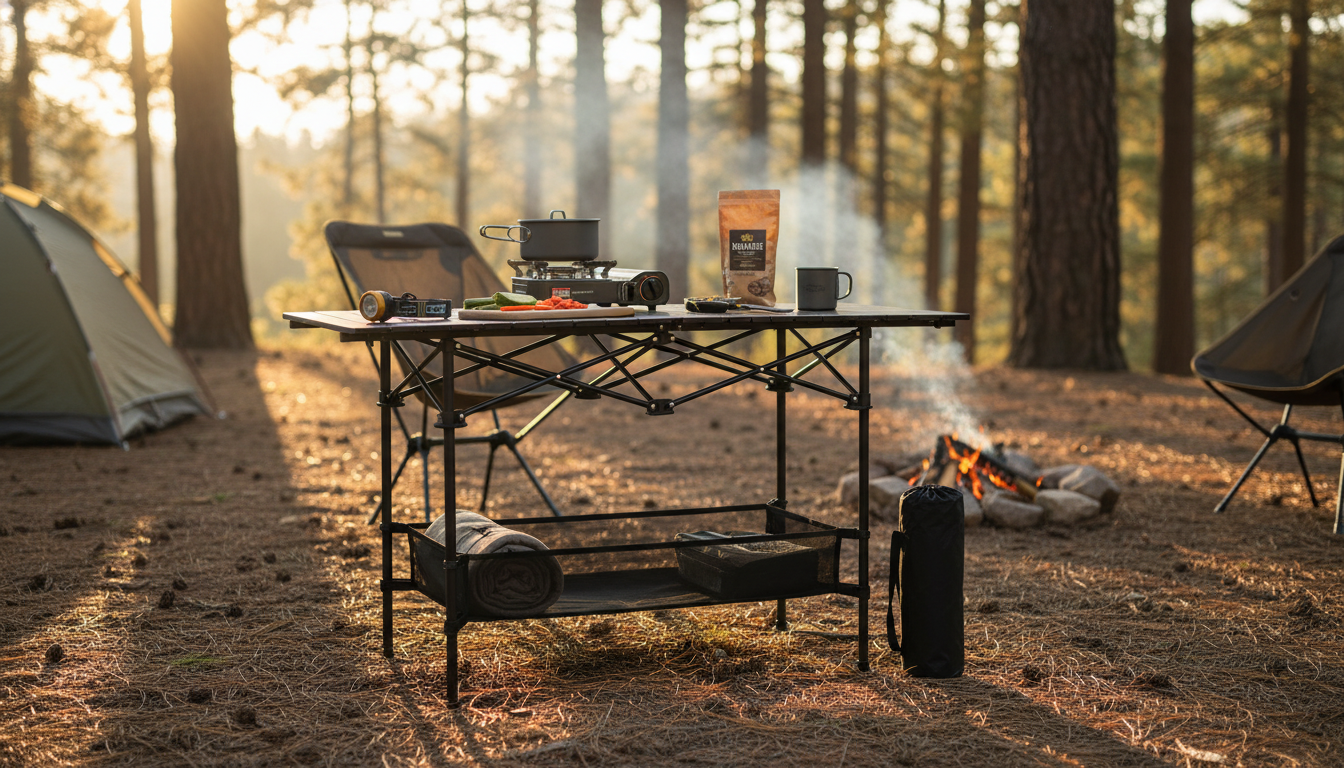
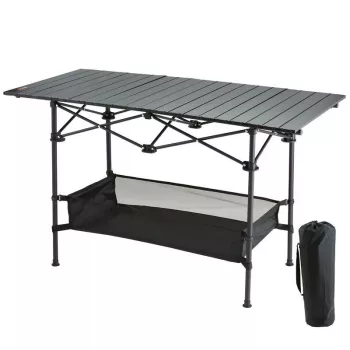
Portable Folding Camping Table for Camp Cooking, Tailgates, and Small-Space Outdoor Setups
A portable folding camping table adds a clean, stable work surface anywhere—next to the grill, by the tent, or at a roadside stop. The right one packs small, sets up fast, handles real meal prep, and stays steady on uneven ground. This guide breaks down what matters most: surface size, stability, carry size, materials, weight capacity, and easy-care details that make outdoor trips smoother.
What a good camp table solves (beyond “a place to set things”)
A folding table earns its keep when it supports the way you actually move through camp: unpack, prep, cook, eat, clean, repeat. A solid surface helps keep food prep off the ground and away from dirt, sand, and pine needles—especially useful when the picnic table is missing, damp, or splintered.
It also creates a dedicated coffee/breakfast station so the cooler and stove area stay organized. That separation matters for both convenience and safety: splitting raw and ready-to-eat items reduces cross-contamination risk. The USDA’s outdoor food safety guidance is a helpful reference for keeping hands, tools, and surfaces clean when you’re away from your kitchen (USDA FSIS: Outdoor Food Safety).
On real campsites, a table protects cookware and stove legs from soft ground and sloped pads, and it improves comfort for card games, kids’ crafts, and lantern-lit evenings. For tailgates and park picnics, it provides a stable surface for trays, condiments, and serving pans that don’t balance well on cooler lids.
Quick fit check: size, height, and packability
Before shopping, picture your most common setup: a two-burner stove and dish tub for car camping, or a compact single-burner and cutting board for quick overnights. Surface size should give you enough room for a stove plus a prep zone (or two place settings) without forcing items to stack. Height matters, too: lower tables pair well with camp chairs for relaxed meals, while taller tables are better for standing prep and frequent stirring.
Packed dimensions are often the hidden deal-breaker. Confirm it fits in a trunk, gear bin, or RV compartment alongside chairs and a shelter. Finally, the carry method and setup speed are more than “nice-to-haves.” A comfortable handle or storage bag reduces frustration on arrival, and fewer parts means fewer lost pieces at dusk—intuitive leg locks matter more than flashy extras.
Common Table Sizes and Best Uses
| Typical Size/Style | Best For | Trade-Offs to Expect |
|---|---|---|
| Small (side table) | Lantern, drinks, phone/charger, small cooler top | Limited prep space; can feel cramped with plates and cookware |
| Medium (camp kitchen helper) | Single-burner stove + cutting board, serving station | May require careful layout for larger pans |
| Large (group meals) | Family-style dining, multi-dish prep, tailgates | Heavier and bulkier; harder to level on uneven ground |
| Adjustable/roll-top styles | Mixed use across trips; flexible packing | More moving parts; may feel less rigid than one-piece tops |
Stability on real campsites: legs, locks, and uneven ground
Materials and care: aluminum, steel, and tabletop finishes
Comfortable camp workflows: simple setups that feel organized
To make a small table feel bigger, set up a two-zone layout: cooking on one side, prep/serving on the other. That split reduces spills and keeps utensils from migrating into food areas. For food safety, keep raw proteins in a dedicated container and sanitize the prep space after handling; planning ahead like this also supports low-impact, less-stress trips (Leave No Trace: Plan Ahead and Prepare).
Featured pick: Portable Folding Camping Table
If you want one go-to surface that packs down for travel while still handling cooking, serving, and general campsite organization, the Portable Folding Camping Table is a practical option to keep in the car-camping kit. It works well as a camp kitchen helper next to a stove, cooler, or grill setup, and it’s also handy for picnics, tailgates, or even backup indoor use in small spaces.
At-a-Glance Checklist Before Buying
| Check Item | Why It Matters | What to Confirm |
|---|---|---|
| Packed size | Fits in vehicle/gear bins | Stored length/width and whether a carry bag is included |
| Setup/locks | Reduces wobble and frustration | Locks engage securely and are easy to operate with cold hands |
| Surface space | Supports real meal prep | Stove + cutting board fit without stacking items |
| Stability | Safer around hot cookware | Wide stance, non-slip feet, solid hinges |
| Cleanup | Faster pack-out | Wipes clean, dries quickly, resists staining |
Travel-friendly extras to round out your kit
- The Smart Traveler’s Guide to Global Etiquette | Digital Download eBook for Cultural Tips, Travel Etiquette, and International Manners for quick cultural notes when your trip includes towns, tours, or international stops.
- Luminous Wooden LED Light Globe 3D Puzzle Model Kit as an off-screen downtime activity at home between trips (or a rainy-day project for travel planning).
Getting more life out of a folding table
FAQ
How much weight can a portable folding camping table hold?
Weight capacity varies by design and materials. Treat the stated rating as a maximum on flat ground, leave a safety buffer for uneven terrain, and keep the heaviest items centered for better stability.
Can a camping table be used with a camp stove or grill accessories?
Many tables work well as a cooking station, but heat resistance depends on the tabletop. Follow manufacturer guidance, keep flame/exhaust clear of the surface, and use a heat mat if recommended.
What’s the easiest way to keep a camp table from wobbling?
Set it on the flattest ground you can find, fully engage the leg locks, and distribute weight toward the center. On soft ground, place flat pads under the feet to reduce sinking and shifting.













Leave a comment